Morocco Trip Guide : Culture, Top Destinations & Sahara Desert Tours
A land of ancient medinas, towering Atlas peaks, golden Sahara dunes and warm Berber hospitality. Here's everything you need to know before your Moroccan adventure.
19.5M
Tourists per year
9
UNESCO World Heritage Sites
3,500 km
Of coastline
300+
Days of sunshine per year
Where Is Morocco?
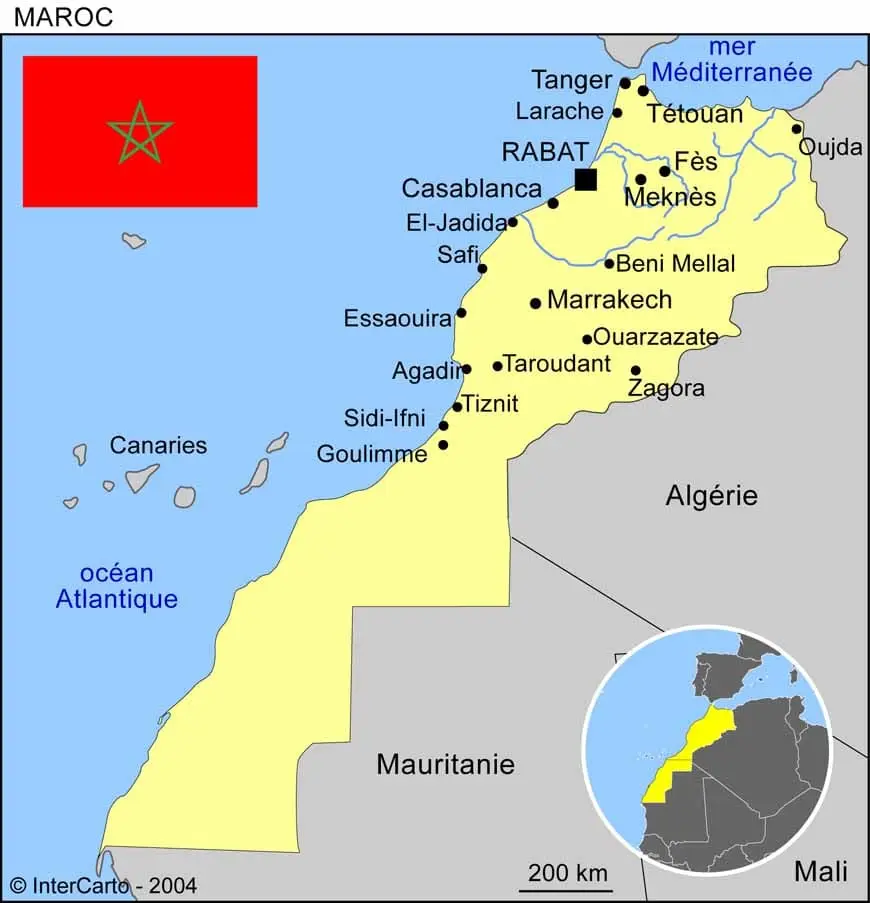
Morocco sits at the northwestern tip of Africa, separated from Spain by just 14 kilometers across the Strait of Gibraltar. Bordered by the Atlantic Ocean to the west, the Mediterranean Sea to the north, Algeria to the east and Mauritania to the south, Morocco's location makes it one of the most accessible African countries from Europe.
The landscape shifts dramatically from the Rif Mountains in the north through the fertile plains around Fes and Meknes, over the snow-capped High Atlas (reaching 4,167 m at Jebel Toubkal, North Africa's highest peak), down into the vast Sahara Desert in the southeast — where the iconic Erg Chebbi dunes near Merzouga rise over 150 meters.
The Flag of Morocco
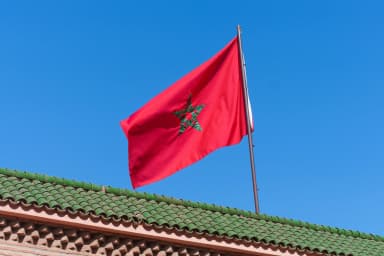
A red field bearing a green pentacle (five-pointed star), the Seal of Solomon. Red represents the ruling Alaouite dynasty and green symbolizes Islam, peace and hope.
Morocco People & Culture
Moroccan culture is a vibrant mosaic shaped by Berber (Amazigh), Arab, Andalusian and Saharan influences over thousands of years. The indigenous Berber people — who have inhabited North Africa for over 5,000 years — remain central to daily life, from the architecture of kasbahs to the rhythms of Gnawa music echoing through Marrakech's Jemaa el-Fna.
Hospitality sits at the heart of Moroccan society. A glass of mint tea is never refused, strangers are welcomed like family, and meals are shared from communal tagine pots. With over 37 million people speaking Arabic, Tamazight, French and increasingly English, Morocco is a multilingual, multicultural country that feels both ancient and alive.
Why Travel to Morocco?
Morocco has long been one of Africa's most rewarding places to visit, and tourism numbers confirm it. With nearly 300 sunny days a year, the country packs deserts, beaches, and snow-capped peaks into a single trip — something very few destinations in the world can match.
The momentum is real: Morocco welcomed close to 19.8 million visitors in 2025, a 14% jump from the year before, with tourism revenue climbing past 130 billion dirhams. The sector now accounts for roughly 7% of national GDP and supports millions of jobs, directly and indirectly, across the country.
Much of that growth is being accelerated by one event: the 2030 FIFA World Cup, co-hosted with Spain and Portugal. Morocco is pouring tens of billions of dirhams into new stadiums, high-speed rail between Tangier, Kenitra, and Marrakech, and a doubled airport capacity — Casablanca's Mohammed V airport alone is being rebuilt to handle over 30 million passengers a year. Hotel capacity is expanding too, with thousands of new rooms planned before kickoff.
None of this is only about football. The roads, trains, and airports built for the World Cup will serve travelers long after the final whistle, making it easier than ever to reach Marrakech, Fes, Casablanca, and the south. Better ties with neighboring Algeria have also reopened land routes, while cruise ships keep filling the ports of Casablanca and Tangier.
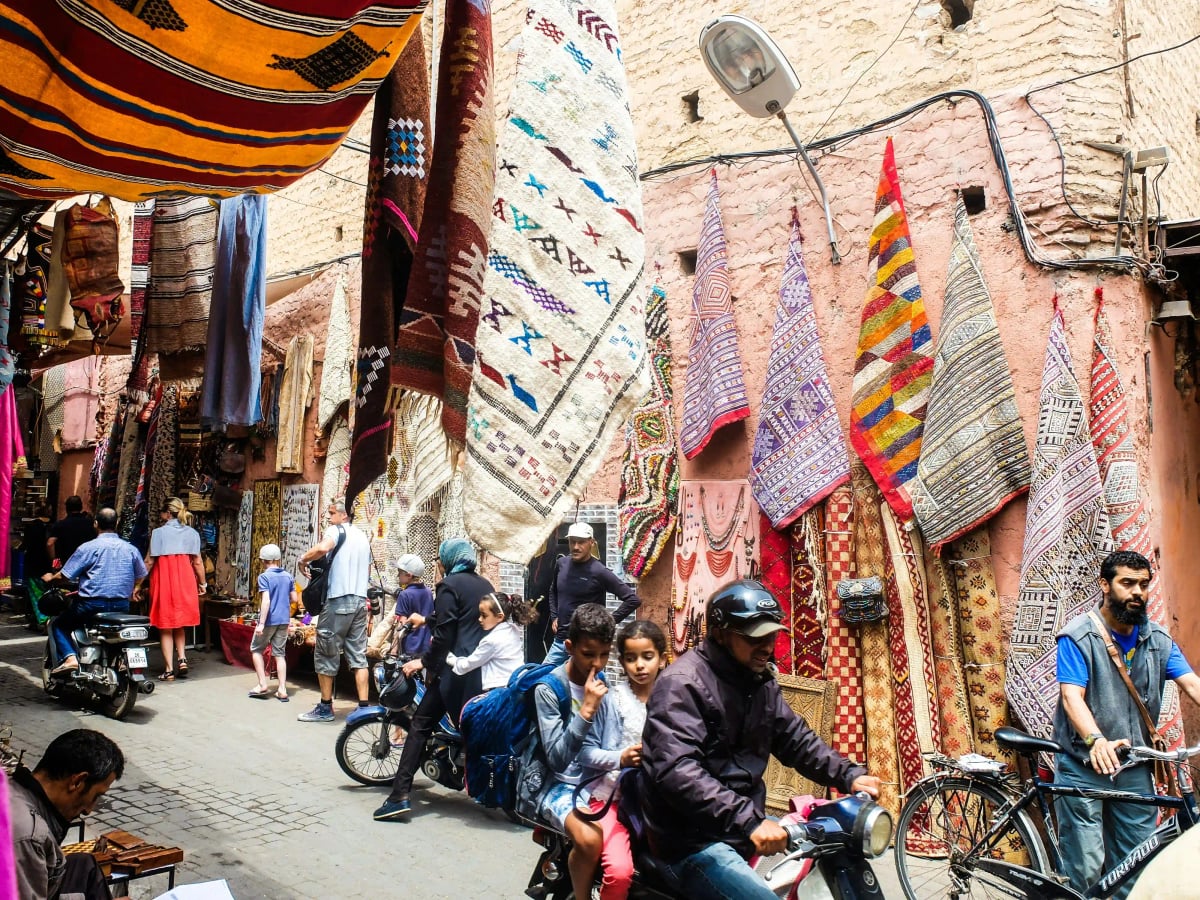
Most visitors come for the same reason: the mix of culture and landscape packed into one country. Imperial cities like Fes and Marrakech hold centuries of Islamic and Roman history inside their medinas and kasbahs. The Atlantic coast around Agadir draws sun-seekers from France, Spain, and the UK year-round, while the Atlas and Rif Mountains pull in hikers and mountain bikers chasing trails through valleys few tourists ever see. And then there's the desert. A trip to Morocco without a night under the stars near Merzouga, camel trek included, is widely considered incomplete. Whether it's the souks of a medina, a sunset over the dunes, or a quiet mountain village, Morocco keeps giving travelers a reason to come back — and with 2030 on the horizon, there has never been a better time to go.
Best Destinations in Morocco
Marrakech is where most journeys begin and where first impressions hit hardest. The Red City wraps centuries of history inside its ochre walls — Jemaa el-Fna square still buzzes with storytellers and food stalls after dark, the Bahia Palace whispers of 19th-century grandeur, and the souks behind the main square sell everything from hand-stitched leather to towers of cumin and saffron. Beyond the medina, the Majorelle Garden offers a quieter side of the city, while the rooftop restaurants of the Kasbah serve slow-cooked tagines with views across the Atlas foothills.
Southeast of Marrakech, the landscape opens up into one of Morocco's most cinematic drives. The road crosses the Tizi n'Tichka pass at 2,260 meters, drops through the UNESCO-listed kasbah of Aït Ben Haddou — a backdrop for Gladiator and Game of Thrones — and continues through the Dadès and Todra Gorges before reaching the golden dunes of Erg Chebbi near Merzouga. These are the tallest sand dunes in Morocco, rising over 150 meters, and the setting for the classic Marrakech desert tour: a camel trek at sunset, Berber drumming around a campfire, and a night under a sky thick with stars.
Fes feels like stepping back 800 years. The old medina — Fes el-Bali — is the world's largest car-free urban area, a maze of 9,000 alleyways hiding the University of al-Qarawiyyin (founded 859 AD, the oldest degree-granting institution on record), leather tanneries that still use medieval techniques, and mosques whose tilework took generations to complete. Further north, Chefchaouen sits in the Rif Mountains with every wall, door, and stairway painted in shades of blue — one of the most photographed small towns on Earth.
On the Atlantic side, Essaouira draws wind-chasers, surfers, and artists to its rampart-lined harbour, while Agadir and Taghazout offer long sandy beaches and year-round warmth. Down south, the oasis valleys of the Draa and Ziz rivers run through palm groves and fortified villages, connecting Marrakech to the edge of the Sahara through some of the most quietly beautiful scenery in North Africa.
Practical Travel Tips for Morocco
The best time to visit Morocco depends on where you're heading. March to May and September to November offer the most comfortable temperatures across the country — warm days in Marrakech (22–28°C), cool nights in the desert, and clear skies in the mountains. Summer is ideal for the Atlantic coast (Essaouira, Agadir), where ocean breezes keep temperatures pleasant while the interior bakes. Winter brings snow to the Atlas — Morocco has ski resorts — and crisp, starry nights in the Sahara, making it a surprisingly good season for desert tours from Marrakech.
Citizens of the EU, UK, USA, Canada, Australia, and over 70 other countries can enter Morocco visa-free for stays up to 90 days. The national currency is the Moroccan dirham (MAD), with 1 EUR buying roughly 11 MAD. Budget travelers can explore comfortably on €30–50 per day; mid-range travelers spending €80–150 per day will enjoy beautiful riads, private guides, and excellent meals. Credit cards are accepted at hotels and restaurants in major cities, but carrying cash is essential in souks, rural areas, and smaller towns.
Morocco ranks among the safest countries in Africa for tourism. Standard precautions apply — keep valuables secure in crowded souks, use licensed guides in the medinas, and book desert tours through established operators. French is widely spoken alongside Arabic and Tamazight, and English is growing rapidly, particularly among younger Moroccans in tourism. Our team at Tours Marrakech Desert speaks English, French, Spanish, and Arabic, and is available around the clock to help plan and support your journey.