
Atlas Mountains Morocco
Explore the Atlas Mountains in Morocco: map, Toubkal, waterfalls, weather, mountain stays and our 6-day private Merzouga desert itinerary.
At Tours Marrakech Desert, we help travelers explore Morocco beyond the city with private journeys that connect the High Atlas Mountains, historic kasbahs, comfortable riads and the Sahara dunes. Our six-day Atlas Mountains and Merzouga itinerary starts in Marrakech, crosses the Tizi n'Tichka mountain landscapes, spends two nights in the Merzouga area and finishes with a guided visit to Fes. Private transport and accommodation are part of the published itinerary; specific hotel and camp arrangements are confirmed when you book. This guide also helps you decide whether a separate mountain walk, waterfall excursion or longer cultural road trip suits you best.
Where are the Atlas Mountains in Morocco? They form a vast mountain system across northwestern Africa, stretching through Morocco, Algeria and Tunisia. In Morocco, the High Atlas, Middle Atlas and Anti-Atlas offer very different experiences: dramatic passes near Marrakech, cedar forests toward Fes, and dry southern mountains. You can visit individual valleys on a day trip or cross the ranges on a multi-day journey toward the pre-Saharan landscapes and Merzouga. The right choice depends on your time, season, fitness and preferred travel style.
Where Are the Atlas Mountains in Africa and Morocco?
The Atlas Mountains are a mountain system of North Africa, not a single mountain or one national park. Morocco contains several important sections. The High Atlas rises south of Marrakech and includes the country's tallest summits; the Middle Atlas extends toward towns such as Ifrane and Azrou; and the Anti-Atlas lies farther to the south and southwest. Their landscapes range from high ridges and cultivated valleys to forests and rugged, arid terrain. Algeria and Tunisia also have mountain ranges within the broader Atlas system, so the term “Atlas Mountains Africa” refers to a much wider region than Marrakech alone.
For a first-time visitor, Marrakech is the most recognizable starting point for the High Atlas. A short excursion can focus on the Ourika Valley or an Imlil village walk. A longer journey can cross the Tizi n'Tichka Pass toward Ait Ben Haddou, Ouarzazate and the Dades Valley. Farther east, the road toward Fes crosses the Middle Atlas after leaving the Ziz Valley. These are distinct regions: Merzouga is famous for Saharan sand dunes, not for being a town high in the Atlas Mountains.
Atlas Mountains Map: How to Understand the Regions and Routes
If you look at an Atlas Mountains map of Morocco, orient yourself using four reference points: Marrakech on the northern side of the High Atlas; Ouarzazate beyond the mountain crossing to the southeast; Merzouga farther east by the Erg Chebbi dunes; and Fes farther north, with the Middle Atlas between it and the southeast. A route joining those places does not follow a straight line. Mountain roads wind through passes, valleys and villages, so driving time depends on the route, weather, stops and road conditions.
| Area | Where to look | Why visit | Planning note |
|---|---|---|---|
| High Atlas | South of Marrakech | Mountain passes, Imlil and valleys | Cooler high elevations; winding roads |
| Middle Atlas | Near Azrou, Ifrane and the route toward Fes | Cedar forests, mountain towns | Weather differs from the Sahara |
| Anti-Atlas | Southern and southwestern Morocco | Rocky mountains and rural landscapes | Usually requires its own itinerary |
| Merzouga / Erg Chebbi | Southeastern Morocco | Saharan dunes and desert camp | Not part of a short mountain day trip |
For a useful map, plot the precise stops you are visiting rather than relying only on a generic Atlas label. Imlil, Ouzoud, Ourika, the Tizi n'Tichka Pass and Merzouga are not interchangeable locations. Travelers planning the Marrakech-to-Fes six-day road trip should consult its actual route and ask for an updated driving plan; a diagram is not a substitute for live road information.
High Atlas vs Middle Atlas vs Anti-Atlas: Which Should You Visit?
High Atlas: mountain scenery, villages and passes
The High Atlas is the best-known section for visitors staying in Marrakech. It includes Jebel Toubkal, villages associated with Amazigh mountain life, terraced agriculture and long views across ridges. Imlil attracts walkers; Ourika appeals to travelers who want a valley excursion; Tizi n'Tichka is important on the paved road toward Ait Ben Haddou and Ouarzazate. You do not need to climb a summit to appreciate the scenery, but a mountain road tour and a hiking holiday are different products. Families may prefer viewpoints and short walks, while experienced hikers may want a dedicated guide and route.
Middle Atlas: forests, cedar country and Ifrane
The Middle Atlas is greener in many places and offers a different atmosphere from the southern desert. Around Azrou, cedar woodland provides a memorable change from palm groves and arid valleys; Barbary macaques may be seen but wildlife sightings are never guaranteed. Ifrane is known for a cooler mountain climate and distinctive townscape. For a traveler taking a one-way desert circuit from Marrakech to Fes, this region is especially relevant on the northbound day after Merzouga.
Anti-Atlas: a different journey into southern Morocco
The Anti-Atlas is associated with drier, rugged landscapes farther south, including areas around Tafraoute and routes toward the southwest. It is a good choice for people interested in geological scenery, smaller settlements and slower exploration. It is not automatically included when a tour advertisement says “cross the Atlas Mountains”; check which range the actual route crosses. Our featured six-day program primarily covers the High Atlas and Middle Atlas rather than a separate Anti-Atlas excursion.
The Moroccan National Tourist Office's geography guide offers an additional overview of the main mountain regions.
Jebel Toubkal in the Atlas Mountains: Height, Location and Hiking
Jebel Toubkal reaches about 4,167 metres and is the highest peak in Morocco and North Africa. It stands in the High Atlas within the Toubkal National Park area, south of Marrakech. Imlil is a commonly used base for trekking in this mountain region. Reaching the summit is an actual high-altitude undertaking, not an ordinary sightseeing stop on the route to the Sahara. Altitude, snow, wind, route conditions and the physical effort involved matter much more than the distance shown on a road map.
If hiking Toubkal is your priority, allow time for a suitable guided plan, check current local requirements, and ask about acclimatization and seasonal equipment. In snowy conditions, skills and equipment requirements change. Visitors who simply want beautiful mountain views can choose shorter village walks around Imlil or a valley excursion instead. The key distinction for booking is simple: our six-day Atlas Mountains–Merzouga–Fes road tour does not include an ascent of Jebel Toubkal. It lets you see the mountain regions from a private vehicle and at planned scenic stops.
Atlas Mountains Waterfalls: Ouzoud, Ourika and Setti Fatma
Ouzoud Waterfalls: a full-day nature excursion
Ouzoud Waterfalls, in the Azilal area, are among Morocco's most recognized waterfall destinations. Walkways and viewing points let visitors appreciate the falls from different angles, but paths can be uneven or slippery, especially near spray. A visit is generally planned as a full-day excursion from Marrakech rather than a quick roadside stop. Allow time for the drive in both directions, walking, rest and lunch if desired. See our Ouzoud Waterfalls day trip for a focused alternative to a long desert tour.
Ourika Valley and the Setti Fatma waterfall walks
The Ourika Valley draws travelers who want river scenery, mountain villages and the possibility of walking toward waterfalls near Setti Fatma. These are walks on natural terrain, not a paved urban promenade. Discuss the route's difficulty and current conditions with a qualified local guide before climbing wet steps or rocky paths. After heavy rain, mountain rivers can change quickly, so avoid approaching flooded channels. Our Ourika Valley excursion is a practical choice for travelers with limited time in Marrakech.
Important itinerary distinction: Ouzoud and Setti Fatma do not appear among the standard stops of our six-day Marrakech–Dades–Merzouga–Fes tour. If waterfalls are a major priority, arrange an additional day or ask about a separately quoted itinerary adjustment. This is more realistic than promising to visit both waterfalls while crossing to the Sahara on the same day.
Weather in the Atlas Mountains Morocco: What to Expect by Season
There is no single “Atlas Mountains weather” forecast. Conditions change dramatically with elevation, aspect, time of day and the difference between the High and Middle Atlas. A pleasant afternoon in Marrakech does not guarantee that a high pass will be warm. Higher elevations can experience snow and freezing conditions in winter, while lower valleys become hot in summer. The Sahara adds another climate zone, with potentially warm days and surprisingly cool nights at certain times of year.
| Season | Typical travel considerations | What to pack or check |
|---|---|---|
| Spring (March–May) | Green valleys in some areas, variable rain, cold higher up | Waterproof layer and up-to-date forecast |
| Summer (June–August) | Hot lower valleys; higher ridges may be cooler | Sun protection, water and early walks |
| Autumn (September–November) | Often good for sightseeing; nights cool as the season advances | Warm layers for altitude and desert evenings |
| Winter (December–February) | Possible snow, ice, cold nights and affected high roads | Appropriate winter gear and route flexibility |
For the six-day route, think of the trip as multiple microclimates: Marrakech, the Tizi n'Tichka crossing, Dades, Merzouga and the Middle Atlas near Ifrane can all feel different within the same week. Before departure, check official forecasts for the actual places, not just the headline forecast for “Morocco.” If roads are affected, the driver may need to adapt timing or discuss an alternative with travelers. No company can guarantee good mountain weather or an uninterrupted crossing.
Where to Stay in the Atlas Mountains Morocco
The best place to stay depends on whether you want a trekking base, a restful rural retreat or a night along a cross-country itinerary. A traditional guesthouse can offer a more personal village experience, while a boutique mountain lodge may emphasize views and quiet. Kasbah-style hotels and riads suit many scenic road trips. However, don't assume a property has central heating, wheelchair access, reliable road access or a private bathroom without checking the actual room description.
Imlil and surrounding villages: for walkers
Choose the Imlil region if your main interest is hiking in the High Atlas or exploring village paths near the Toubkal massif. Check how far the accommodation is from the trailhead, whether vehicle access is direct, and whether luggage assistance can be arranged. In mountain areas, the distance from a road to the entrance can matter more than the star rating.
Ourika and Ouirgane: for mountain-valley escapes
These valleys appeal to travelers seeking a calm atmosphere outside Marrakech. Before booking, compare the ease of transfers, availability of meals on site, the kinds of walks nearby and the suitability for children or travelers with mobility limitations. A scenic mountain hotel is not necessarily within walking distance of a waterfall or a major tourist attraction.
Dades, Ouarzazate and Midelt: for a road itinerary
On a longer tour, overnight location should follow the route rather than an arbitrary accommodation ranking. Dades makes sense after the High Atlas and Ait Ben Haddou; Ouarzazate is useful for some southern itineraries; Midelt can serve other journeys toward the Middle Atlas. Our featured tour specifies a night in the Dades Valley, one night near the Merzouga dunes, a separate desert camp night and two nights in Fes. A Merzouga camp is a Sahara stay, not an Atlas mountain lodge.
Ask about the room configuration, breakfast, dinner, seasonal heating or cooling, luggage access, cancellation conditions and whether the quoted rate applies to your dates. With Tours Marrakech Desert's customized tour option, you can discuss preferred accommodation categories before a private tour is confirmed; no named hotel or specific facility should be treated as guaranteed until it appears in your booking details.
How to Visit the Atlas Mountains from Marrakech
You can see part of the High Atlas in a day, but it is not possible to explore every range, waterfall, village and desert location in one outing. A guided day trip suits travelers who have only a few nights in Marrakech, while a private multi-day road tour makes more sense if you want to connect the Atlas landscapes with Ait Ben Haddou, the southern valleys and Merzouga. Consider the number of hours in the vehicle, the accessibility of walks, available daylight and how many nights you can spare.
| Trip style | Best for | What it covers | What it does not cover |
|---|---|---|---|
| Ourika day trip | Valley scenery and a shorter outing | Ourika area and agreed activities | Merzouga and the whole Atlas system |
| Ouzoud day trip | Waterfall-focused travel | Ouzoud area and walking time | A Sahara camp overnight |
| Dedicated Toubkal trek | Fit hikers | High-altitude trekking route | Usually not a general sightseeing drive |
| Six-day mountain and desert road tour | Travelers wanting landscapes and culture | High Atlas, Dades, Merzouga, Middle Atlas, Fes | Toubkal summit and waterfall day trips |
For one-day nature options, compare Ourika and Ouzoud. For a longer experience, the Morocco Atlas Mountains Desert Merzouga 6 Day Itinerary links both Atlas ranges with the Sahara and Fes. These serve different travelers; neither is a substitute for the other.
Why Combine the Atlas Mountains with Merzouga and Fes?
Crossing from the High Atlas toward the Sahara is memorable because the landscape changes in stages. Mountain villages and roads lead toward historic earthen architecture at Ait Ben Haddou, then dry valleys and dramatic rock formations in Dades and Todra. At Merzouga, the dunes of Erg Chebbi form a genuinely different landscape. Heading north again, palm groves along the Ziz Valley give way to the Middle Atlas and finally the urban heritage of Fes. That geographical progression helps travelers understand more of Morocco than a single destination visit.
One-way travel is another practical advantage. If you already plan to visit Marrakech and Fes, a private Marrakech-to-Fes desert circuit can connect both cities rather than require an unnecessary return to Marrakech. The trade-off is that some driving days are long. Travelers who dislike extended road journeys should discuss breaks, departure times and an alternative pace before committing. The six-day route is especially appropriate for people who want mountain scenery, a Sahara night and a guided cultural day without claiming to trek Toubkal.
Morocco Atlas Mountains Desert Merzouga 6 Day Itinerary: Day-by-Day Program
This is the published 6 days / 5 nights private itinerary operated by Tours Marrakech Desert. It starts with an agreed pickup in Marrakech and finishes in Fes. The overnight sequence is important: Dades (night one), accommodation near Merzouga (night two), desert camp near Erg Chebbi (night three), then Fes (nights four and five). The following day-by-day descriptions explain the experience without adding stops or services that are not in the official program. See the original itinerary and request a quotation.
Day 1 — Marrakech → High Atlas → Ait Ben Haddou → Ouarzazate → Dades Valley
Meet your private driver at the agreed accessible pickup location in Marrakech and begin the ascent into the High Atlas. The Tizi n'Tichka road provides an introduction to the changes in altitude, villages and mountain scenery; panoramic photo stops depend on road, weather and timing. Farther south, the route continues to Ait Ben Haddou, the celebrated earthen ksar recognized by UNESCO for its traditional southern Moroccan architecture. Allow time to walk through the historic settlement rather than treating it as a viewpoint only.
Continue past Ouarzazate toward the Dades Valley, where rocky escarpments, cultivated areas and the colors of the southern landscape replace the greenery near Marrakech. This is a travel day with meaningful sightseeing, so pack water and keep a light layer accessible for the mountain crossing. Check into the agreed hotel or riad in the Dades area for dinner where included in the accommodation arrangement and your first overnight stay. UNESCO's Ait Ben Haddou listing provides historical context for the ksar.
Day 2 — Dades Valley → Tinghir → Todra Gorge → Merzouga
After breakfast, travel toward Tinghir and Todra Gorge. Here the route brings you close to steep canyon walls, with opportunities to step out and enjoy the river corridor and dramatic rock scenery when conditions allow. This is a different kind of Atlas-region experience from a high-altitude summit: it is about the contrast between rocky southern valleys and the approach to the Sahara. Comfortable shoes are useful for short walks on uneven ground.
Continue across southeastern Morocco toward Merzouga, where the golden Erg Chebbi dunes become visible beyond the settlement. Tonight is spent in a hotel or riad near the dunes, giving you time to rest before the main desert-camp experience on Day 3. Do not confuse this with the camp overnight: the published plan intentionally separates the first Merzouga evening from the following desert night. The type of room and meal arrangement should be confirmed with your booking.
Day 3 — Explore Merzouga → Camel Trek → Erg Chebbi Desert Camp
Day three is designed around Merzouga rather than another long transfer between cities. Enjoy time in the area, then meet the camel team for the journey across part of the Erg Chebbi dunes. The ride's exact timing depends on weather, daylight and camp arrangements. If the conditions are suitable, there may be time to stop and appreciate the changing evening light. The route does not include a guaranteed sandboarding session, quad bike ride or buggy trip; these should be discussed separately if you want them.
Arrive at the luxury-style desert camp and settle into the private tent arranged for your tour. Dinner and, when available, traditional music are part of the evening atmosphere described on the tour page. After dark, the desert feels markedly different from the busy streets of Marrakech. A camp's precise facilities—including private bathroom, heating and seasonal comfort arrangements—depend on the category confirmed in writing. This is the only camp night of the standard six-day tour.
Day 4 — Merzouga → Ziz Valley → Midelt → Azrou → Ifrane → Fes
Leave Merzouga after breakfast and begin the northbound journey. The road runs through the Ziz Valley, where palm groves create a striking contrast with surrounding dry hills, before continuing toward Midelt for a break. As you progress into the Middle Atlas, the scenery changes again. Cedar woodland in the Azrou area is one possible stop, and Barbary macaques sometimes appear, although seeing wildlife cannot be guaranteed or scheduled.
Continue by Ifrane and reach Fes for the evening. This is one of the longer driving days in the itinerary, so realistic expectations are essential: it is a crossing between regions, not simply a short taxi transfer. Your overnight accommodation is a riad or hotel in Fes according to the confirmed plan. The contrast between Sahara sand, forested mountain scenery and the city makes this day useful for anyone interested in the geography of Morocco.
Day 5 — Guided Fes Medina, Artisan Quarters and Cultural Heritage
After several days of landscapes and road travel, Day 5 focuses on culture. A professional local guide accompanies the exploration of Fes, including the Royal Palace area and Mellah before entering Fes el-Bali. The medina's narrow lanes contain workshops, traditional shops and historic buildings that are easier to interpret when you understand the functions of different neighborhoods and crafts. The guide helps connect the sights into a coherent introduction rather than a rushed series of photographs.
Depending on opening conditions and the agreed visit, the route may include the surroundings of Al-Qarawiyyin, Al Attarine Madrasa, Nejjarine or viewpoints associated with the Chouara tanneries. Entrance tickets to paid attractions are not automatically included. Return to your accommodation in Fes for the second night. Travelers particularly interested in the city can read about our guided Fes visit.
Day 6 — Breakfast in Fes, Departure or a Separately Arranged Extension
Enjoy breakfast in Fes and conclude the scheduled six-day journey. The published route ends in Fes, not Marrakech. A transfer to the airport, railway station or another accessible agreed location can be discussed according to the booking. Check the departure time carefully when choosing flights or trains; the tour should not be interpreted as including unlimited transfers or an extension to another city.
If you want more of Morocco, ask before booking about adding nights in Fes or a separately arranged extension toward Chefchaouen, Casablanca or another destination. This flexibility is subject to availability and a revised quotation. The standard package remains six days and five nights, with the overnight locations described above.
What Is Included in the Six-Day Private Atlas and Sahara Tour?
According to the published itinerary, the core services are private pickup at an agreed accessible Marrakech location, private drop-off in Fes, an air-conditioned 4x4 or comfortable minivan, a professional private driver, fuel and vehicle-related costs, the five scheduled nights, a camel trek in Erg Chebbi and a local professional guide for Day 5 in Fes. Accommodation comprises one night in Dades, one night near Merzouga, one night in a luxury-style desert camp and two nights in Fes. Breakfasts follow the confirmed accommodation package and dinners are included only where specified in that package.
Lunches, drinks, entrance fees for paid attractions, tips, personal purchases, travel insurance and optional quad or buggy activities are not part of the standard listed inclusions. A local guide at Ait Ben Haddou is also not included unless confirmed. The exact camp category, room facilities, optional visits, dates and final price belong in your individual quotation. The tour page may display a starting price, but it is not enough to assume a guaranteed final per-person or per-group rate without a written clarification.
Who Is This Morocco Atlas Mountains Tour Best For?
Couples who want privacy and a blend of landscapes and heritage may appreciate the one-way format. Families can benefit from planning appropriate room configurations and considering how children handle longer drives and a camel activity. Small groups should confirm vehicle capacity and luggage space. Photography enthusiasts may enjoy the variety of mountain passes, kasbahs, dunes and traditional streets, with stops always dependent on conditions. Anyone whose main goal is a challenging summit hike should instead choose a dedicated Toubkal trekking itinerary.
The tour is not marketed as an effortless two-hour mountain excursion. There are extended road days, changes in elevation, and an overnight in the Sahara where comfort differs from a city hotel. Travelers with mobility needs should ask about walking surfaces, vehicle steps and access to accommodation in advance. If two nights in Merzouga or a longer stay in the Atlas sounds ideal, discuss the details through our custom private tour service before the itinerary is finalized.
Practical Tips for a Responsible Atlas Mountains Visit
- Pack in layers: high passes, southern valleys and desert nights can feel different even on the same trip.
- Wear suitable footwear: villages, waterfall trails and the walk through Ait Ben Haddou may have uneven surfaces.
- Carry water and sun protection: bright sun and dry conditions are possible in every season.
- Respect communities: ask before photographing people or entering private spaces in mountain villages.
- Allow flexibility: rain, snow or road works can affect driving and stop durations.
- Protect fragile landscapes: avoid litter, do not feed wild macaques and follow local guidance around watercourses.
- Confirm details before paying: accommodation category, tent facilities, meal plan, inclusions, drop-off point and cancellation terms should be written down.
For background on the mountains, the Moroccan National Tourist Office's mountain information is a useful starting point. For weather-dependent travel, rely on updated local forecasts closer to departure rather than generic seasonal promises.
Plan Your Atlas Mountains and Merzouga Journey with Tours Marrakech Desert
Ready to turn your research into an itinerary? Our six-day Atlas Mountains, Merzouga and Fes private tour is designed for travelers who want to cross mountain landscapes, sleep near and among the Saharan dunes, and finish with a guided cultural day in Fes. To request an accurate proposal, tell us your dates, number of travelers, preferred room and camp comfort, any child-seat needs and where you would like to be collected in Marrakech and dropped off in Fes.
If you would rather spend time hiking in Imlil, add a waterfall day trip or modify the route, use the custom tour request or contact Tours Marrakech Desert. We can discuss suitable options and provide details subject to availability and written confirmation. A great Atlas Mountains journey is not about squeezing every landmark into one day; it is about choosing the landscapes and pace that make sense for your holiday.
FAQ
The Atlas Mountains extend across northwestern Africa, including Morocco, Algeria and Tunisia. In Morocco, the High Atlas, Middle Atlas and Anti-Atlas offer different landscapes.
The High Atlas lies south of Marrakech, the Middle Atlas includes areas around Azrou and Ifrane, and the Anti-Atlas is farther south. Merzouga lies in southeastern Morocco near the Sahara dunes.
Jebel Toubkal is approximately 4,167 metres high and is the highest peak in Morocco and North Africa. A summit hike requires appropriate preparation and attention to local requirements.
Ouzoud Waterfalls near Azilal and the waterfall walks near Setti Fatma in the Ourika Valley are two well-known choices. They are separate excursions from the standard six-day tour.
Imlil is useful for mountain walking, while Ourika and Ouirgane can suit relaxing valley stays. For a road itinerary, accommodation should follow the route, such as Dades or the Middle Atlas area.
Weather changes with altitude and season. High elevations can be cold and snowy in winter, while lower valleys can be hot in summer. Check forecasts for the specific locations you plan to visit.
Yes, parts of the High Atlas are accessible on day excursions such as Ourika or Imlil-area trips. Merzouga, however, requires a much longer multi-day journey.
No. The published trip is a private scenic road itinerary via the High Atlas, Dades, Merzouga and the Middle Atlas to Fes, not a Toubkal trekking expedition.
Day 1 Marrakech to Dades; Day 2 Dades to Merzouga via Todra; Day 3 Merzouga and a desert camp; Day 4 Merzouga to Fes via the Middle Atlas; Day 5 guided Fes visit; Day 6 finish in Fes.
Yes. The published itinerary plans one night in a hotel or riad near Merzouga and one separate night in a desert camp near Erg Chebbi.
No. The itinerary includes listed accommodation, a camel trek, private vehicle and a local Fes guide. Breakfasts and dinners depend on the confirmed accommodation package; lunches, drinks, paid attraction tickets and optional quad activities are not standard inclusions.
You can request changes to accommodation categories, optional activities or departure arrangements. Any modifications, availability and revised pricing must be confirmed before booking.
Tours Marrakech Desert
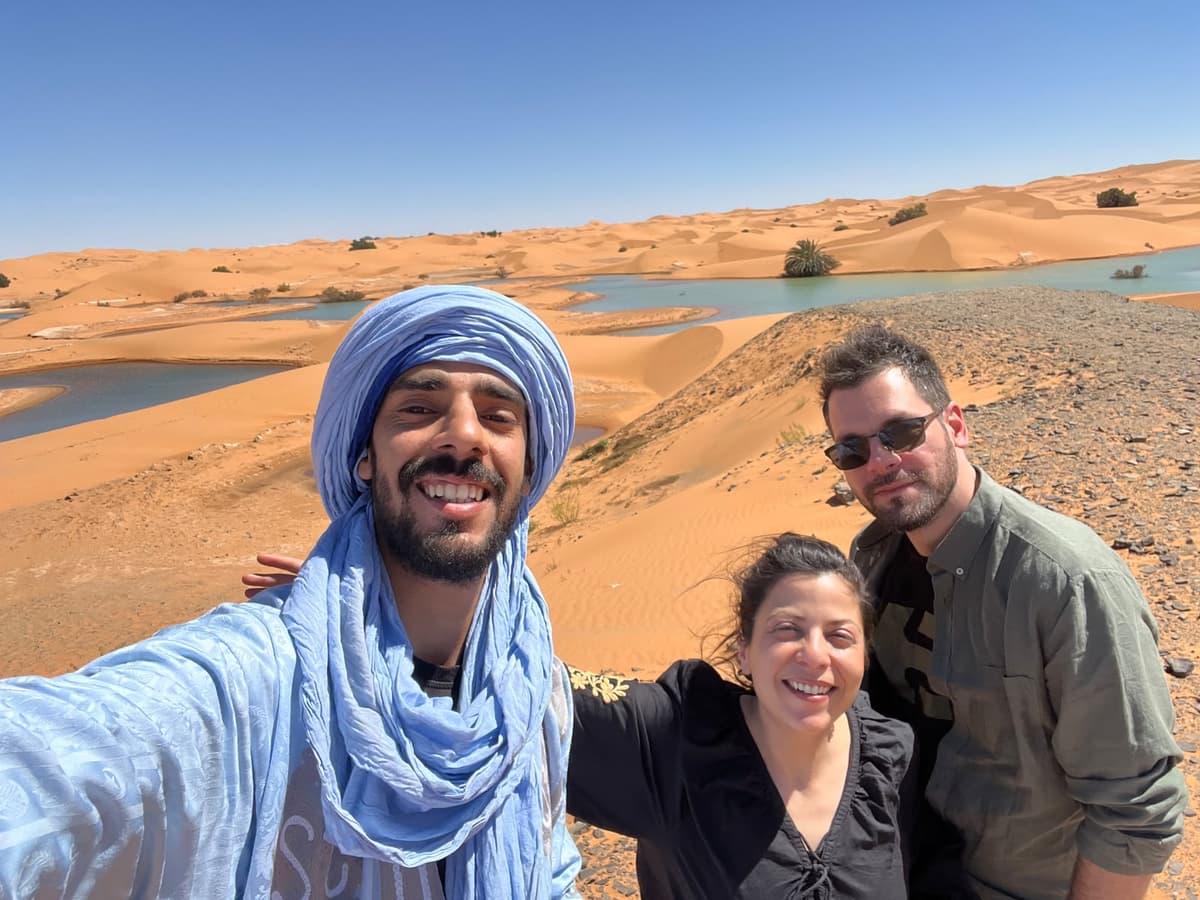 5 days / 4 nights
5 Days Tour from Marrakech to Merzouga
Travel from Marrakech to Merzouga over five days through the High Atlas, Ait Ben Haddou, Draa Valley and Erg Chebbi, with camel ride, luxury desert camp, Merzouga exploration, Todra and Dades.
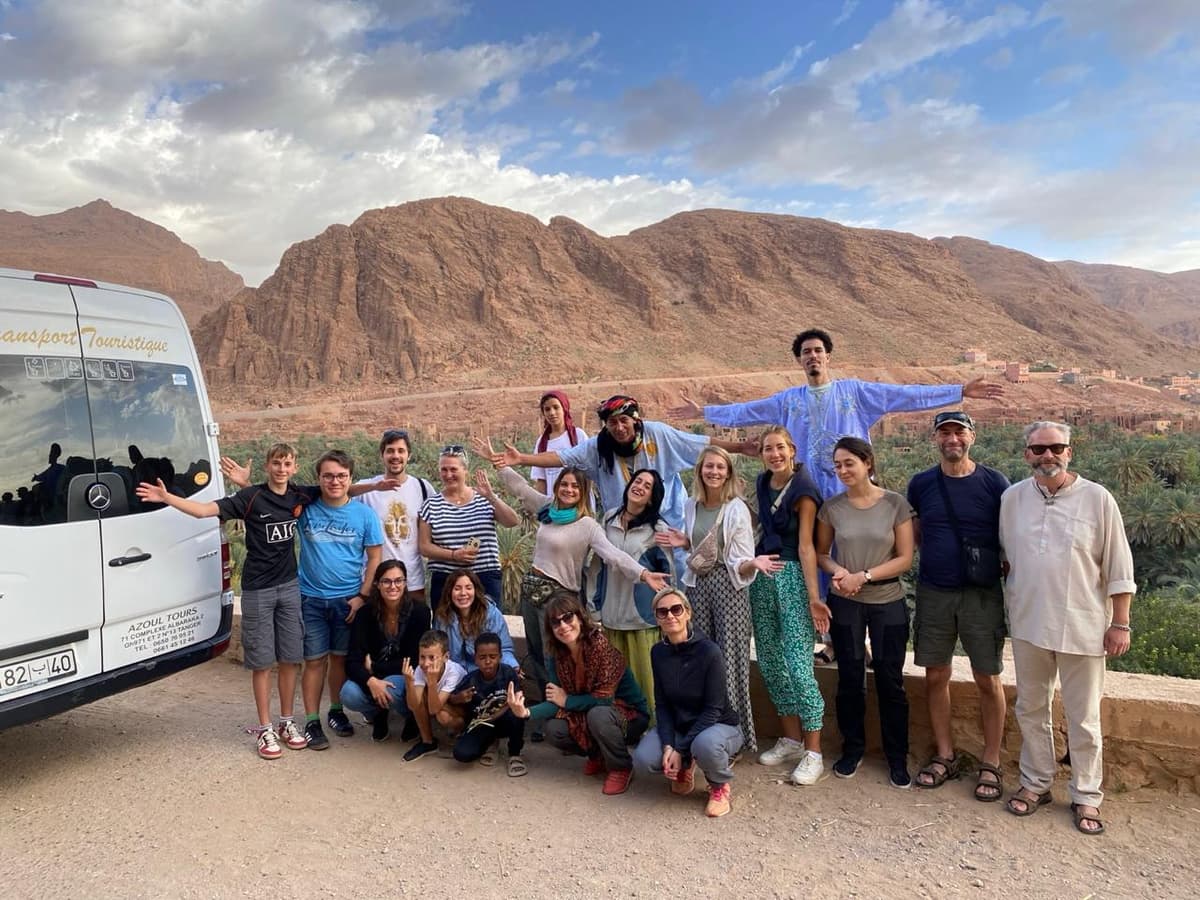 7 days / 6 nights
Morocco 7 Day Itinerary – 7 Days Desert Tour from Marrakech
Spend seven days traveling from Marrakech through the High Atlas, Dades, Todra and Merzouga before exploring remote Sahara villages, the Draa Valley and Ouarzazate.
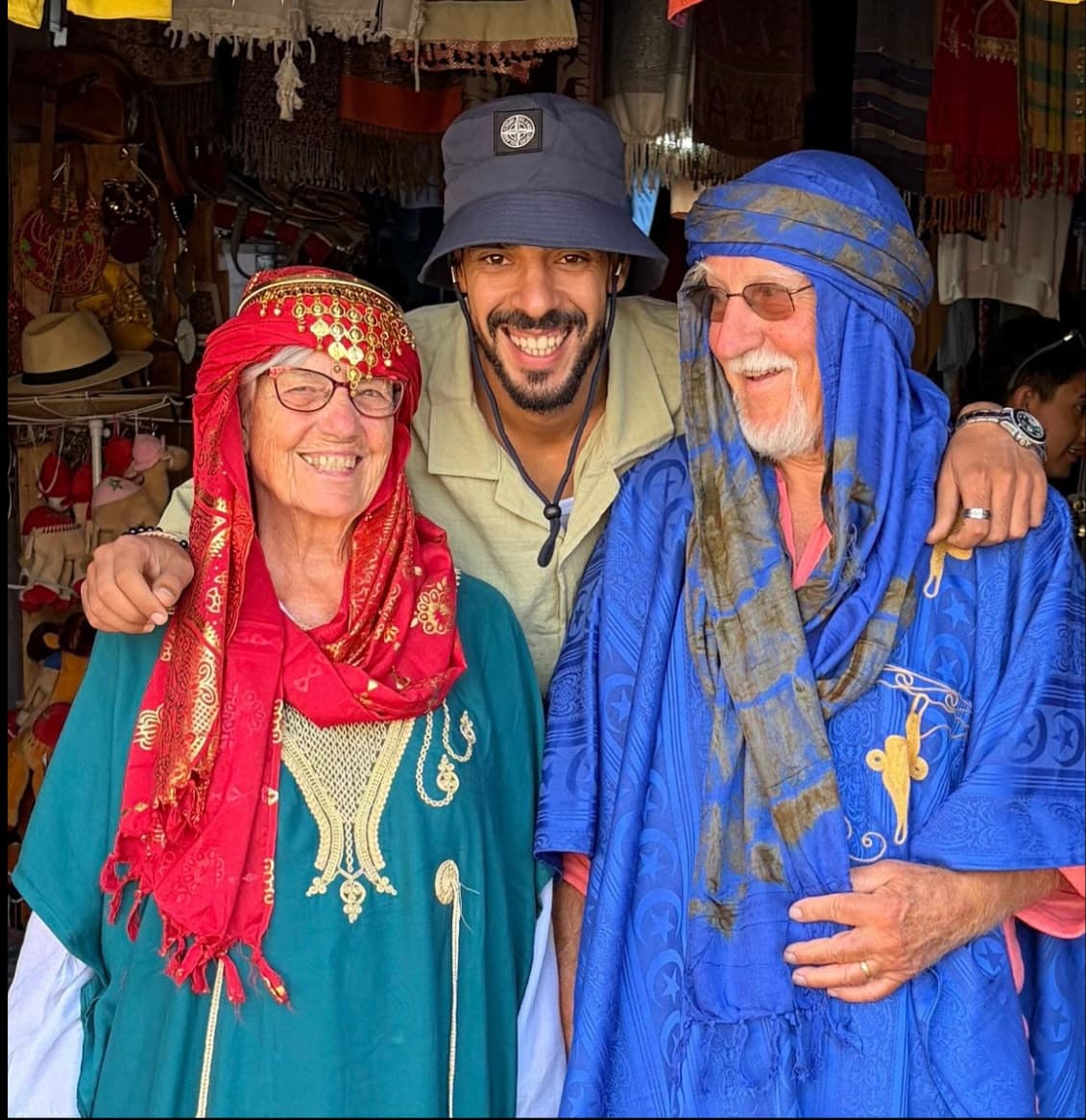 6 days / 5 nights
Morocco Atlas Mountains Desert Merzouga 6 Day Itinerary
Travel from Marrakech through the High Atlas, Ait Ben Haddou, Dades and Merzouga in six days, with camel trek, luxury desert camp, Middle Atlas and a guided Fes Medina visit.
Free travel advice
Have a question about one of our tours?
Ask us about the itinerary, accommodation, transport, desert camps, prices or possible changes. We'll help you understand your options before you book — completely free and with no obligation.