fun facts about morocco
Explore 20 fun facts about Morocco, from geography and culture to Chefchaouen, the Sahara, argan oil, Moroccan gifts and UNESCO heritage.
Did you know Morocco has coastlines on both the Atlantic Ocean and the Mediterranean Sea, the highest mountain in North Africa, centuries-old medinas, and Saharan dune fields that look completely different from its green northern landscapes? Those contrasts are part of what makes fun facts about Morocco genuinely interesting rather than just trivia.
This guide brings together geography, history, language, architecture, traditions, unusual details, famous Moroccan products and practical gift ideas. The focus is on facts that are easy to remember, useful to travelers and supported by reliable sources.
3 Facts About Morocco You Should Know First
- Morocco is in northwestern Africa and has both Atlantic and Mediterranean coastlines.
- Jbel Toubkal rises to 4,167 metres in the High Atlas and is the highest peak in North Africa.
- Moroccan identity is culturally layered, with Arab-Islamic, Amazigh and Saharan-Hassani foundations alongside African, Andalusian, Hebraic and Mediterranean influences.
20 Fun Facts About Morocco That Might Surprise You
Morocco Location Facts: More Than Just the Sahara
1. Morocco sits at the northwestern edge of Africa
Morocco faces Europe across the Strait of Gibraltar and extends south toward Saharan landscapes. This position helps explain long-standing links with Africa, the Mediterranean and Atlantic trade routes. For a deeper geography overview, read Is Morocco in Africa?.
2. It has two very different coastlines
Morocco borders both the Atlantic Ocean and the Mediterranean Sea. Atlantic cities such as Casablanca or Essaouira feel different from Mediterranean-facing areas in the north, and both are different again from Marrakech or Merzouga.
3. The High Atlas contains North Africa's highest summit
Jbel Toubkal reaches 4,167 metres, according to Morocco's national tourism office. The High Atlas also forms a major geographic barrier between different parts of the country. Visit Morocco's geography guide confirms the elevation.
4. Morocco is not “mostly desert”
The country includes Atlantic plains, Rif and Atlas mountains, forests, agricultural regions, historic cities, oases and Saharan zones. Merzouga is famous for the dunes of Erg Chebbi, but those dunes represent only one part of Morocco's geography.
5. One country can feel like several climate zones
Coastal areas are moderated by the ocean, high mountain areas are cooler, Marrakech is inland, and southeastern Morocco becomes much drier. A traveler can need a jacket in the Atlas and strong sun protection later on the same road journey.
Culture and History Facts
6. Morocco has two official languages
Arabic and Amazigh are official languages of the Moroccan state. French is widely used in business, administration and tourism, but it is not an official national language. Learn more in our Morocco language guide.
7. Fes preserves remarkable historic urban heritage
The Medina of Fes was inscribed on the UNESCO World Heritage List in 1981. UNESCO describes an urban fabric preserving madrasas, fondouks, palaces, residences, mosques and fountains developed across centuries. UNESCO's Medina of Fes page gives the official context.
8. Marrakech is nicknamed the Red City
The name reflects the characteristic reddish and ochre tones visible in many walls and buildings. The color has become a major part of Marrakech's visual identity.
9. Ait Ben Haddou is a ksar, not simply one kasbah
Travelers often say “Kasbah Ait Ben Haddou,” but UNESCO defines the site as a ksar: a fortified group of earthen buildings enclosed by defensive walls. Read our Ait Ben Haddou guide for the distinction.
10. Gnawa is a living tradition, not only a music genre
UNESCO inscribed Gnawa on the Representative List of the Intangible Cultural Heritage of Humanity in 2019. It includes music, performance, spiritual practices and social traditions with African, Arab-Muslim and Amazigh influences. UNESCO's Gnawa entry explains it in more detail.
Weird Facts About Morocco That Are Actually True
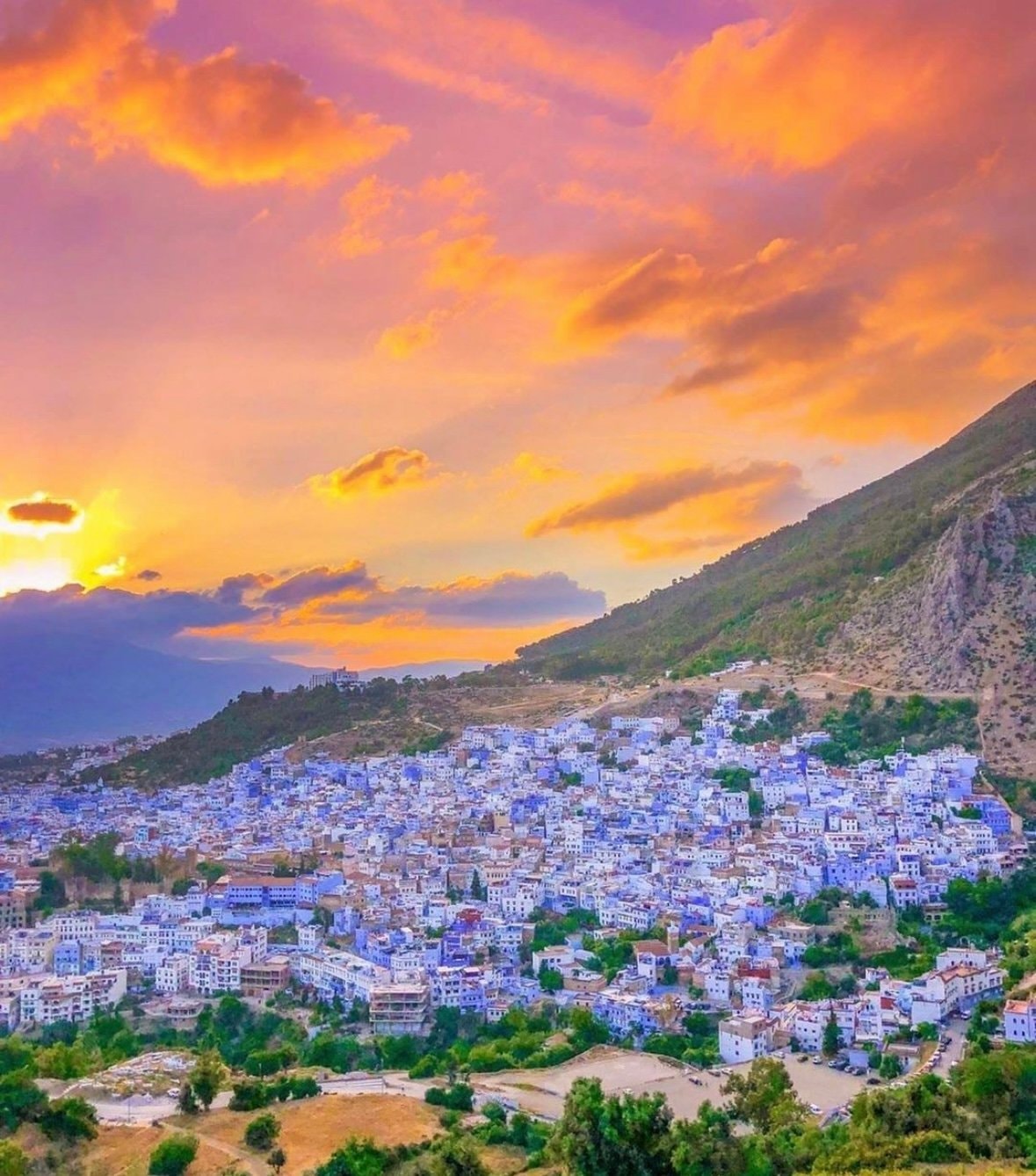
11. Chefchaouen really is famous for blue-painted streets
The city's blue-rinsed houses and narrow lanes are among its most recognizable features. Many explanations for the color circulate online, but no single origin story should be presented as settled fact. Our Chefchaouen guide explores the city in more depth.
12. The argan tree is strongly tied to southwestern Morocco
UNESCO describes the argan tree as endemic to the Arganeraie Biosphere Reserve in southwest Morocco. Traditional argan practices include harvesting, drying, cracking, grinding and preparing oil for culinary and cosmetic uses.
13. Mint tea is a social ritual as much as a drink
Moroccan mint tea is closely associated with hospitality and conversation. Preparation styles vary by household and region, so there is no single “correct” family recipe. Read our Moroccan mint tea guide.
14. Gnawa music uses distinctive instruments
Urban Gnawa groups commonly use a stringed instrument and metal castanets, while drums also appear in rural traditions. The sound is recognizable, but the cultural practice goes far beyond a tourist performance.
15. The Erfoud region is associated with fossils and stone workshops
Southeastern Morocco contains fossil-bearing geological formations, and Erfoud is known for fossil cutting and decorative stone products. Travelers should not assume every fossil item is automatically legal to export; provenance and local rules matter.
Amazing Facts About Moroccan Life
16. A traditional riad turns inward
Instead of emphasizing the street-facing facade, a riad is organized around an interior courtyard or garden. This creates privacy, shade and a calm center within dense historic neighborhoods. See our guide to Moroccan riads.
17. Moroccan food changes from region to region
Tagine and couscous are famous internationally, but recipes, ingredients and serving traditions vary widely. Coastal cooking, mountain dishes, city cuisine and Saharan food traditions are not identical.
18. Traditional crafts are still part of economic life
Zellige tilework, leatherwork, weaving, metalwork, wood carving and pottery remain visible in workshops, markets, homes, hotels and contemporary design. Use our Marrakech souks guide for a deeper look.
19. The Valley of Roses is linked to real agriculture
Around Kelaat M'Gouna and the Dades region, roses are cultivated and processed into rose water and other products. The rose season is not merely a tourism theme; it is connected to local agricultural activity.
20. One road journey can connect mountains, earthen villages, oases and Sahara dunes
Routes from Marrakech can cross the High Atlas, pass Ait Ben Haddou and Dades, then continue toward Erg Chebbi. That geographic progression is one reason Marrakech desert tours appeal to travelers who want contrasting environments in one connected trip.
Quick Quiz: What Is Morocco's Capital?
Marrakech, Casablanca or Rabat? The correct answer is Rabat. Casablanca is the country's largest city by population, while Marrakech is one of its most internationally recognized tourism cities.
What Is Morocco Famous For?
| Famous for | Why it matters | Where travelers encounter it |
|---|---|---|
| Marrakech souks | Crafts, textiles, metalwork and leather | Marrakech Medina |
| Chefchaouen | Blue-painted streets and Rif setting | Northern Morocco |
| Fes Medina | Historic urban heritage and crafts | Fes |
| Sahara landscapes | Dunes, oases and desert environments | Merzouga and southeast |
| Atlas Mountains | High peaks, valleys and Amazigh communities | Central Morocco |
| Riads | Courtyard-centered architecture | Historic medinas |
| Mint tea | Hospitality and social tradition | Across Morocco |
| Tagine and couscous | Regional culinary traditions | Across Morocco |
| Argan oil | Food, cosmetics and cultural heritage | Especially southwest Morocco |
Moroccan Gifts: What Should You Bring Home?
Argan Oil
A thoughtful gift when the origin and intended use are clear. Check the ingredient list, packaging and whether the oil is cosmetic or culinary.
Moroccan Tea Glasses
Decorated tea glasses make practical souvenirs. Check paint quality and protective packaging before flying.
Handmade Pottery
Moroccan ceramics vary by region and workshop. Look for cracks, glaze quality and secure packing.
Babouche Slippers
Traditional slippers are widely sold in medinas. Check stitching, leather quality and sizing rather than choosing only by color.
Scarves and Textiles
Weaving quality, fiber content and origin vary widely. Ask what material you are buying.
Rose Water
Rose water connects naturally to Kelaat M'Gouna and Dades. Check labeling and bottle sealing.
Spices
Spices can be useful gifts, but avoid unidentified mixtures sold with vague claims.
Leather Accessories
Bags, belts and small leather goods are common. Examine stitching, lining, hardware and finish.
Moroccan Oil Gift Sets: What Should You Know Before Buying?
The phrase moroccan oil gift set can mean very different products. Traditional Moroccan argan oil is not automatically the same thing as a branded haircare set using “Moroccan oil” or argan ingredients.
- Traditional argan oil: produced from argan kernels and associated with southwest Morocco.
- Cosmetic argan oil: labeled for external beauty use.
- Culinary argan oil: intended for food and prepared differently.
- Commercial haircare sets: shampoos, conditioners, masks or oils that may include argan-derived ingredients.
- Branded products: commercial haircare items, not automatically traditional handmade Moroccan gifts.
Before buying, check ingredients, origin, intended use, packaging, seller reliability and airline liquid restrictions. UNESCO documents traditional argan knowledge in southwest Morocco and the important role of rural women, but not every argan product comes from a women's cooperative. UNESCO's argan heritage page is a useful reference.
Want to Experience These Morocco Facts in Real Life?
Walking through a medina explains why riads turn inward; crossing the High Atlas reveals Morocco's geographic scale; Ait Ben Haddou shows earthen architecture in context; and Merzouga gives a direct sense of how different the Sahara is from northern Morocco.
If you want to connect some of these places, browse the 3-day Marrakech to Merzouga tour or use Customize Your Tour to discuss a different route.
Final Thoughts: Morocco Is More Than Its Famous Landmarks
The most interesting Morocco facts explain why the country feels so varied: two coastlines, high mountains, old medinas, living crafts, argan heritage, rose-growing valleys and Saharan landscapes. Knowing those connections makes a trip more meaningful than simply collecting famous sights.
FAQ
Morocco is in northwestern Africa with Atlantic and Mediterranean coastlines, Jbel Toubkal is North Africa's highest peak, and Arabic and Amazigh are official languages.
Its geographic variety stands out: mountains, two coastlines, historic medinas, agricultural valleys, oases and Saharan dunes all exist within one country.
Morocco is in northwestern Africa, facing the Atlantic Ocean and Mediterranean Sea and lying across the Strait of Gibraltar from Europe.
Morocco is famous for Marrakech, Fes, Chefchaouen, the Atlas Mountains, Sahara landscapes, riads, souks, mint tea, argan oil and traditional crafts.
Chefchaouen is known for blue-painted streets, argan traditions are strongly tied to southwest Morocco, and Ait Ben Haddou is technically a ksar.
Yes. Morocco is a North African country at the continent's northwestern edge.
Common gifts include argan oil, tea glasses, pottery, babouche slippers, textiles, rose water, spices and leather accessories.
Argan oil is produced for both culinary and cosmetic uses. The products are prepared and labeled differently.
Not necessarily. A commercial haircare set may contain argan-derived ingredients without being pure Moroccan argan oil or a traditional product.
Yes. Multi-day road trips from Marrakech can cross the High Atlas and southern valleys to reach Merzouga and Erg Chebbi.
Tours Marrakech Desert
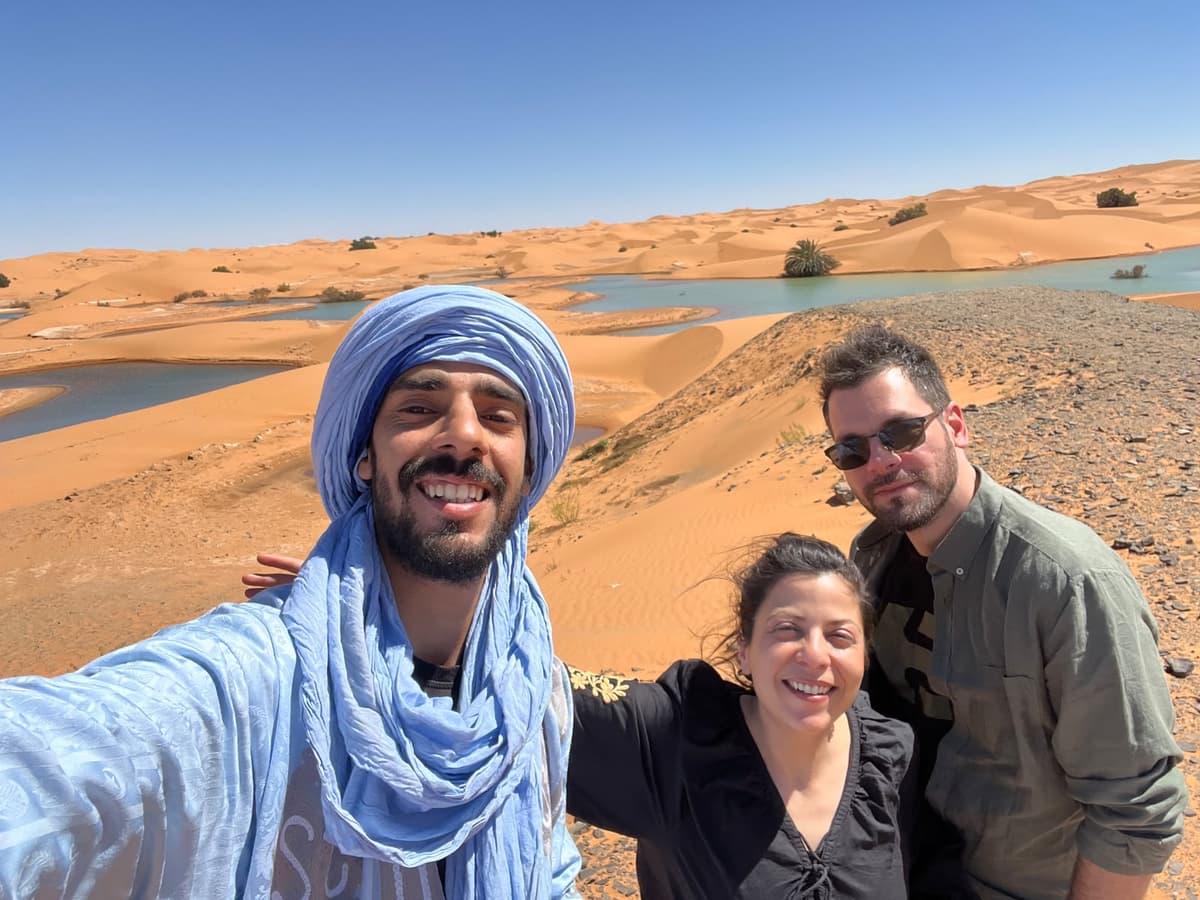 5 days / 4 nights
5 Days Tour from Marrakech to Merzouga
Travel from Marrakech to Merzouga over five days through the High Atlas, Ait Ben Haddou, Draa Valley and Erg Chebbi, with camel ride, luxury desert camp, Merzouga exploration, Todra and Dades.
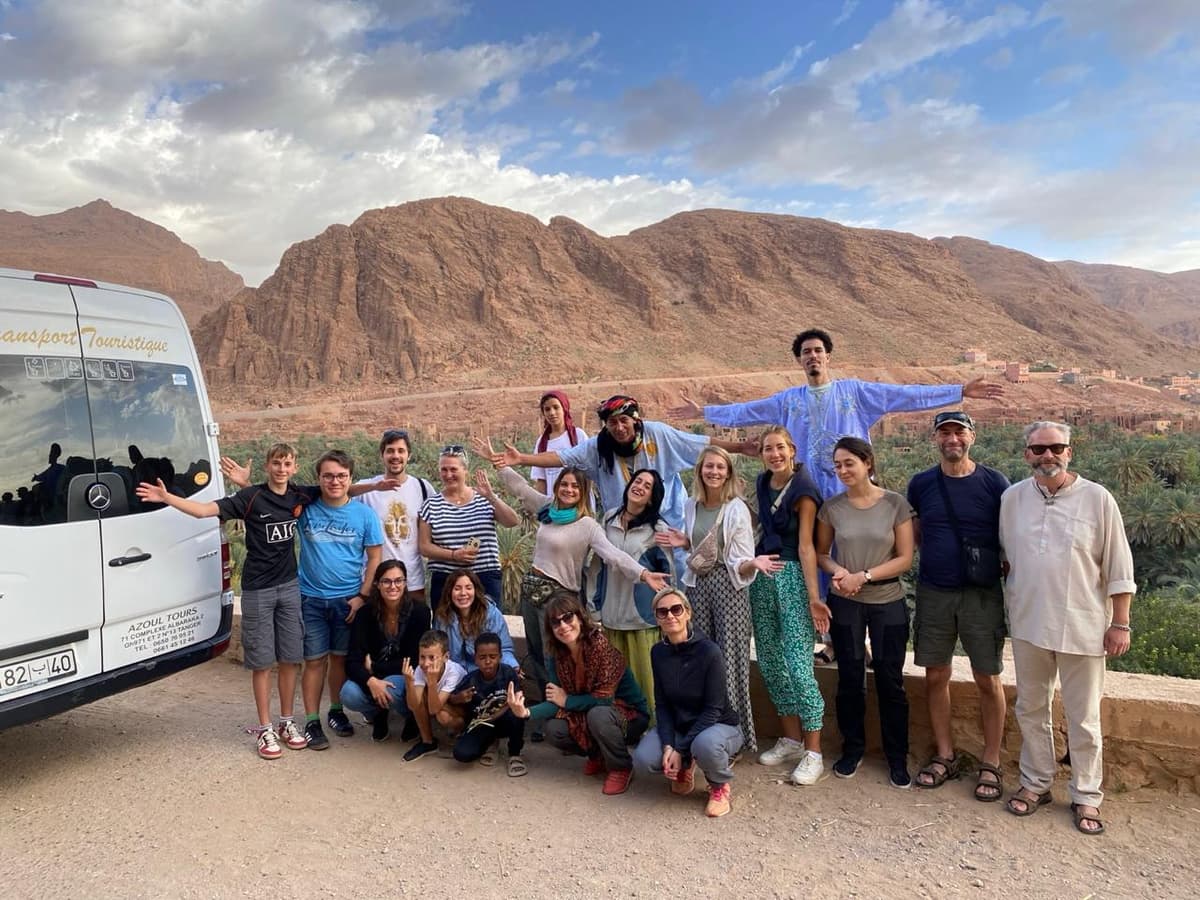 7 days / 6 nights
Morocco 7 Day Itinerary – 7 Days Desert Tour from Marrakech
Spend seven days traveling from Marrakech through the High Atlas, Dades, Todra and Merzouga before exploring remote Sahara villages, the Draa Valley and Ouarzazate.
 6 days / 5 nights
Morocco Atlas Mountains Desert Merzouga 6 Day Itinerary
Travel from Marrakech through the High Atlas, Ait Ben Haddou, Dades and Merzouga in six days, with camel trek, luxury desert camp, Middle Atlas and a guided Fes Medina visit.
Free travel advice
Have a question about one of our tours?
Ask us about the itinerary, accommodation, transport, desert camps, prices or possible changes. We'll help you understand your options before you book — completely free and with no obligation.