Ait Ben Haddou Kasbah: Complete Guide, Movies & Marrakech Trip
Complete Ait Ben Haddou Kasbah guide: what a kasbah and ksar are, movies filmed there, Marrakech to Ait Ben Haddou, UNESCO history, hotels and desert tours.
Ait Ben Haddou Kasbah: Complete Guide to Morocco's Famous Fortified Village
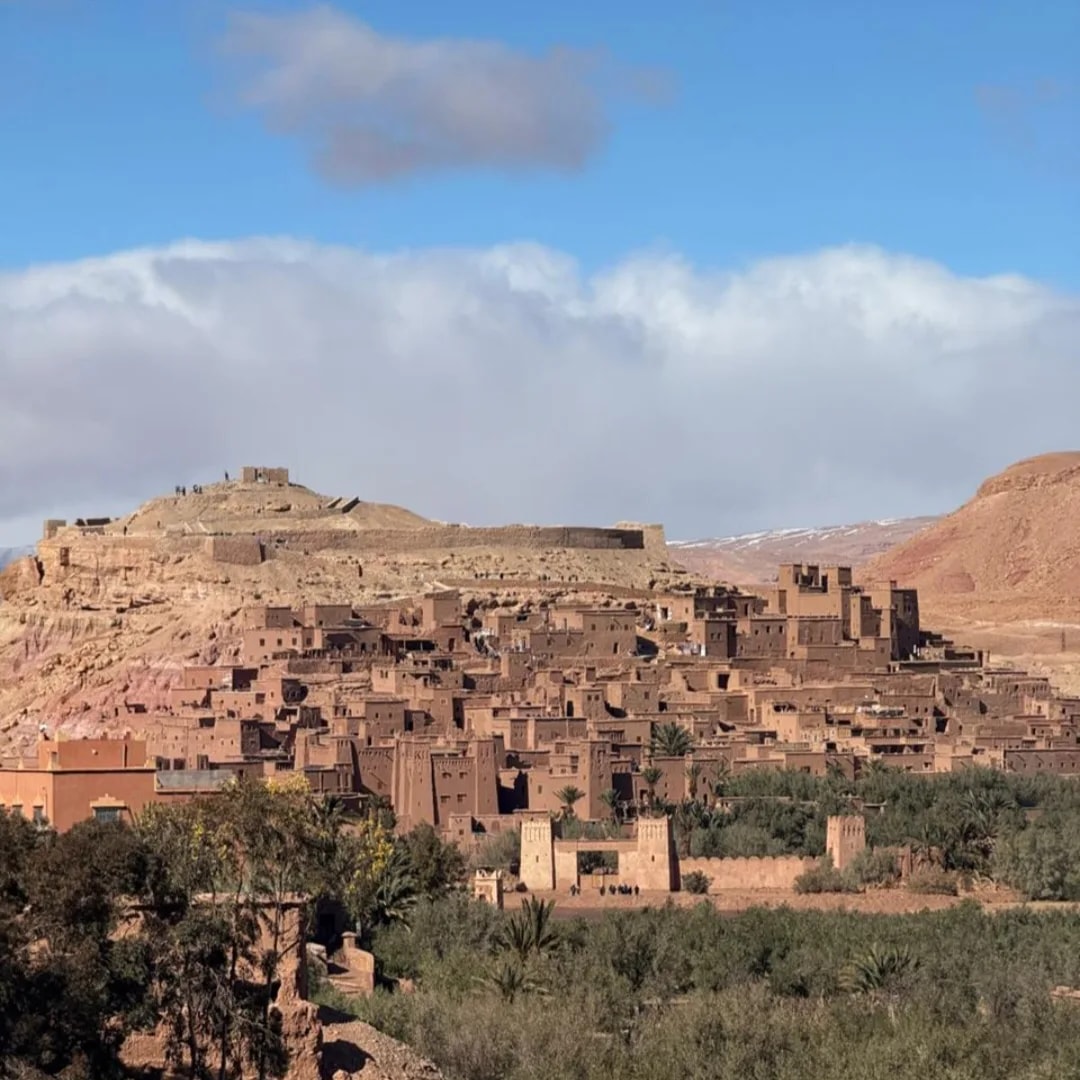
Ait Ben Haddou Kasbah is one of the most recognizable places in Morocco. Rising above the Ounila Valley in the province of Ouarzazate, its clay-colored towers, defensive walls and tightly packed houses have become symbols of southern Moroccan architecture.
Travelers often search for kasbah Ait Ben Haddou Ouarzazate, but there is an important detail to understand: Ait Ben Haddou is technically a ksar, not one single kasbah. UNESCO describes the site as a fortified group of earthen buildings surrounded by defensive walls and reinforced towers. It was inscribed on the World Heritage List in 1987. Read the official description on the UNESCO Ksar of Ait-Ben-Haddou page.
This guide explains what is a kasbah in Morocco, the difference between a kasbah and a ksar, Ait Ben Haddou's history and architecture, famous Ait Ben Haddou films, the route from Marrakech to Ait Ben Haddou, where to stay, and how to include the site in a longer Sahara itinerary.
For a dedicated visit, use our Ait Ben Haddou day trip from Marrakech. Travelers continuing south can instead explore our desert tours from Marrakech.
What Is a Kasbah in Morocco?
The phrases what is kasbah in Morocco and what is a kasbah Morocco appear frequently because the word is used for different fortified places. In a Moroccan context, a kasbah usually refers to a fortified residence, citadel or defensive building. In southern Morocco, many kasbahs were traditionally built with earth, clay, straw and timber, often with tall corner towers decorated with geometric patterns.
A kasbah might protect a powerful family, a local leader, stored goods or a strategic route. Famous Moroccan examples include Kasbah Taourirt in Ouarzazate and the Kasbah of the Udayas in Rabat, although these structures come from very different historical settings.
What Is a Ksar?
A ksar is different. It is generally a fortified village composed of many homes and shared spaces within defensive walls. UNESCO describes Ait Ben Haddou as a mainly collective group of dwellings with houses, community buildings and defensive towers.
That is why the historically precise name is Ksar of Ait-Ben-Haddou. The phrase “Ait Ben Haddou Kasbah” remains useful because it is the wording many travelers use when searching online.
Where Is Ait Ben Haddou?
Ait Ben Haddou lies in Ouarzazate Province on the southern slopes of the High Atlas, overlooking the Ounila Valley. UNESCO calls it the most famous ksar in the valley and a striking example of southern Moroccan architecture.
The Moroccan National Tourist Office places the site around 30 km from Ouarzazate. Its position makes it a natural stop between Marrakech and the valleys and desert regions farther south.
From Marrakech, the journey crosses the High Atlas. The route is scenic, but mountain roads mean that travel time should be considered part of the experience rather than a simple transfer.
A Short History of Ait Ben Haddou
Ait Ben Haddou developed on an important route linking the northern side of the Atlas with pre-Saharan valleys and historical caravan corridors. Its fortified form helped protect residents, supplies and trade in a difficult environment.
UNESCO notes that the oldest visible buildings do not appear to predate the seventeenth century, although the construction techniques and settlement pattern are much older in southern Moroccan valleys.
The complex includes modest dwellings, larger towered houses and communal spaces. Over time, many residents moved to the more accessible modern settlement on the opposite side of the river, while the historic ksar remained a major heritage site.
Why Is Ait Ben Haddou a UNESCO World Heritage Site?
The Ksar of Ait-Ben-Haddou was inscribed on UNESCO's World Heritage List in 1987. Its value comes from preserving an outstanding example of pre-Saharan settlement architecture and traditional earthen construction.
Defensive walls, angle towers, narrow lanes and tightly grouped houses show how communities adapted to climate, security and locally available materials.
What to See Inside Ait Ben Haddou
1. Earthen Houses and Defensive Towers
Architecture is the main attraction. Look at the tall towers, geometric decoration, mud-brick surfaces and the difference between modest homes and larger fortified residences.
2. Narrow Lanes and Shared Spaces
The site functioned as a village rather than one palace. Walking through its lanes makes the distinction between a kasbah and a ksar easy to understand.
3. The Upper Viewpoint
The climb toward the top gives wide views over the Ounila Valley, the modern village and the dry landscapes beyond. Morning and late-afternoon light are especially attractive.
4. Traditional Building Techniques
Notice the exposed earth layers, timber beams and decorated façades. Earthen architecture requires regular maintenance because rain and erosion slowly damage exterior surfaces.
Ait Ben Haddou Films: Why Cinema Loves This Place
The combination of monumental earthen architecture, open landscapes and limited modern visual intrusion has made Ait Ben Haddou and the wider Ouarzazate region major filmmaking locations.
A UNESCO-related heritage document identifies Ait Ben Haddou as a film location associated with Lawrence of Arabia, Jesus of Nazareth, Gladiator and Kingdom of Heaven.
The Moroccan National Tourist Office also highlights Ait Ben Haddou in connection with Lawrence of Arabia, Babel and Indiana Jones.
Movies Filmed at Ait Ben Haddou
- Lawrence of Arabia — one of the classic productions associated with the site.
- Jesus of Nazareth — used the historic architecture and surrounding scenery.
- Gladiator — strongly associated with Moroccan locations in the Ouarzazate/Ait Ben Haddou region.
- Kingdom of Heaven — another major production linked to southern Morocco.
- Babel — listed by Morocco's tourism office among productions connected to Ait Ben Haddou.
- Indiana Jones — also associated with the site in official Ouarzazate tourism material.
When researching movies filmed at Ait Ben Haddou, remember that the historic ksar is part of a wider filmmaking region. Ouarzazate contains studios, purpose-built sets and many additional filming locations.
Was Game of Thrones Filmed Here?
Southern Morocco's kasbah landscapes are strongly associated with Game of Thrones. Morocco's tourism office confirms that kasbahs and desert landscapes were used to recreate parts of the fictional world of Westeros.
However, the wider Ouarzazate region includes multiple locations and studios, so it is better not to attribute every recognizable television scene specifically to the historic ksar.
Ait Ben Haddou and Ouarzazate: What Is the Difference?
Ait Ben Haddou is the historic fortified settlement. Ouarzazate is a modern regional city known for Kasbah Taourirt, film studios, hotels, restaurants and transport services.
Film fans should consider visiting both: Ait Ben Haddou for UNESCO heritage and traditional architecture, and Ouarzazate for studios, cinema history and additional kasbahs.
Marrakech to Ait Ben Haddou: Can You Visit in One Day?
Yes. A Marrakech to Ait Ben Haddou day trip is possible and popular, but it is a long day because the route crosses the High Atlas. An early departure gives you more time inside the ksar.
For a trip focused on the site itself, choose our Ait Ben Haddou day trip from Marrakech.
If you have several days, it is usually more efficient to combine Ait Ben Haddou with Ouarzazate, Dades and Merzouga instead of returning immediately to Marrakech.
Ait Ben Haddou on a Marrakech Desert Tour
Ait Ben Haddou fits naturally into a Sahara itinerary. It provides an important cultural stop after the High Atlas and before the valleys and increasingly arid landscapes farther east.
Our 2 Days Marrakech to Merzouga Desert Tour suits travelers with limited time. The 3 Day Desert Tour from Marrakech to Merzouga offers a more balanced pace.
If your final destination is Fes, choose the 3 Day Tour from Marrakech to Fes via Merzouga instead of returning to Marrakech.
For private hotels, stops and camp preferences, use Customize Your Morocco Tour.
Best Time to Visit Ait Ben Haddou
Spring and autumn generally offer the most comfortable temperatures. Summer midday heat can make the climb tiring, while winter mornings and evenings may be cold.
Photographers often prefer early morning or late afternoon, when the low light adds stronger texture to the ochre walls.
How Long Do You Need?
Allow roughly two to three hours for a relaxed visit, including the crossing from the modern village, the lanes, the climb to the upper area and photographs.
Architecture and cinema enthusiasts may want longer, especially if they plan to eat nearby or explore the Ounila Valley.
Hotel Ait Ben Haddou: Where to Stay
Travelers searching for hotel Ait Ben Haddou can choose between several types of accommodation:
- Modern village opposite the ksar: best for easy walking access and early/late views.
- Ounila Valley guesthouses: good for a quieter rural atmosphere.
- Ouarzazate: better for a wider choice of hotels, restaurants, fuel, transport and film attractions.
Read recent reviews for parking, heating or air conditioning, road access and whether the property genuinely has a view of the ksar.
Where to Eat Near Ait Ben Haddou
The modern village has restaurants and guesthouses serving tagine, couscous, salads, grilled dishes and mint tea. A terrace facing the ksar can turn lunch into part of the sightseeing experience.
Practical Tips for Visiting
- Wear comfortable shoes: the paths are uneven and dusty.
- Start early: especially in summer or when traveling from Marrakech.
- Carry water: shade is limited in some areas.
- Respect private homes: the ksar is heritage, not simply an abandoned movie set.
- Ask before photographing people.
- Walk to the higher viewpoints: do not stop only in the lower lanes.
- Check mountain weather and road conditions.
Is Ait Ben Haddou Worth Visiting?
Yes. Ait Ben Haddou combines UNESCO heritage, southern Moroccan architecture, caravan-route history, cinema and High Atlas landscapes in one destination.
Its real value goes beyond film tourism. The ksar shows how communities used earth, timber, defensive walls and compact planning to adapt to a pre-Saharan environment.
For a dedicated day, book our Marrakech to Ait Ben Haddou excursion. For a longer route, explore tours from Marrakech or build a private Morocco itinerary.
FAQ
In Morocco, a kasbah is generally a fortified residence, citadel or defensive building. A ksar is different: it is a fortified village made up of several homes and communal spaces. Ait Ben Haddou is often called a kasbah in tourism, but UNESCO officially classifies it as the Ksar of Ait-Ben-Haddou.
Technically, Ait Ben Haddou is a ksar, meaning a fortified settlement containing many dwellings and shared spaces. 'Ait Ben Haddou Kasbah' is a common tourism phrase, but 'Ksar of Ait-Ben-Haddou' is more historically precise.
Ait Ben Haddou is associated with productions including Lawrence of Arabia, Jesus of Nazareth, Gladiator, Kingdom of Heaven and Babel. The wider Ouarzazate region has hosted many other major international films and series.
Yes. A Marrakech to Ait Ben Haddou day trip is possible, but it is a long day because the route crosses the High Atlas. An early departure is recommended.
Yes. It is one of Morocco's most important examples of pre-Saharan earthen architecture, a UNESCO World Heritage Site and one of the country's best-known film locations.
You can stay in the modern village opposite the ksar, in guesthouses in the Ounila Valley, or in Ouarzazate for a wider choice of hotels, restaurants and cinema-related attractions.
Tours Marrakech Desert
 5 days / 4 nights
5 Days Tour from Marrakech to Merzouga
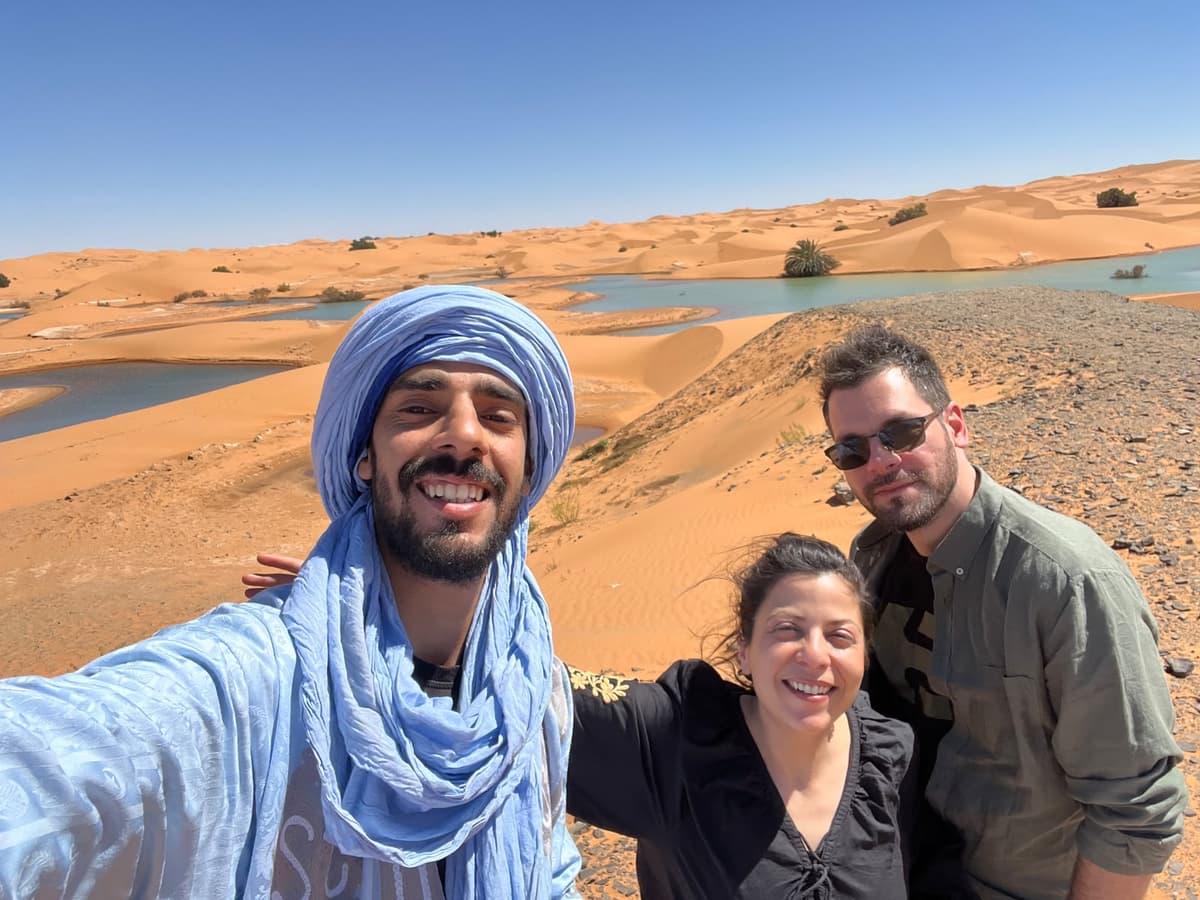
Travel from Marrakech to Merzouga over five days through the High Atlas, Ait Ben Haddou, Draa Valley and Erg Chebbi, with camel ride, luxury desert camp, Merzouga exploration, Todra and Dades.
 7 days / 6 nights
Morocco 7 Day Itinerary – 7 Days Desert Tour from Marrakech
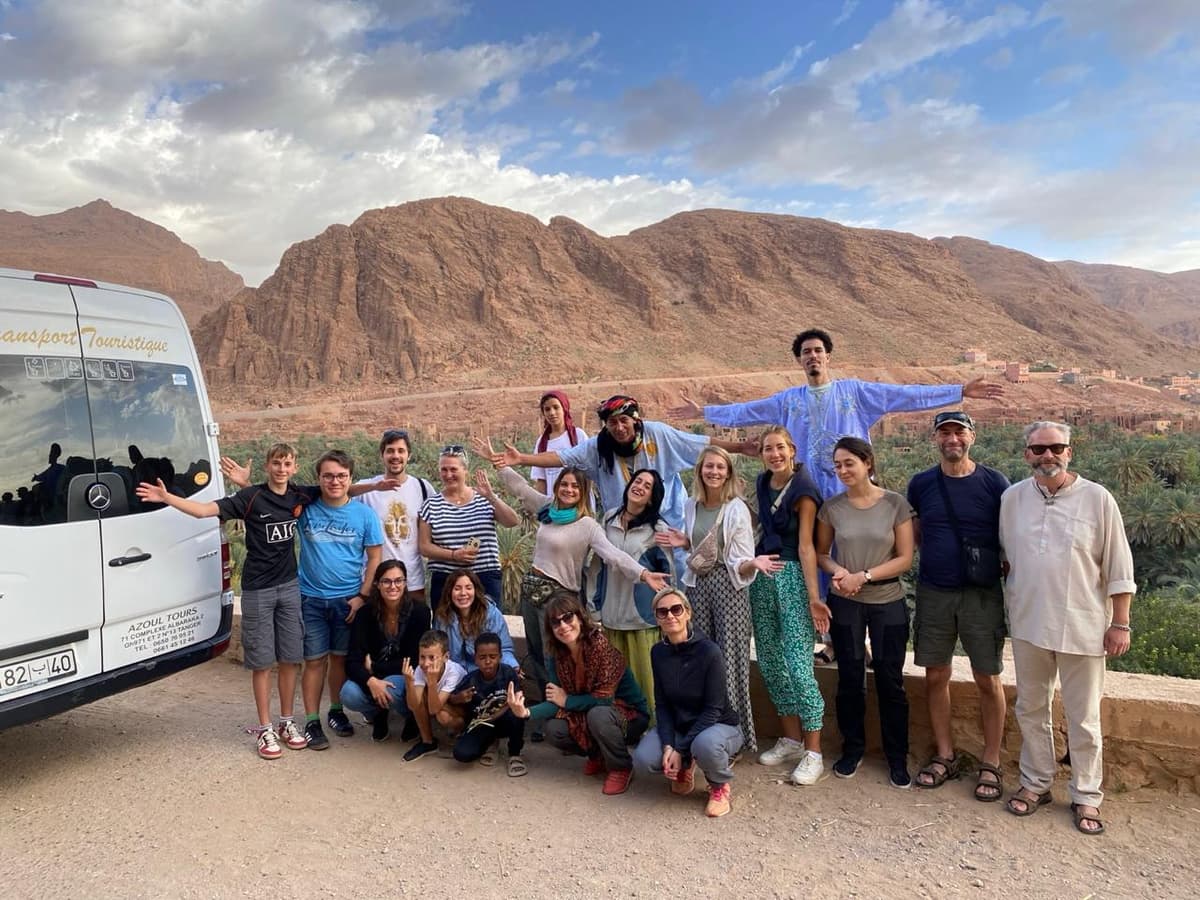
Spend seven days traveling from Marrakech through the High Atlas, Dades, Todra and Merzouga before exploring remote Sahara villages, the Draa Valley and Ouarzazate.
 6 days / 5 nights
Morocco Atlas Mountains Desert Merzouga 6 Day Itinerary
Travel from Marrakech through the High Atlas, Ait Ben Haddou, Dades and Merzouga in six days, with camel trek, luxury desert camp, Middle Atlas and a guided Fes Medina visit.
Free travel advice
Have a question about one of our tours?
Ask us about the itinerary, accommodation, transport, desert camps, prices or possible changes. We'll help you understand your options before you book — completely free and with no obligation.