Blue Town Morocco: Why Is Chefchaouen Blue and Things to Do in Chefchaouen Morocco
Explore Morocco's blue city: why Chefchaouen is blue, top things to do, Medina, food, souk, hotels, Akchour and how to travel from Fes to Chefchaouen.
Blue Town Morocco: Why Is Chefchaouen Blue and What Should You Do There?
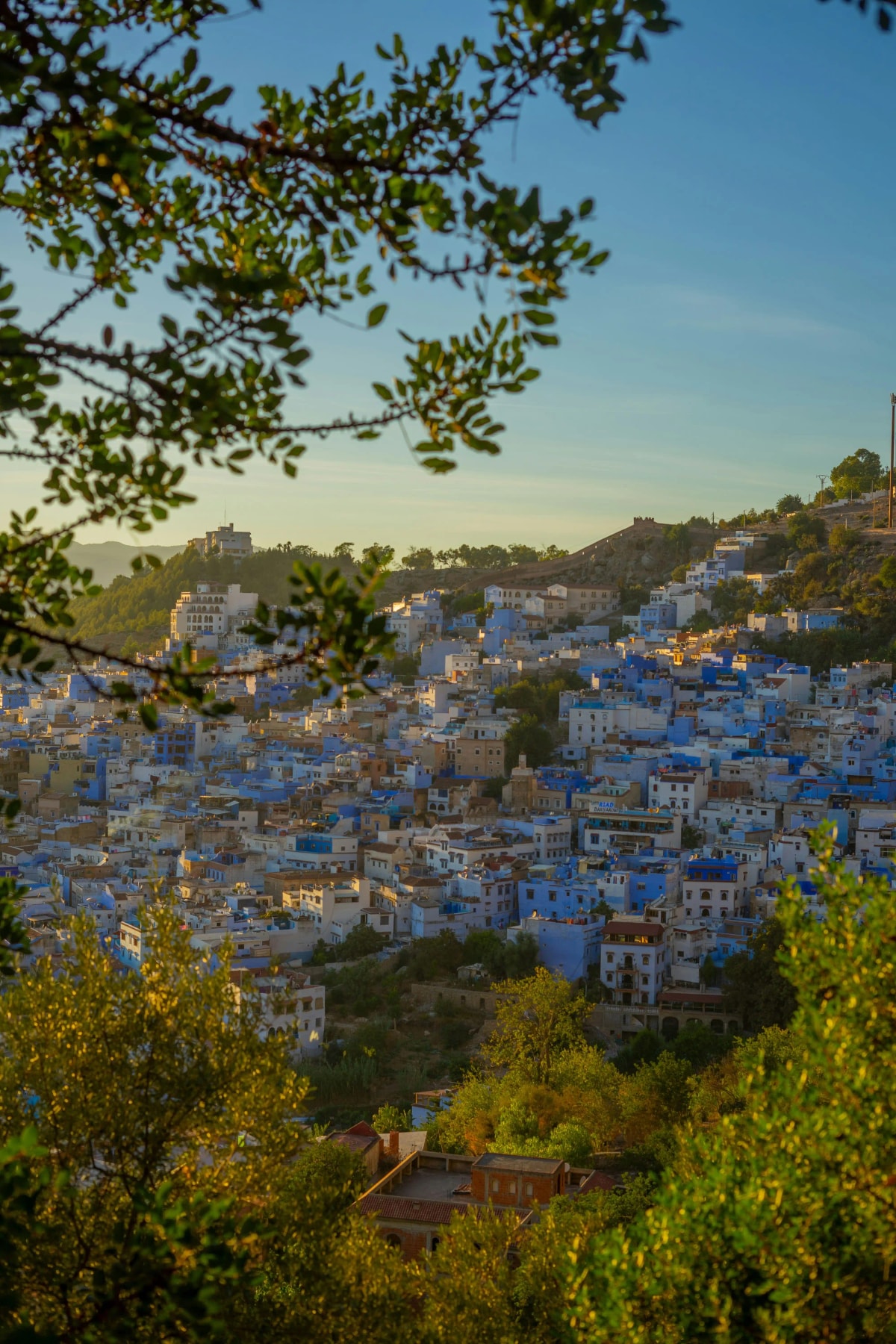
Chefchaouen is one of the most recognizable destinations in northern Morocco. Travelers searching for the Morocco blue city, blue village Morocco or even the common misspelling morroco blue are usually looking for the same place: Chefchaouen, a mountain town in the Rif known for its blue-painted lanes, whitewashed houses, relaxed Medina and dramatic setting beneath rugged peaks.
But Chefchaouen is much more than a place for photographs. Its compact old town contains traditional craft workshops, small restaurants, local markets, a historic Kasbah, mountain viewpoints and easy access to nature. The Moroccan National Tourist Office describes it as a blue mountain city with a rich Medina, Kasbah, traditional crafts and nearby hiking opportunities in the Rif. You can read the official destination overview on Visit Morocco's Chefchaouen page.
If you are staying in Fes and want to see the city without changing hotels, our Fes to Chefchaouen day trip is the most direct option. Travelers planning a longer route through northern Morocco can also browse our tours starting from Fes.
Why Is Chefchaouen Blue?
The question why is Chefchaouen blue has no single proven answer. Chefchaouen was founded in 1471, but the blue tones that define the city today appeared later. Lonely Planet notes that Muslim and Jewish refugees from Spain settled in the town after its foundation, while the exact moment and reason the blue tradition began remain uncertain.
One of the most repeated explanations is that Jewish residents introduced blue-painted walls because blue has spiritual associations with the sky and the divine. Smithsonian also notes this theory, while emphasizing that the origin of the city's blue architecture has never been officially confirmed.
Other popular explanations suggest that blue helped keep houses cool, discouraged mosquitoes, represented water, or simply developed into a local aesthetic tradition that residents continued because it gave the city a unique identity. These explanations are widely repeated, but they should be treated as theories rather than established historical fact.
What is certain is that the blue became part of Chefchaouen's modern identity. Today the city is marketed by Morocco's official tourism office as a “blue diamond,” and the painted lanes are central to its international image.
A Short History of the Morocco Blue City
Chefchaouen sits in the Rif Mountains of northwestern Morocco. The town was founded in the late fifteenth century, in a period marked by regional conflict and migration from the Iberian Peninsula. Over time, Andalusian, Amazigh, Arab and Jewish influences shaped its architecture and urban culture.
Lonely Planet describes Chefchaouen as founded in 1471 and later populated by Muslim and Jewish refugees from Spain. Its old town developed with whitewashed houses, tiled roofs, enclosed streets and courtyards that still give the Medina a distinct Andalusian character.
The combination of mountain geography and layered cultural history is one reason Chefchaouen feels different from imperial cities such as Fes or Marrakech. It is smaller, quieter and more intimate, making it particularly attractive to travelers who want a slower stop between larger destinations.
1. Walk Through Chefchaouen Medina
The Chefchaouen Medina is the main attraction. Unlike the much larger medinas of Fes and Marrakech, Chefchaouen's old town is compact enough to explore slowly without turning the day into a race between monuments.
The Moroccan National Tourist Office highlights its narrow, winding streets, blue-painted buildings, Kasbah and traditional craft workshops. Woodwork, wool, weaving and tanning remain important local crafts. Read more on the official Chefchaouen Medina page.
Do not follow only the most photographed staircases. Some of the best corners are found by walking away from the busiest lanes, especially in the early morning when delivery activity and local life are more visible.
2. Visit Plaza Uta el-Hammam and the Kasbah
Plaza Uta el-Hammam is the social center of the old city. Cafés and restaurants surround the square, making it an easy place to stop between walks through the Medina.
The Kasbah stands beside the square and adds a different color to the blue-and-white streets with its warm stone walls and gardens. Morocco's tourism office notes that the Kasbah functions as a museum with old weapons, historical photographs and textiles.
Even if you only have a day in Chefchaouen, this area deserves time because it connects the city's daily rhythm with its historical character.
3. Photograph the Famous Blue Streets
Photography is one of the reasons the Morocco blue city became internationally famous. Walls range from pale powder blue to deep indigo, often paired with white trim, painted doors, tiled steps, plants and woven goods.
The best photographs are not always at the most famous Instagram corners. Early morning usually offers softer light and fewer visitors, while late afternoon creates stronger shadows and richer color contrasts.
Remember that the Medina is a residential area, not an outdoor studio. Avoid blocking doorways, ask permission before photographing people and respect signs asking visitors not to enter private stairs or courtyards.
4. Walk to Ras El Ma
Ras El Ma sits just outside the Medina and is one of Chefchaouen's best-known local gathering areas. Fresh water flowing from the mountain has historically been important to the town, and the area provides a pleasant transition between the urban lanes and surrounding hills.
The official Moroccan tourism site lists Ras El Ma among Chefchaouen's essential attractions. It is easy to combine with a Medina walk and a climb toward viewpoints above the city.
5. Climb Toward the Spanish Mosque Viewpoint
For one of the best views over the blue village Morocco, walk uphill from Ras El Ma toward the Spanish Mosque. The route is especially popular before sunset, when the blue Medina sits below the green and rocky Rif landscape.
The viewpoint is more important than the building itself for many visitors. Allow enough time to walk down before full darkness, especially if you are unfamiliar with the route.
6. Explore Chefchaouen Souk and Local Crafts
The Chefchaouen souk is less overwhelming than the markets of Marrakech and Fes, but it is still a good place to look for regional crafts. Shops sell woven blankets, wool products, leather items, ceramics, baskets, clothing, spices and small decorative objects.
Chefchaouen is especially known for textile and wool work. Morocco's official tourism office also highlights weaving, carpentry and tanning as important local crafts.
Take time to compare quality rather than buying the first product you see. Bargaining exists, but the atmosphere is usually more relaxed than in larger tourist markets.
7. Try Chefchaouen Food
Chefchaouen food reflects northern Moroccan cuisine as well as the town's mountain setting. Expect classic Moroccan dishes such as tagine, couscous, grilled meats, salads, soups, fresh bread and mint tea, but also regional ingredients and local dairy products.
Goat cheese is strongly associated with northern Morocco and is worth trying when available. For breakfast or a snack, look for msemen or meloui served with honey, cheese or tea. An official Moroccan tourism article about Chefchaouen even highlights freshly prepared meloui with local honey as part of the town's everyday food experience.
Restaurants around Plaza Uta el-Hammam are convenient, but terrace restaurants higher in the Medina can offer better views. Compare menus and recent reviews rather than choosing only by location.
8. Visit Akchour Waterfalls
If you stay overnight, Akchour is one of the best additions to a Chefchaouen itinerary. The Moroccan National Tourist Office lists Akchour Waterfalls among the top attractions in and around the city.
The area is known for river scenery, mountain paths and waterfalls. Conditions can change depending on weather and season, so wear proper walking shoes, carry water and check local conditions before setting out.
Akchour turns Chefchaouen from a simple photography stop into a stronger nature destination.
9. Discover Talassemtane National Park and the Rif Mountains
Chefchaouen is surrounded by some of northern Morocco's most attractive mountain landscapes. Talassemtane National Park is also highlighted by Morocco's tourism office as one of the main attractions near the city.
The Rif setting gives travelers opportunities for walking, longer hikes and scenic drives. If hiking is a major reason for your visit, staying two or three nights makes far more sense than trying to fit everything into a same-day trip from Fes.
10. Slow Down and Experience Chefchaouen After the Day-Trippers Leave
One of the best things to do in Chefchaouen Morocco is surprisingly simple: stay long enough to stop rushing. Day-trippers arrive in large numbers around midday, but early mornings and evenings feel different.
Spend an evening on a terrace, walk through the quieter lanes after shops begin closing and watch the light change across the Rif Mountains. This slower rhythm is one reason many travelers prefer Chefchaouen as an overnight stop rather than only a photo stop.
Fes to Chefchaouen: How Far Is It?
The route Fes to Chefchaouen is one of the most popular excursions in northern Morocco. The Moroccan National Tourist Office lists Chefchaouen at approximately 194 km from Fes with a travel time of about 3 hours 24 minutes. Actual journey time can vary with traffic, road conditions and stops.
If you only have one free day, our Chefchaouen day trip from Fes allows you to visit the Medina, main square and blue streets without arranging transport yourself.
Before leaving Fes, you can also explore its UNESCO-listed old city with our guided tour of Fes Medina. For a longer Morocco itinerary beginning in the city, see our tours from Fes.
Chefchaouen Hotels: Medina or Outside the Old Town?
When comparing Chefchaouen hotels, location matters more than luxury level for many travelers. Staying inside or immediately beside the Medina gives you easy access to the blue streets early in the morning and after sunset.
- Inside the Medina: best for atmosphere, photography and walking access.
- Near a Medina gate: useful if you have luggage or want easier vehicle access.
- Higher hillside properties: often chosen for panoramic views.
- Modern hotels outside the old town: practical for parking and larger rooms.
Read recent reviews carefully because steep stairs are common in Chefchaouen and not every riad is convenient for travelers with mobility limitations or heavy luggage.
How Many Days Do You Need in Chefchaouen?
One day: enough for the Medina, Kasbah, Uta el-Hammam, Ras El Ma and main blue streets.
Two days: better for relaxed photography, food, sunsets and a slower Medina experience.
Three days: ideal if you also want Akchour, Talassemtane or more extensive Rif hiking.
If your Morocco route is tight, a day trip works well. If photography, hiking or a relaxed mountain atmosphere are priorities, staying overnight is worth it.
Best Time to Visit Chefchaouen
Spring and autumn are often the easiest seasons for combining Medina walks with outdoor activities because temperatures are generally comfortable. Winter can be cool and wet in the Rif, while summer days can be warm but the mountain setting is often more comfortable than Morocco's hotter inland regions.
Weather changes quickly in mountain areas, so check the forecast if you plan to hike to Akchour or explore Talassemtane.
Practical Tips for Visiting Chefchaouen
- Wear comfortable shoes: the Medina is steep and many lanes have uneven stone steps.
- Start early: mornings are best for quieter blue streets.
- Respect residents: many famous blue doorways belong to private homes.
- Carry some cash: small shops and cafés may be easier to pay in dirhams.
- Do not rush: Chefchaouen is better when explored slowly.
- Check hiking conditions: weather affects Akchour and mountain routes.
- Use established transport: especially if returning to Fes the same evening.
Is Chefchaouen Worth Visiting?
Yes. Chefchaouen deserves its reputation as the Morocco blue city, but its value goes beyond blue walls. The Medina, Kasbah, food, souk, mountain scenery and relaxed pace make it one of northern Morocco's most distinctive stops.
The best approach is to avoid treating the city only as a photo backdrop. Walk slowly, visit local craft areas, try regional food and give the Rif landscape some of your time.
If you are based in Fes, start with our Fes to Chefchaouen excursion. It is one of the easiest ways to experience the blue village Morocco without reorganizing your full itinerary.
FAQ
There is no single proven explanation. The blue color appeared after the town's foundation, and several theories exist. One widely repeated explanation links the blue tradition to Jewish communities who settled in Chefchaouen, while other explanations connect it with cooling, insects, the sky or water. The exact origin remains debated.
The best things to do include exploring the blue Medina, visiting Plaza Uta el-Hammam and the Kasbah, walking to Ras El Ma, hiking toward the Spanish Mosque viewpoint, shopping for local crafts, trying northern Moroccan food and taking an excursion to Akchour or Talassemtane National Park.
Yes. Chefchaouen can be visited as a long day trip from Fes. The Moroccan National Tourist Office lists Fes at roughly 194 km from Chefchaouen and gives a driving time of around 3 hours 24 minutes, so an early departure is recommended.
Yes. Chefchaouen Medina is smaller and generally calmer than the medinas of Marrakech or Fes. Its steep, narrow lanes can still be confusing, but walking is part of the experience and the main square provides an easy reference point.
Try tagine, fresh bread, local goat cheese when available, Moroccan salads, grilled dishes, mint tea and regional breakfast foods such as msemen or meloui. Terrace restaurants around the Medina are popular for both food and views.
A day trip works if your schedule is limited, but staying one or two nights gives you quieter early mornings and evenings, more time for photography, and the possibility of adding Akchour or Rif Mountain walks.
Tours Marrakech Desert
 5 days / 4 nights
5 Days Tour from Marrakech to Merzouga
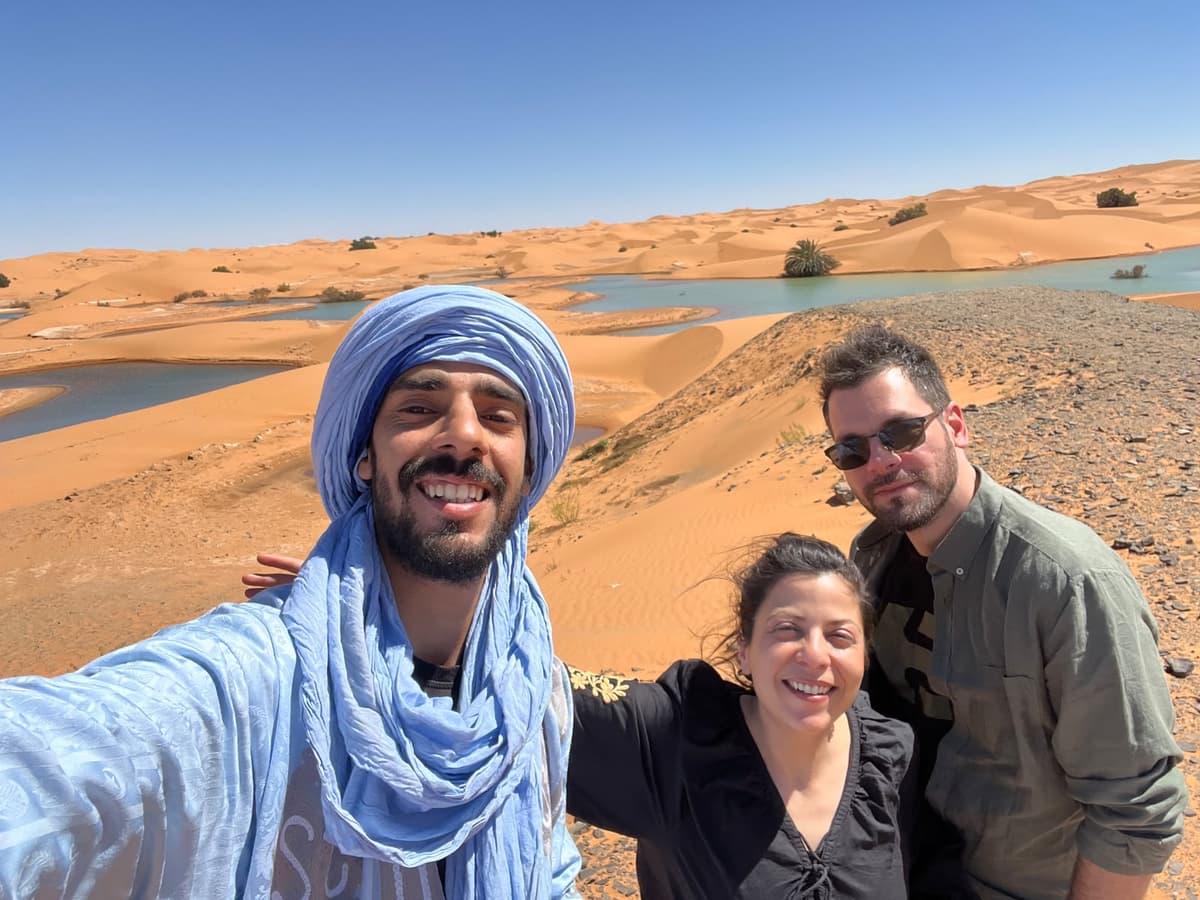
Travel from Marrakech to Merzouga over five days through the High Atlas, Ait Ben Haddou, Draa Valley and Erg Chebbi, with camel ride, luxury desert camp, Merzouga exploration, Todra and Dades.
 7 days / 6 nights
Morocco 7 Day Itinerary – 7 Days Desert Tour from Marrakech
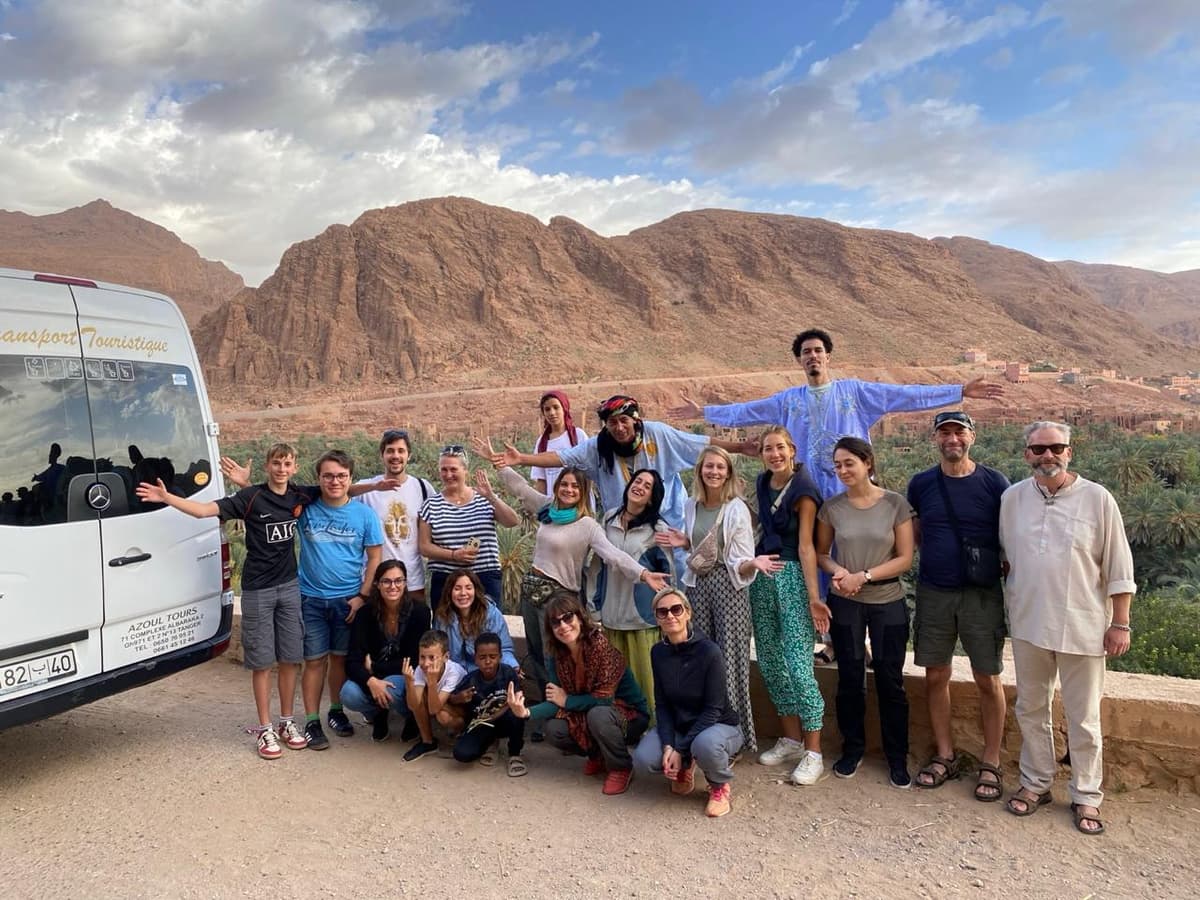
Spend seven days traveling from Marrakech through the High Atlas, Dades, Todra and Merzouga before exploring remote Sahara villages, the Draa Valley and Ouarzazate.
 6 days / 5 nights
Morocco Atlas Mountains Desert Merzouga 6 Day Itinerary
Travel from Marrakech through the High Atlas, Ait Ben Haddou, Dades and Merzouga in six days, with camel trek, luxury desert camp, Middle Atlas and a guided Fes Medina visit.
Free travel advice
Have a question about one of our tours?
Ask us about the itinerary, accommodation, transport, desert camps, prices or possible changes. We'll help you understand your options before you book — completely free and with no obligation.