Moroccan Mint Tea: The Symbol of Moroccan Art of Living
Discover Moroccan mint tea: how to make it, traditional recipe, caffeine, benefits, green tea base and its role in Moroccan hospitality and art of living.
Travel Insights by Tours Marrakech Desert
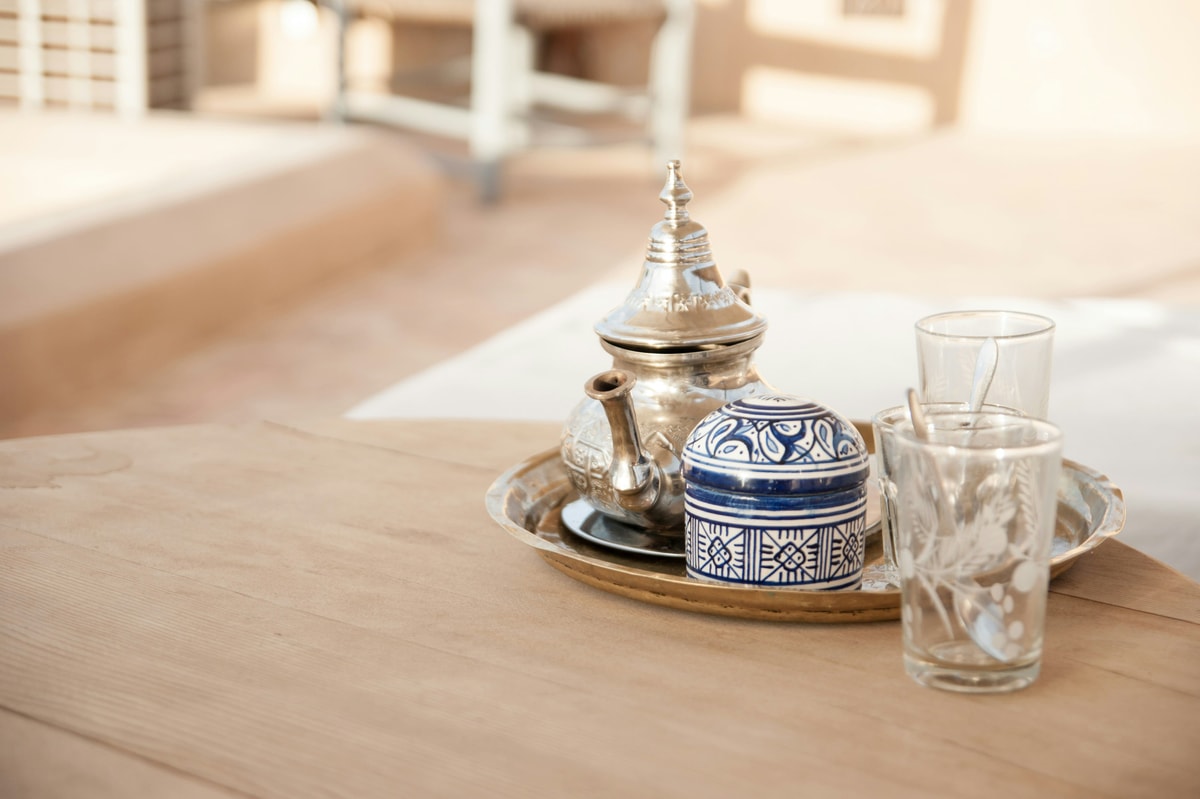
Moroccan mint tea is much more than a hot drink. In Morocco, tea is part of hospitality, family life, business meetings, celebrations and everyday conversation. A silver teapot, small decorated glasses, fresh mint and the movement of pouring tea from high above the glass are instantly recognizable elements of Moroccan culture.
The Moroccan National Tourist Office describes green mint tea as a ceremonial drink deeply rooted in Moroccan traditions and explains that it is often used to welcome guests in a friendly atmosphere. Its wider hospitality guide presents tea as a time-honored social ritual. Read the official Moroccan food and drink guide and Moroccan hospitality guide.
If you want to experience traditions like this during your trip, browse our Morocco tours, activities or create a private itinerary with Customize Your Morocco Tour.
Why Moroccan Mint Tea Represents the Moroccan Art of Living
The Moroccan art of living is about more than decoration, food or architecture. It also includes the way people welcome each other and make time for conversation. Tea represents all of this at once.
In Morocco, tea may be served when a guest arrives, during a business conversation, after a meal or simply when family and friends sit together. The preparation is part of the experience, not just a way to make a drink.
The Moroccan National Tourist Office notes that people traditionally get to know one another around tea and describes the ceremony as an important expression of hospitality.
Moroccan Mint Tea Hospitality Tradition
If you are searching for a reliable Moroccan mint tea hospitality tradition source, official Moroccan tourism material is especially useful. It describes tea as a beverage of friendship and hospitality and says it is often prepared in front of guests.
This explains why an invitation to drink tea can feel personal even in a carpet shop, riad, village home or artisan workshop. The location changes, but the social message remains the same: sit, slow down, talk and share.
What Is Moroccan Mint Tea Made From?
A classic mint tea Moroccan recipe uses four basic ingredients:
- green tea;
- fresh mint;
- hot water;
- sugar.
The green tea is often a tightly rolled Chinese tea commonly known as gunpowder tea. Its relatively strong flavor works well with fresh mint and sugar.
Green Moroccan Tea: Why Green Tea Is Used
The base of green Moroccan tea gives the drink body and a slight bitterness. Mint adds freshness, while sugar softens the overall taste.
A pure mint infusion is an herbal tea. Traditional Moroccan mint tea is different because it uses real tea leaves from Camellia sinensis.
How to Make Moroccan Mint Tea
Ingredients
- 1–2 tablespoons gunpowder-style green tea;
- 1 generous bunch fresh mint;
- 750 ml to 1 liter hot water;
- sugar to taste.
1. Warm the Teapot
Pour a little hot water into the teapot, swirl it around and discard it.
2. Add the Green Tea
Add the tea leaves to the pot.
3. Rinse the Leaves
Add a small amount of hot water, swirl gently and pour it out. This begins opening the rolled leaves.
4. Add Hot Water
Fill the pot and allow the tea to infuse.
5. Add Mint and Sugar
Add plenty of fresh mint and sugar according to taste. Traditional versions can be very sweet, but at home you can reduce the sugar.
6. Mix the Tea
Instead of stirring with a spoon, many Moroccan tea makers pour out one or two glasses and return them to the pot. This helps combine tea, mint and sugar.
7. Pour from a Height
Serve the tea into small glasses while holding the teapot above them. This aerates the drink and creates the characteristic light foam.
Traditional Moroccan Mint Tea Recipe vs Home Recipe
There is no single recipe followed identically in every Moroccan home. Families vary the strength, sweetness and quantity of mint.
At home, it is perfectly reasonable to use less sugar, a shorter infusion or more mint. The drink may be lighter, but it still preserves the main flavor profile.
Why Is Moroccan Mint Tea So Sweet?
Sweetness became part of the traditional flavor and hospitality ritual. In many homes and cafés, tea can be much sweeter than visitors expect.
This matters when discussing Moroccan mint tea benefits. Green tea and mint may contribute useful plant compounds and refreshing flavor, but a heavily sweetened tea should not automatically be treated as a health drink.
Does Moroccan Mint Tea Have Caffeine?
Does Moroccan mint tea have caffeine? Yes. Traditional Moroccan mint tea contains green tea, and green tea naturally contains caffeine.
The FDA gives about 37 mg of caffeine in a typical 12-ounce green tea, while Harvard gives about 28 mg in an 8-ounce cup. The real amount varies depending on the tea, quantity of leaves and brewing time.
Moroccan tea glasses are usually smaller than Western mugs, but multiple glasses can still add up.
Is Pure Mint Tea Caffeine-Free?
Yes. A herbal infusion made only with mint is naturally caffeine-free.
However, that is not the traditional Moroccan recipe. Once green tea is included, the drink contains caffeine.
Moroccan Mint Tea Benefits: What Is Reasonable to Say?
Green tea contains polyphenols, and mint makes the drink aromatic and refreshing. Harvard also identifies traditional tea as a source of polyphenols and caffeine.
It is better to avoid claims that Moroccan tea cures specific health problems. The overall health effect depends on preparation, sugar quantity, caffeine sensitivity and the rest of a person's diet.
Does Moroccan Mint Tea Help Digestion?
Tea is frequently served after meals in Morocco and is culturally associated with refreshment and digestion.
It is more responsible to present this as a traditional practice rather than a guaranteed medical effect.
Can You Drink Moroccan Mint Tea at Night?
Yes, and many people do. But caffeine-sensitive travelers should remember that the green tea base contains caffeine.
If caffeine affects your sleep, a pure mint infusion without green tea is a better late-evening option.
Why Is Moroccan Tea Poured from High Up?
The high pour is practical and ceremonial. It helps mix the tea and produces a layer of foam on top.
Official Moroccan tourism material also describes pouring from height as a traditional part of tea service.
What Is the Foam on Moroccan Tea?
The foam comes from aeration. It is not milk or cream. The stream of tea captures air when poured from height and creates bubbles on the surface.
Why Are Moroccan Tea Glasses Small?
Small glasses encourage repeated servings and make tea a longer social moment rather than one large drink consumed quickly.
The decorated glasses are also part of the visual beauty of the tea ceremony.
The Traditional Moroccan Teapot
Moroccan teapots are typically metal and have a long curved spout designed to control the stream during the high pour.
The full tea set often includes the teapot, small glasses and a serving tray.
Moroccan Mint Tea in Marrakech
In Marrakech, mint tea is everywhere: riads, cafés, restaurants, artisan shops and homes.
After walking through the Medina, sitting on a rooftop terrace with tea can be one of the simplest ways to experience the city's rhythm.
Our private Marrakech tour guide can help travelers understand the Medina, souks and everyday traditions.
Moroccan Mint Tea in Fes
Fes has a strong tradition of hospitality, craftsmanship and family culture, so tea naturally appears throughout the Medina.
Visitors may drink it in a riad courtyard, artisan workshop or restaurant. See our guided tour of Fes.
Mint Tea in the High Atlas
In mountain communities, serving tea to visitors is an important gesture of welcome.
Our Ourika Valley day trip is an easy way to combine mountain landscapes with local hospitality.
Mint Tea in the Sahara
In desert regions, tea often accompanies rest, conversation and storytelling.
At camps around Merzouga, tea may be served after arrival or during a quiet moment around sunset.
Our 3 Day Marrakech to Merzouga Desert Tour combines desert landscapes with these slower moments of Moroccan hospitality.
Does Moroccan Mint Tea Taste the Same Everywhere?
No. Some families use much more mint or sugar. Regional versions can also include aromatics such as verbena, saffron or rosebuds.
That variation is part of the charm: tea reflects family preference as much as national tradition.
Moroccan Tea Etiquette
If someone offers tea, accepting at least one glass is usually a warm way to take part in the moment.
You are not required to drink several rounds. In a tourist shop, accepting tea also does not mean you are obligated to buy something.
How to Order Mint Tea in Morocco
The Moroccan tourism office teaches travelers the expression “Atini Attay” for asking for tea and “Shukran” for thank you.
In major tourist areas, “mint tea” in English or French will also usually be understood.
Is Moroccan Mint Tea Vegan?
The basic recipe of green tea, mint, water and sugar is vegan.
Is Moroccan Mint Tea Gluten-Free?
Plain Moroccan tea made from green tea, mint, water and sugar does not naturally contain gluten.
Can You Make Moroccan Mint Tea Without Sugar?
Yes. It will taste less traditional, but many travelers prefer a lightly sweetened or unsweetened version.
Best Time to Drink Moroccan Mint Tea
There is no fixed time. Tea may be served in the morning, between meals, after lunch, when guests arrive or in the evening.
Moroccan Mint Tea as a Travel Experience
Some of the most memorable moments in Morocco are simple ones: tea in a riad courtyard, a pause in a mountain village or a glass shared in a Sahara camp.
Our tailor-made Morocco tours can combine traditional riads, private guides, the High Atlas and desert camps.
Final Thoughts: Moroccan Mint Tea and the Art of Living
Moroccan mint tea symbolizes the Moroccan art of living because it combines taste, ritual, hospitality and time shared with other people.
The recipe itself is simple: green tea, fresh mint, hot water and sugar. What makes it special is how it is prepared, poured and shared.
Explore our Morocco tours, activities and day trips, or create your own private Morocco itinerary.
FAQ
Traditional Moroccan mint tea is usually made with green tea, fresh mint, hot water and sugar. The tea is rinsed, infused, mixed with mint and sugar, then poured from a height to aerate it and create a light foam.
Yes. Moroccan mint tea usually contains green tea, so it naturally contains caffeine. The amount varies with the tea, quantity used and steeping time.
Green tea contains polyphenols and mint makes the drink refreshing and aromatic. Traditional recipes can contain a lot of sugar, so it is better to avoid exaggerated health claims.
Tea is traditionally used to welcome guests, share conversation and mark social moments. The Moroccan National Tourist Office describes the tea ceremony as a deeply rooted expression of hospitality.
Moroccan mint tea is generally made with green tea, commonly gunpowder-style green tea, fresh mint and sugar.
Pouring from a height helps mix and aerate the tea, producing a light foam. It also forms part of the visual ritual of Moroccan tea service.
Tours Marrakech Desert
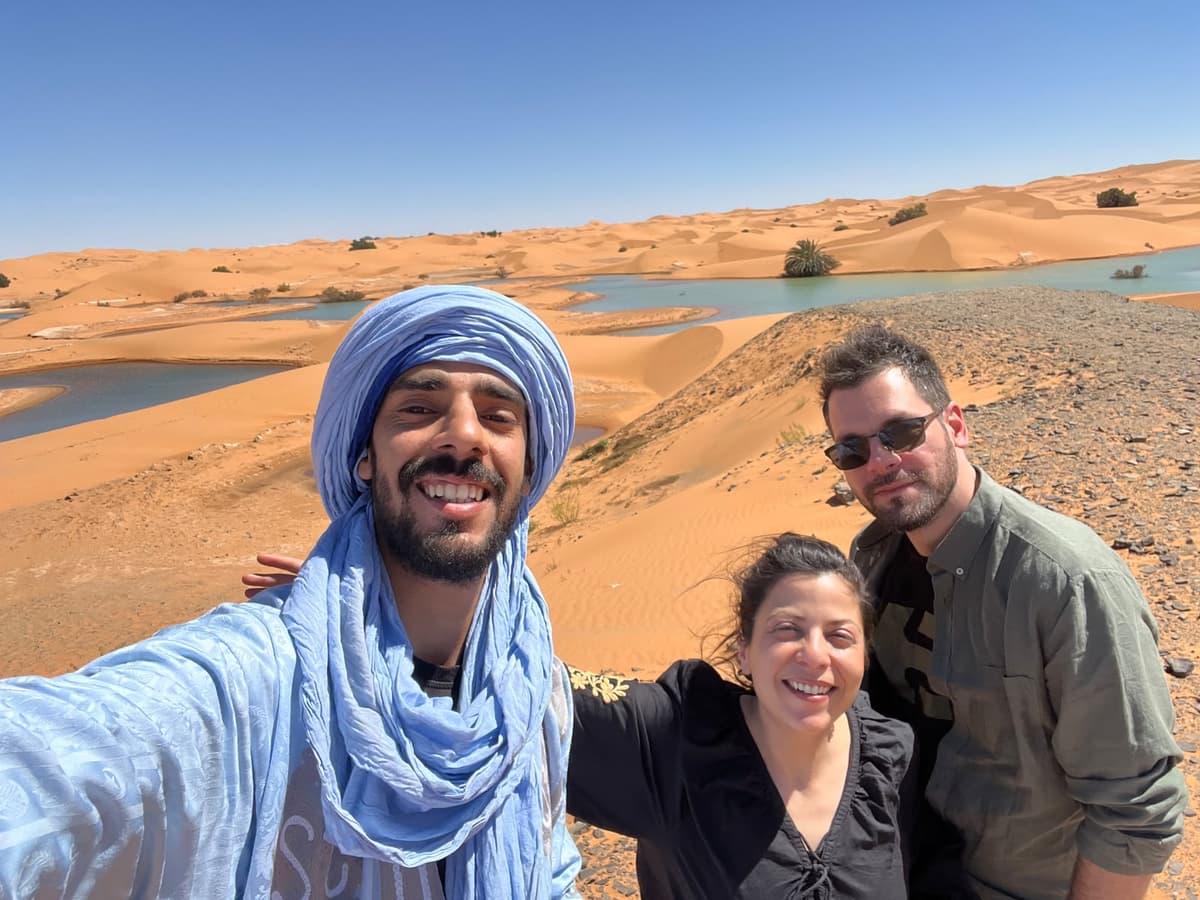 5 days / 4 nights
5 Days Tour from Marrakech to Merzouga
Travel from Marrakech to Merzouga over five days through the High Atlas, Ait Ben Haddou, Draa Valley and Erg Chebbi, with camel ride, luxury desert camp, Merzouga exploration, Todra and Dades.
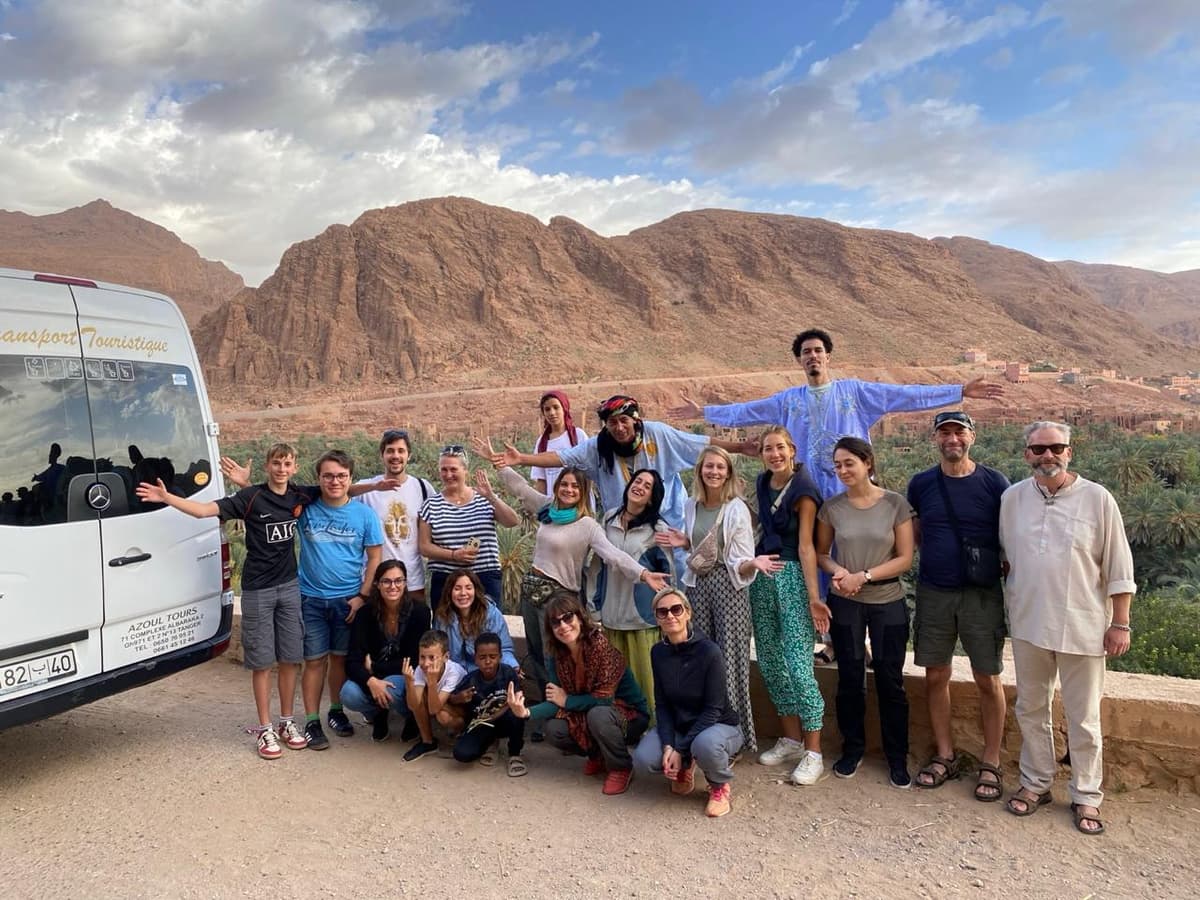 7 days / 6 nights
Morocco 7 Day Itinerary – 7 Days Desert Tour from Marrakech
Spend seven days traveling from Marrakech through the High Atlas, Dades, Todra and Merzouga before exploring remote Sahara villages, the Draa Valley and Ouarzazate.
 6 days / 5 nights
Morocco Atlas Mountains Desert Merzouga 6 Day Itinerary
Travel from Marrakech through the High Atlas, Ait Ben Haddou, Dades and Merzouga in six days, with camel trek, luxury desert camp, Middle Atlas and a guided Fes Medina visit.
Free travel advice
Have a question about one of our tours?
Ask us about the itinerary, accommodation, transport, desert camps, prices or possible changes. We'll help you understand your options before you book — completely free and with no obligation.