Morocco Language: What Language Do They Speak in Morocco?
What language is spoken in Morocco? Learn about Arabic, Darija, Amazigh, Tifinagh, French, Spanish and the languages tourists will hear across Morocco.
Travel Insights by Tours Marrakech Desert
If you are planning your first trip, you may be wondering: what language is spoken in Morocco? The answer is more interesting than naming just one language. Morocco has two official languages: Arabic and Amazigh, while Moroccan Arabic, known as Darija, is the language you will hear constantly in everyday conversations.
French is also widely used in tourism, business and many urban environments, while Spanish is more common in parts of northern Morocco. English is increasingly useful in major tourism destinations, especially with guides, riads and younger people working in the travel industry.
The Moroccan National Tourist Office confirms that Arabic and Amazigh are Morocco's two official languages. It also explains that Darija is the main spoken Moroccan Arabic variety and that Amazigh uses the Tifinagh alphabet. Read the official Morocco language guide.
If you prefer to travel without worrying about language barriers, our private Morocco tour planning can include drivers, guides and organized accommodation. You can also browse our Morocco tours, activities and day trips.
What Language Is Spoken in Morocco?
The phrase what language is spoken in Morocco has no single-word answer because different languages are used for different situations.
- Arabic: an official language used in administration, education, media, religion and formal communication.
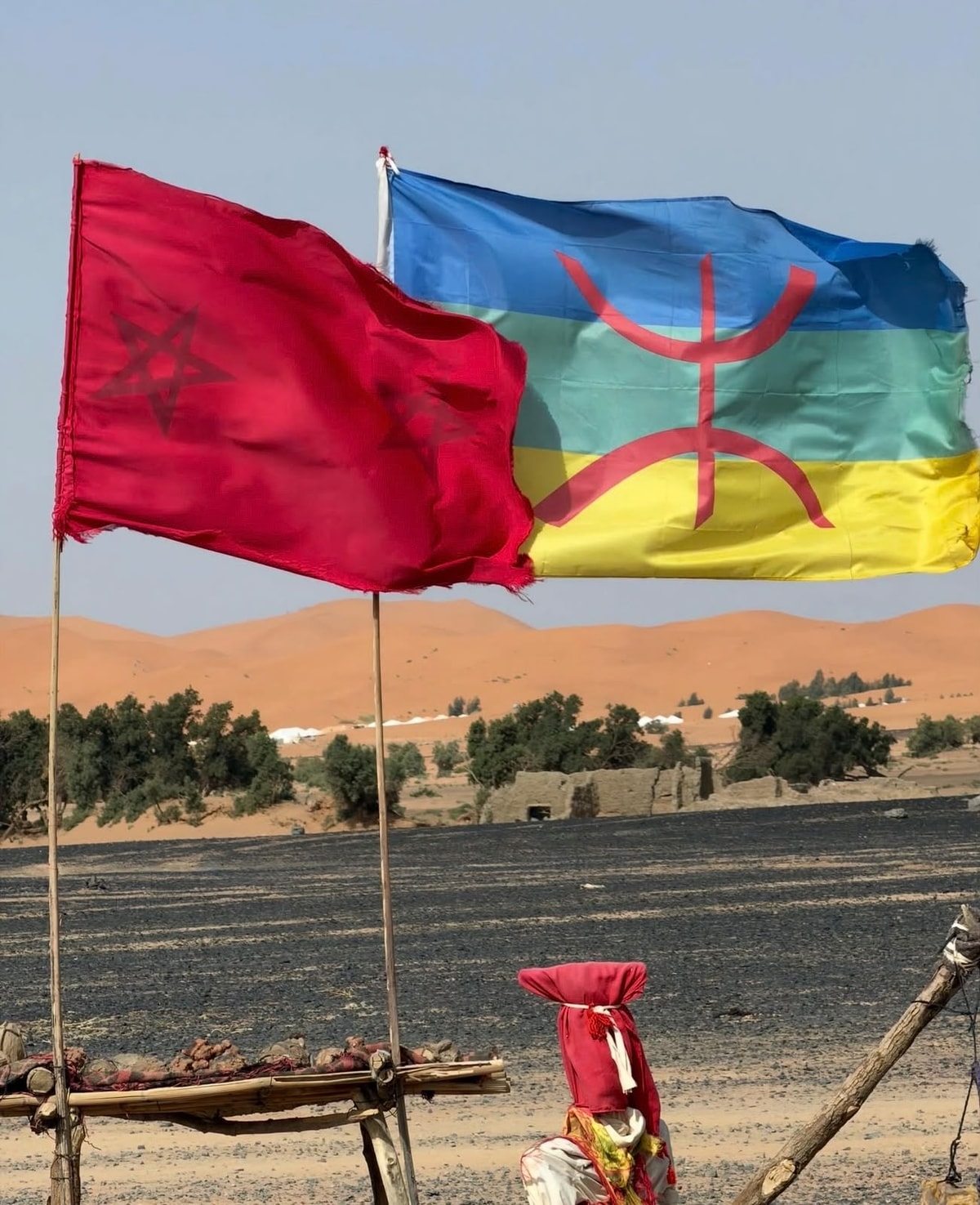
- Amazigh: Morocco's other official language and a major part of the country's indigenous cultural heritage.
- Darija: Moroccan Arabic used extensively in everyday conversation.
- French: widely used in tourism, business, higher education and many professional settings.
- Spanish: more common in parts of northern Morocco and some other regions.
- English: increasingly common in tourism and among younger speakers, but not an official language.
What Is the Official Language of Morocco?
The Morocco official language question is straightforward: Morocco officially recognizes Arabic and Amazigh.
Modern Standard Arabic is the formal variety commonly encountered in government, formal media and official documents. It is different from the Darija you will hear in cafés, taxis, homes and markets.
Amazigh became constitutionally recognized as an official language alongside Arabic and has an important place in Morocco's national identity.
What Is Darija?
Darija is Moroccan Arabic, the everyday spoken language used across much of the country.
For a foreign learner, Darija can sound quite different from the Arabic taught in formal language courses. It has developed through centuries of contact between Arabic and Amazigh and also contains vocabulary influenced by French and Spanish.
The Moroccan National Tourist Office describes Darija as the language used orally by Moroccans and notes this mixture of linguistic influences.
Is Darija a Language or a Dialect?
You will see both descriptions. Linguistically, Darija is commonly classified as a variety of Maghrebi Arabic, while Moroccans often simply call their everyday speech “Darija.”
For tourists, the classification matters less than understanding that spoken Moroccan Arabic is not identical to formal Arabic.
If you have studied Modern Standard Arabic, some vocabulary will be familiar, but pronunciation, rhythm and everyday expressions can still feel very different.
What Is the Amazigh Language?
The Amazigh language is one of the most important parts of Morocco's linguistic identity. Amazigh communities have lived across North Africa for centuries before the Arab-Islamic expansion.
In Morocco, Amazigh is not one uniform spoken variety. The country includes regional varieties commonly associated with areas such as the Rif, Middle Atlas and Souss.
Official Amazigh writing uses the Tifinagh alphabet, which visitors may notice on road signs, public buildings and official signage alongside Arabic.
Why Is Amazigh Important in Morocco?
Amazigh heritage influences Moroccan place names, music, food, crafts, architecture and everyday vocabulary.
Traveling through the High Atlas, Anti-Atlas, Souss, Middle Atlas or Rif makes this heritage especially visible.
On our Ourika Valley day trip, for example, visitors leave Marrakech and enter High Atlas communities where Amazigh heritage is an important part of local identity.
What Does Tifinagh Look Like?
Tifinagh is the writing system officially used for Amazigh in Morocco. Its geometric characters look very different from both Arabic and Latin writing.
Tourists often notice three scripts on signs: Arabic, Tifinagh and Latin letters. This is a visible reminder of Morocco's multilingual identity.
Morocco Language Spoken in Everyday Life
If your question is morocco language spoken in everyday life, Darija is the answer you will encounter most frequently in many cities.
Two friends may speak Darija together, switch into French for a professional term, use an Amazigh word from their region and then speak English with a visitor. Code-switching is normal in many multilingual Moroccan environments.
This flexibility is one reason visitors often find communication easier than expected.
Do Moroccans Speak French?
Yes. French is widely used, although it is not one of Morocco's two official languages.
You may encounter French in restaurants, hotels, business environments, private schools, medical services, menus and tourism.
The Moroccan National Tourist Office states that French is widely spoken and understood and identifies Spanish as more common in northern and some southern regions. citeturn349962search0
Why Is French Spoken in Morocco?
French usage is strongly connected to Morocco's twentieth-century history and the period of the French Protectorate from 1912 to 1956.
After independence, Arabic remained central to national identity while French continued to play an important role in business, education, science, administration and international communication.
Today, the balance between languages changes depending on city, profession, age group and social context.
Do People Speak Spanish in Morocco?
Yes, especially in parts of northern Morocco because of geographic proximity and historical connections with Spain.
Spanish can be particularly useful around cities such as Tangier, Tetouan and Chefchaouen, although Darija, Arabic and Amazigh remain central to Moroccan linguistic life.
If you visit Chefchaouen from Fes, our Fes to Chefchaouen day trip offers organized transport through northern Morocco.
Can You Travel Morocco Speaking Only English?
Yes, most tourists can travel through Morocco using English, particularly in Marrakech, Fes, Casablanca, desert camps and established tourism areas.
However, English coverage is not identical everywhere. In small towns or local shops, Darija or French may be more useful.
A private guide or driver reduces communication problems, especially on multi-day routes. Browse our tours from Marrakech or tours from Fes.
Language in Marrakech
In Marrakech you will hear Darija constantly, while French and English are common in the tourism industry. Amazigh influence is also strong because the city is closely connected with High Atlas and southern communities.
Menus, hotel information and tour services are often available in multiple languages.
For visitors who want cultural explanation as well as navigation, our private Marrakech tour guide can help you understand the Medina, souks and major monuments.
Language in Fes
Fes is deeply connected with Arabic scholarship, traditional education and historic urban culture. Darija is the everyday spoken language, while Arabic is visible throughout religious and historic institutions.
French is also widely useful for tourism. A guide can make traditional crafts, architecture and local terminology much easier to understand. See our guided tour of Fes.
Language in Casablanca
Casablanca is one of Morocco's most international business cities. Darija dominates everyday conversation, while French is especially visible in business, offices, restaurants and professional environments.
English is increasingly common in hotels and international companies.
Our Casablanca city tour is useful for travelers who want to see the city's main areas with local assistance.
Language in the Sahara and Southern Morocco
Language changes again as you travel south. Darija is widely understood, but Amazigh varieties are particularly important across many mountain and southern communities.
Tourist camps around Merzouga often work with international guests, so staff may speak Darija, Amazigh, French, English, Spanish or other languages.
Our 3 Day Marrakech to Merzouga Desert Tour passes through several regions where this linguistic diversity becomes very visible.
Useful Darija Words for Tourists
| Darija | Meaning |
|---|---|
| Salam | Hello / peace |
| Labas? | How are you? / Everything good? |
| Shukran | Thank you |
| Afak | Please |
| Iyyeh | Yes |
| La | No |
| Bshhal? | How much? |
| Ma fhemtsh | I don't understand |
| Beslama | Goodbye |
You do not need perfect pronunciation. A simple greeting or thank-you often makes an interaction warmer.
What Language Is Used in Moroccan Souks?
Darija is the main everyday language you are likely to hear between local traders and customers.
In Marrakech's tourist souks, many sellers also know useful French, English, Spanish and sometimes other European languages.
If you want to understand the markets better, combine language knowledge with our Marrakech Medina tour.
What Language Is Used on Moroccan Road Signs?
Depending on the sign and location, travelers may see Arabic, Amazigh in Tifinagh and Latin-script text.
French-language place names or transliterations have historically been common, while official Amazigh visibility has increased significantly.
For travelers renting a car, this multilingual signage is generally manageable because major place names are recognizable in Latin script.
Do You Need to Learn Arabic Before Visiting Morocco?
No. Tourists do not need to learn Arabic before visiting Morocco.
But learning a handful of Darija expressions is worthwhile because it shows interest in local culture and can help in cafés, shops and markets.
If language barriers concern you, organized transport and local guides can make your trip much easier. Use Customize Your Morocco Tour to plan a private itinerary.
Arabic vs Darija: What Should a Tourist Learn?
For daily travel, a few Darija expressions are generally more useful than formal Arabic.
Modern Standard Arabic matters for official communication and the wider Arabic-speaking world. Darija matters when ordering tea, asking a basic question or greeting someone in Morocco.
Amazigh vs Darija: Are They Related?
They are different linguistic traditions. Darija is a variety of Arabic, while Amazigh belongs to the indigenous Amazigh language family of North Africa.
However, centuries of contact mean that Moroccan Darija contains Amazigh influence and many Moroccan communities use both linguistic traditions in different ways.
Is “Moroccan” a Language?
There is no official language simply called “Moroccan.” When people say “Moroccan language,” they usually mean Moroccan Arabic (Darija).
That distinction is useful for SEO searches such as moroccan language or language of Morocco: Morocco itself is multilingual rather than having one single uniquely named national language.
Why Morocco's Languages Matter for Travelers
Understanding the Morocco language spoken situation makes the country easier to understand.
Language reveals Morocco's history: Amazigh roots, Arab-Islamic history, links with France and Spain, and today's growing international tourism.
Even a short trip from Marrakech through the Atlas to Merzouga can expose you to several linguistic environments.
Morocco Language Tips for First-Time Visitors
- Learn 5–10 Darija words: enough for greetings and basic politeness.
- Do not assume everyone speaks English: especially outside tourism centers.
- French can be very useful: particularly in cities and professional environments.
- Expect code-switching: people may move between Darija and French in the same conversation.
- Use translation apps offline: useful on road trips.
- Ask politely: people will often try to help even if you do not share a language.
Final Answer: What Language Do They Speak in Morocco?
So, what language do they speak in Morocco? Morocco has two official languages: Arabic and Amazigh. In everyday life, Darija is the Moroccan Arabic you will hear constantly, while French is widely used and Spanish is common in some northern regions.
The Amazigh language is central to Morocco's identity and is officially written using Tifinagh. English is increasingly useful in tourism but is not an official language.
For travelers, the good news is simple: you do not need to speak Arabic or Amazigh to enjoy Morocco. A few words of Darija are appreciated, and organized travel makes communication even easier.
Explore our Morocco tours, activities and day trips, or create a private Morocco itinerary with local drivers and guides.
FAQ
Morocco has two official languages: Arabic and Amazigh. In everyday conversation, many Moroccans speak Darija, the Moroccan Arabic dialect. French is also widely used, while Spanish is more common in parts of northern Morocco.
Arabic and Amazigh are the two official languages of Morocco. Amazigh is written using the Tifinagh script, while Modern Standard Arabic is used in many formal, administrative and educational contexts.
Darija is Moroccan Arabic. It developed from Arabic while also incorporating vocabulary and influences from Amazigh, French and Spanish. It can sound very different from Modern Standard Arabic to learners.
Amazigh, often called Tamazight in a broad sense, is an indigenous North African language heritage with several regional varieties in Morocco. It is an official language and is written officially using the Tifinagh alphabet.
Yes, especially in major tourist destinations, hotels, riads and organized tours. However, English is not Morocco's official language. Learning a few Darija words can make local interactions easier and more enjoyable.
Yes. French is widely used in business, tourism, education and daily life, although it is not one of the two official languages. The Moroccan National Tourist Office also notes that Spanish is used in parts of northern and southern Morocco.
Tours Marrakech Desert
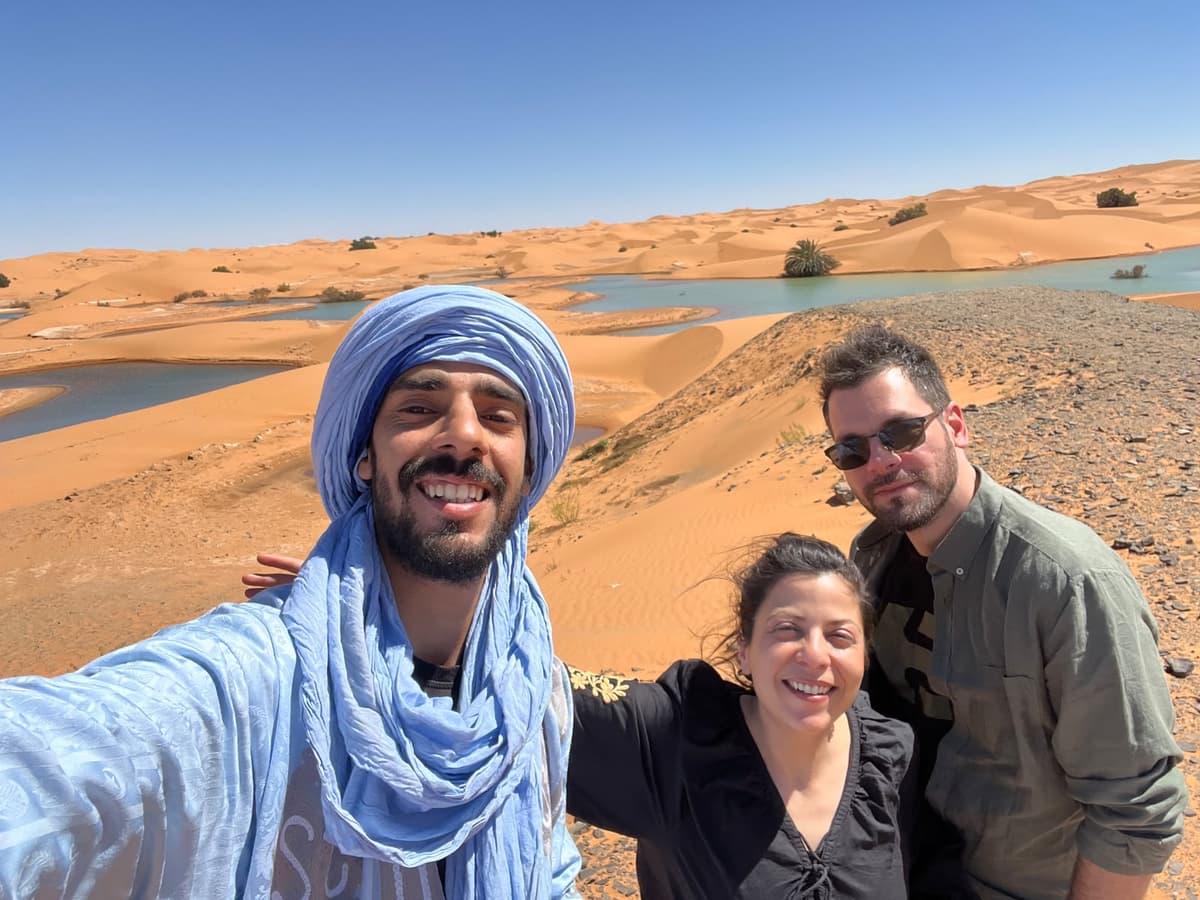 5 days / 4 nights
5 Days Tour from Marrakech to Merzouga
Travel from Marrakech to Merzouga over five days through the High Atlas, Ait Ben Haddou, Draa Valley and Erg Chebbi, with camel ride, luxury desert camp, Merzouga exploration, Todra and Dades.
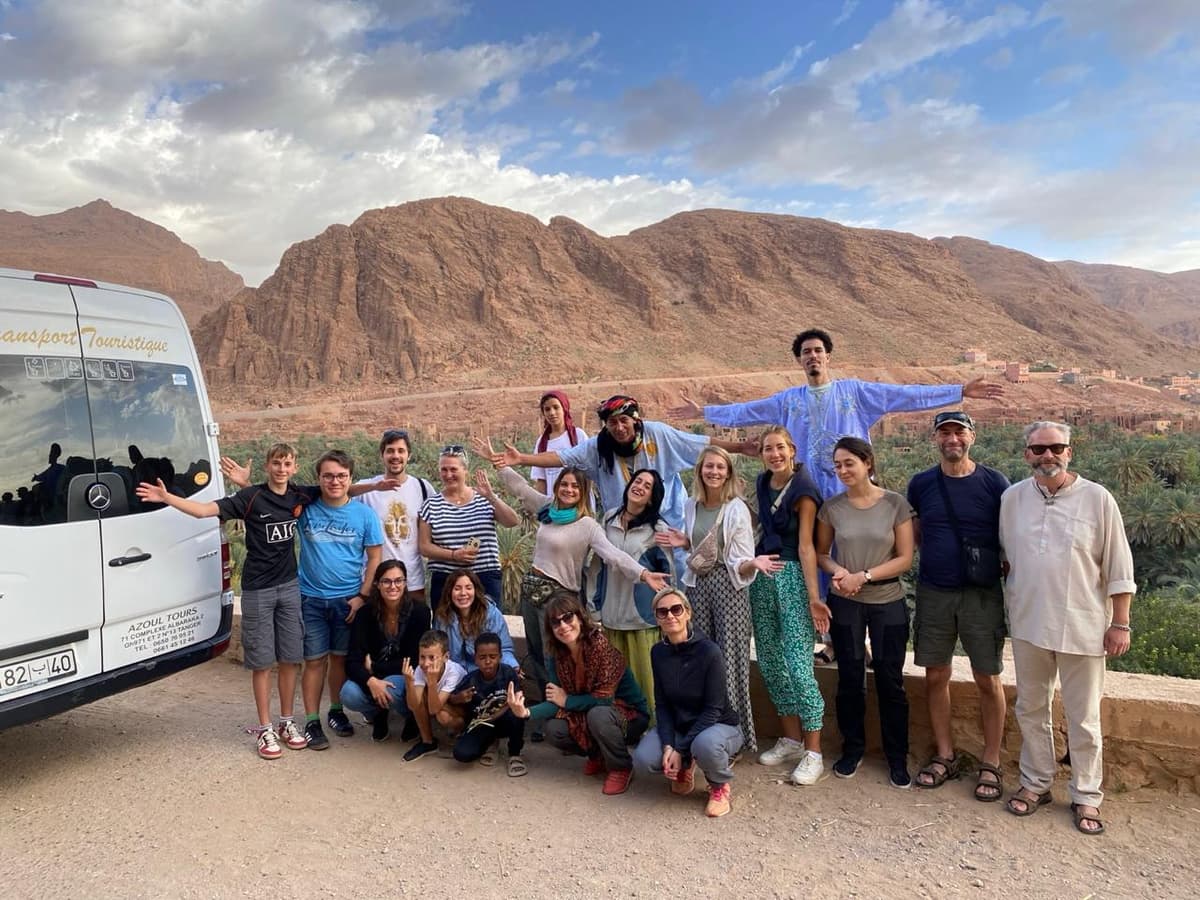 7 days / 6 nights
Morocco 7 Day Itinerary – 7 Days Desert Tour from Marrakech
Spend seven days traveling from Marrakech through the High Atlas, Dades, Todra and Merzouga before exploring remote Sahara villages, the Draa Valley and Ouarzazate.
 6 days / 5 nights
Morocco Atlas Mountains Desert Merzouga 6 Day Itinerary
Travel from Marrakech through the High Atlas, Ait Ben Haddou, Dades and Merzouga in six days, with camel trek, luxury desert camp, Middle Atlas and a guided Fes Medina visit.
Free travel advice
Have a question about one of our tours?
Ask us about the itinerary, accommodation, transport, desert camps, prices or possible changes. We'll help you understand your options before you book — completely free and with no obligation.