Morocco in April 2027: Weather, Sahara & Best 7-9 Day Itinerary
Plan Morocco in April 2027 with regional weather guidance, Sahara and Atlas advice, plus private 6-, 7- and 9-day itinerary comparisons.
Planning Morocco in April 2027? Tours Marrakech Desert helps travelers organize private spring journeys that connect historic cities, High Atlas landscapes and the Sahara without pretending that the whole country has one climate. Depending on the confirmed package, an April itinerary can combine comfortable private transport, a professional driver, selected riads or hotels, a Merzouga desert-camp experience, local guides where included and route planning adapted to your arrival and departure cities. With roughly six, seven or nine days, travelers can choose between a one-way Marrakech-to-Fes route through Merzouga, a seven-day Marrakech round trip with deeper southeastern desert travel, or a broader nine-day private itinerary beginning in Casablanca and finishing in Marrakech.
Is April 2027 a good time to visit Morocco? For many travelers, yes. April falls in spring and can offer comfortable city sightseeing, greener mountain scenery than summer and practical conditions for a Sahara journey before the strongest summer heat. This is a climate-planning guide, not a forecast for April 2027. Morocco's Atlantic coast, imperial cities, mountains and desert differ significantly, and individual days can be warmer, cooler, wetter or windier than historical averages. Check location-specific official forecasts shortly before departure.
Is April a Good Time to Visit Morocco?
April is especially useful for travelers who want to combine several regions in one journey. The Moroccan National Tourist Office highlights the country's climatic contrasts and identifies spring and autumn as favorable periods for Sahara travel. That matters because a pleasant afternoon in Marrakech says little about conditions on a High Atlas pass or in a Merzouga camp later in the same itinerary.
Marrakech can feel warm in the afternoon while evenings remain cooler. Fes and northern Morocco can still see spring rain. High Atlas locations can be much colder because of altitude, while Merzouga often has warmer afternoons, cooler nights and occasional wind or blowing sand. The practical advantage of April is not “perfect weather”; it is the possibility of moving between several regions before summer heat becomes dominant in the interior and desert.
Morocco Weather in April 2027: What to Expect
The table below uses historical climate normals and long-term references, not a day-by-day forecast for April 2027. Marrakech, Fes and Casablanca use station-based climate normals published through the World Meteorological Organization; some mountain and desert references are modeled and are labeled accordingly.
| Destination | Typical daytime | Typical night | Rain / variability | Practical meaning |
|---|---|---|---|---|
| Marrakech | about 25.7°C / 78°F | about 12.4°C / 54°F | about 26 mm monthly rainfall in 1991–2020 normals | Warm afternoons; light layer useful morning and evening. |
| Fes | about 22.0°C / 72°F | about 8.3°C / 47°F | about 54.7 mm; spring showers remain possible | Good walking temperatures but a light rain layer is sensible. |
| Casablanca | about 20.6°C / 69°F | about 13.3°C / 56°F | about 33.5 mm with Atlantic influence | Milder than inland Marrakech; evenings can feel cool. |
| Rabat | mild spring conditions | cooler after sunset | Atlantic and northern influences | Use a current local forecast rather than Marrakech figures. |
| Chefchaouen | around 20–21°C / 68–70°F | around 9–10°C / 48–50°F | Rif spring rainfall can be meaningful | Pack for cooler, wetter conditions than Marrakech. |
| Ouarzazate | around 26–27°C / 79–81°F | around 12°C / 54°F | generally drier than the north | Useful transition between High Atlas routes and the southeast. |
| Merzouga | roughly upper-20s °C in recent modeled April normals | roughly mid-teens °C | dry overall, but wind and blowing sand can occur | Sun protection by day and layers for camp evenings. |
| Essaouira | about 20.7°C / 69°F | about 14.1°C / 57°F | Atlantic wind and coastal moderation | Cooler and breezier than Marrakech. |
| Imlil / High Atlas reference | around 19.5°C / 67°F in a modeled reference | around 4.1°C / 39°F | altitude creates large day-night differences | Mountain layers are essential; higher elevations can be colder. |
The table shows why “Morocco temperature in April” is too broad to be useful on its own. Marrakech's inland setting creates warmer afternoons, Fes can be cooler and wetter, Casablanca is moderated by the Atlantic, the High Atlas is colder with altitude and Merzouga behaves like a desert location rather than a city on the coast.
Marrakech Morocco Weather in April
For Marrakech, 1991–2020 climate normals show a mean daily maximum near 25.7°C and a minimum near 12.4°C, with roughly 26 mm of monthly rainfall. These values are averages over many years, not guaranteed conditions for your exact dates.
For sightseeing, April often allows comfortable mornings for the Medina, palaces and gardens, followed by warmer afternoons. Early departures toward the High Atlas can feel cool, especially before the sun is high. Carrying one light insulating layer is usually more useful than packing only summer clothing.
If your journey begins in the city, compare our private tours from Marrakech, which connect the city with Atlas routes, southern valleys and Merzouga.
Sahara Desert Weather in April
April is often practical for Merzouga and Erg Chebbi because it comes before the strongest summer heat, but the Sahara should never be described as uniformly hot. Recent modeled normals for Merzouga place typical April daytime highs in the upper 20s Celsius, with much cooler nights. Individual days can be hotter or cooler, and wind can lift sand.
Layers matter. Light clothing and sun protection work during much of the day, while a fleece, light jacket or warm overshirt may be useful after sunset. Camp comfort also depends on wind, the exact camp location and the confirmed tent category. Do not assume heating, air conditioning or a private bathroom unless those details appear in the written package.
Merzouga is the Sahara destination around Erg Chebbi. Agafay near Marrakech is a separate rocky-desert landscape and should not be presented as the same experience.
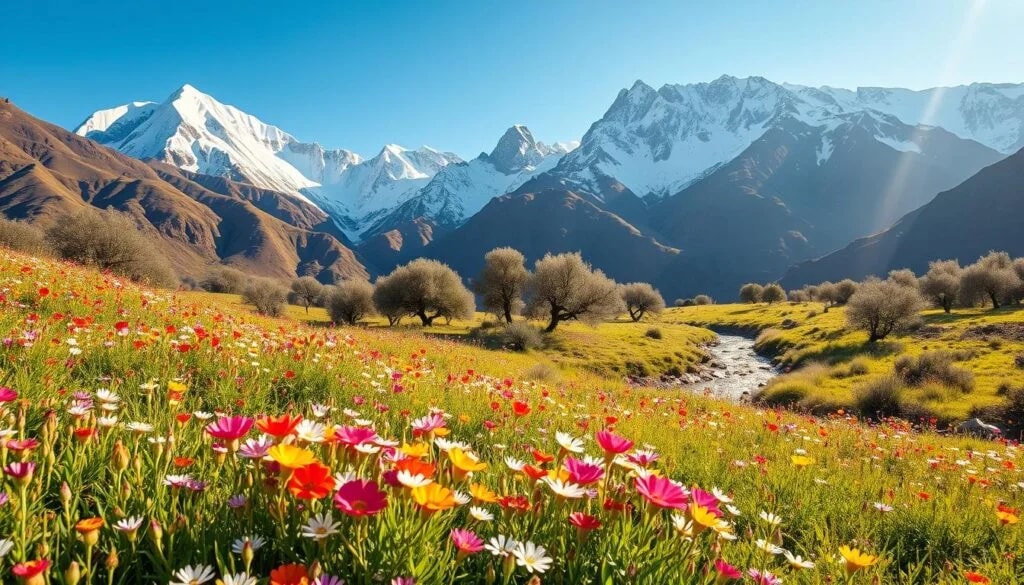
Weather in the Atlas Mountains in April
The Atlas Mountains cannot be assigned one temperature. Elevation changes quickly between Marrakech, Tizi n'Tichka, valleys and high mountain villages. A modeled Imlil-area reference for April suggests daytime temperatures around the high teens Celsius and nights close to 4°C, while higher ground can be significantly colder.
Snow can remain on high peaks even when Marrakech feels warm. This does not mean every road is snowy or closed. Road conditions must be assessed near the travel date, especially on High Atlas crossings.
For geography, ranges and route context, read our Atlas Mountains Morocco guide.
When Is Spring in Morocco?
Morocco follows Northern Hemisphere seasons, so spring conventionally covers March, April and May. March is generally cooler and can be more unsettled in the north and mountains. April often gives a balanced window for multi-region travel. By May, inland and desert areas can become substantially warmer.
For a full seasonal comparison rather than an April-only view, see our Best Time to Visit Morocco guide.
Does It Rain in Morocco in April?
Yes. Rain is possible in April, but it is not distributed evenly. Fes and the Rif around Chefchaouen generally have more spring-rain potential than the southeast. Marrakech is drier, while Merzouga is much drier overall. Atlantic cities have maritime influences that differ from inland locations.
A compact waterproof layer is useful for Fes, Chefchaouen and mountain sections. It is sensible insurance rather than evidence that April should be treated as a rainy-season trip.
What to Wear in Morocco in April
- Marrakech: breathable daytime layers, comfortable walking shoes and a light evening layer.
- Fes and northern cities: add a light waterproof layer because spring showers remain possible.
- Atlantic coast: include a wind-resistant layer for Casablanca or Essaouira.
- High Atlas: pack warmer layers for early mornings, sunsets and high-altitude stops.
- Sahara evenings: carry a fleece or light jacket even when the afternoon feels warm.
For road journeys, clothing that works across changing microclimates is more useful than a single “April outfit.” Layers let you adapt when moving from warm valleys to air-conditioned vehicles, mountain stops and cooler desert evenings.
What to Pack for a Sahara Tour in April
- Light, breathable clothes for daytime travel.
- A warm layer for desert evenings and mountain sections.
- Comfortable walking shoes.
- Hat, sunglasses and sunscreen.
- A refillable water bottle.
- A scarf or light face covering for wind or dust if needed.
- Personal medication and essential toiletries.
- A compact overnight bag where camp logistics make it practical.
Check the current forecasts for Marrakech, the Atlas crossing and Merzouga shortly before departure rather than relying only on monthly averages.
Best Places to Visit in Morocco in April
Marrakech works well for gardens, Medina sightseeing and the beginning or end of a private road journey. Fes offers an important cultural contrast with its historic Medina and artisan quarters. Chefchaouen can be greener in spring but also cooler and wetter. Casablanca and Rabat are useful for travelers entering Morocco through the Atlantic corridor.
South of Marrakech, Ait Ben Haddou, the Dades Valley and Todra Gorge connect the High Atlas with southeastern Morocco. Merzouga provides access to Erg Chebbi and the classic Sahara dune landscape. These places fit naturally into a multi-day overland route instead of being isolated checklist stops.
Planning Morocco in April 2027
Start with your flight pattern. If you arrive in Marrakech and can depart from Fes, a one-way route reduces backtracking. If you fly in and out of Marrakech, a round trip can be easier. If your international flight lands in Casablanca and you have more time, a broader route may be more appropriate.
April overlaps school and university holiday periods in several international markets. That can create stronger demand on some dates, but it does not justify claiming that any specific hotel, camp or departure is sold out. Availability must be checked when you request a quotation.
For broader 2027 planning, see our Morocco Holidays 2027 guide.
Three Private Morocco Itineraries to Consider for April 2027
The following routes serve different travelers. The six-day itinerary is a one-way journey from Marrakech to Fes. The seven-day itinerary is a Marrakech round trip with additional remote southeastern desert travel. The nine-day itinerary starts in Casablanca and finishes in Marrakech. Flight logistics should influence the choice as much as duration.
Six Days: Marrakech, Atlas, Merzouga and Fes
The Morocco Atlas Mountains Desert Merzouga 6 Day Itinerary lasts six days and five nights, begins in Marrakech and finishes in Fes. It crosses the High Atlas, visits Ait Ben Haddou, Dades and Todra Gorge, spends two nights in the Merzouga region including a desert-camp night, then continues through the Middle Atlas to Fes and includes a guided Fes Medina day.
Seven Days: Marrakech Round Trip with Deeper Desert Travel
The 7-day desert tour from Marrakech starts and ends in Marrakech. It combines the High Atlas, Ait Ben Haddou, Dades, Todra and Merzouga with a longer southeastern route through remote desert areas, the Draa Valley and Ouarzazate before returning across the mountains.
Nine Days: Casablanca to Marrakech
The nine-day Morocco itinerary from Casablanca to Marrakech is confirmed as a nine-day private route beginning in Casablanca and finishing in Marrakech. The detailed live product page could not be independently fetched during this research, so this guide intentionally does not invent its day-by-day program, overnight sequence or unverified inclusions. Use the official product page and written quotation as the current source of truth.
6-Day Atlas Mountains and Merzouga Route: Day by Day
Day 1 — Marrakech → High Atlas → Ait Ben Haddou → Ouarzazate → Dades
Leave Marrakech with your private driver and climb the High Atlas via Tizi n'Tichka. Scenic stops depend on traffic, weather and timing. Continue to Ait Ben Haddou, pass Ouarzazate and reach Dades for the first night.
Day 2 — Dades → Todra Gorge → Merzouga
Travel via Tinghir to Todra Gorge, then continue toward Merzouga. The second night is in a hotel or riad near the dunes; this is not yet the desert-camp night.
Day 3 — Merzouga → Erg Chebbi → Desert Camp
Spend time in the Merzouga region before a camel trek across part of Erg Chebbi and the camp overnight. Dinner and traditional music may be part of the evening according to the confirmed package and local conditions.
Day 4 — Merzouga → Ziz Valley → Midelt → Azrou → Ifrane → Fes
Leave the Sahara, travel through the Ziz Valley and Midelt, then cross the Middle Atlas. A stop near the cedar forest may provide an opportunity to see Barbary macaques, although wildlife sightings are never guaranteed. Continue through Ifrane and arrive in Fes.
Day 5 — Guided Fes Medina
Spend the day with a local guide exploring Fes el-Bali, souks, artisan quarters and historic architecture according to opening conditions and the agreed itinerary. Do not assume paid monument tickets are included unless confirmed.
Day 6 — Finish in Fes
After breakfast, the published six-day journey concludes in Fes. An agreed transfer to the airport, railway station or another accessible location can be arranged according to the booking. The standard route does not return to Marrakech.
7-Day Marrakech Desert Route: Day by Day
Day 1 — Arrival in Marrakech
Use the agreed arrival pickup, accommodation and time to settle in before the road journey begins.
Day 2 — Marrakech → High Atlas → Ait Ben Haddou → Valley of Roses → Dades
Cross the High Atlas, visit Ait Ben Haddou and continue through southern kasbah landscapes toward the Valley of Roses and Dades.
Day 3 — Dades → Todra Gorge → Erfoud → Merzouga
Continue through Todra Gorge and Erfoud toward Merzouga for the first night close to Erg Chebbi.
Day 4 — Merzouga → Khamlia → Erg Chebbi → Desert Camp
Explore the desert region according to conditions and the confirmed program, with cultural stops when available, before the camel trek and camp experience.
Day 5 — Merzouga → Taouz → Ouzina → Ramlia → Tafraoute Sidi Ali
This day reaches more remote southeastern landscapes. Off-road travel depends on track conditions and the agreed vehicle arrangement.
Day 6 — Tafraoute Sidi Ali → Zagora → Agdz → Tamnougalt → Ouarzazate
Move from remote desert scenery toward the Draa Valley, oasis landscapes and Ouarzazate.
Day 7 — Ouarzazate → Ounila Valley → Telouet → High Atlas → Marrakech
Return across the High Atlas to Marrakech, making this route suitable for travelers who specifically need a Marrakech round trip.
Which Morocco Itinerary Is Best for April 2027: 6, 7 or 9 Days?
| Feature | 6 days | 7 days | 9 days |
|---|---|---|---|
| Start | Marrakech | Marrakech | Casablanca |
| Finish | Fes | Marrakech | Marrakech |
| Main focus | Atlas + Merzouga + Fes | Atlas + extended southeast/desert + Marrakech return | Broader private Morocco itinerary |
| Atlas | High Atlas and Middle Atlas | High Atlas | Use current official page for route detail |
| Merzouga | Yes, including camp night | Yes, including camp experience | Confirm current published itinerary |
| Best suited to | Marrakech arrival and Fes departure | Marrakech round trip and deeper desert focus | Casablanca arrival with more total time |
The six-day option is included as a shorter alternative even though the title emphasizes seven- to nine-day itineraries. It can be especially efficient when flights allow you to finish in Fes.
How April Weather Can Affect These Routes
High Atlas: expect cooler air and greater variability than Marrakech. Merzouga: sun exposure matters during the day, while evenings can be cool and wind may affect sand conditions. Fes: spring walking temperatures can be comfortable but rain remains possible. Marrakech: afternoons can be warm while early departures feel cooler. Remote tracks on the seven-day route: surface conditions can change after weather events, which is why an appropriate vehicle and professional route planning matter.
What Is Included in a Private Morocco Tour?
Exact inclusions differ by product. They may include agreed private transport, a professional driver, accommodation, breakfast or dinner where specified, a desert camp, camel trek where listed, local guides on designated sightseeing days and agreed pickup/drop-off arrangements.
Lunches, drinks, monument tickets and optional activities may be excluded, and accommodation upgrades can affect pricing. Use the official product page and written quotation for the final package.
Private Tour Pricing in April 2027
The final price can depend on group size, itinerary length, vehicle, room configuration, hotel category, camp category, travel dates, guide services, optional activities and starting/ending cities. This guide intentionally avoids inventing an April 2027 promotion or package price.
To compare offers accurately, request a quotation for the same dates, travelers and accommodation level. A low headline price is not directly comparable if the route or inclusions are different.
April 2027 Booking Strategy
- Choose an approximate departure date.
- Confirm arrival and departure airports.
- Decide whether six, seven or nine days fits your pace.
- Select your preferred accommodation level.
- Share the number of adults and children.
- Request a private itinerary and quotation.
- Review inclusions, exclusions and booking terms.
- Confirm the itinerary and arrangements in writing.
Plan Your Morocco Trip for April 2027
Whether you have six, seven or nine days, Tours Marrakech Desert can help you discuss a private itinerary with a realistic balance of imperial cities, Atlas landscapes and Sahara experiences based on your flights and preferred pace.
Share your dates, airports, number of travelers, preferred duration, accommodation level, approximate budget and priority destinations through Customize Your Tour or contact Tours Marrakech Desert to request a personalized proposal.
FAQ
Yes for many multi-region trips. Historical climate patterns often make April comfortable for cities, Atlas road routes and Sahara travel, but actual 2027 weather must be checked closer to departure.
It varies strongly by region. Marrakech is warmer inland, Fes and the north can be cooler and wetter, the Atlas is colder with altitude, and Merzouga is generally warmer and drier by day with cooler nights.
1991–2020 climate normals indicate an average daily high around 25.7°C and low around 12.4°C. These are historical averages, not a forecast.
Yes. Rain remains possible, especially in northern and mountain regions. Marrakech and the southeast are generally drier than Fes or the Rif.
April days around Merzouga can be warm, but not every day is hot. Wind can also affect conditions, so use a current forecast before travel.
Nights can feel much cooler than daytime, especially after sunset and when windy. Pack a warm layer for a desert camp.
Morocco follows Northern Hemisphere seasons, with spring conventionally covering March, April and May.
Pack breathable daytime clothing, comfortable shoes, sun protection, a light waterproof layer and warmer layers for mountains and desert evenings.
Yes for many scenic road itineraries, but altitude means cooler and more changeable conditions. Check forecasts and road conditions close to departure.
Seven days is enough for a focused private route, but not for every region. The published seven-day tour from Marrakech prioritizes the Atlas, Sahara and southeastern Morocco before returning to Marrakech.
The six-day route runs Marrakech to Fes via Merzouga, the seven-day route starts and ends in Marrakech with deeper southeastern desert travel, and the nine-day option starts in Casablanca and finishes in Marrakech.
You can request a private itinerary and quotation for April 2027. Availability, accommodation, camp choice and final pricing must be confirmed for your exact dates.
Tours Marrakech Desert
 5 days / 4 nights
5 Days Tour from Marrakech to Merzouga
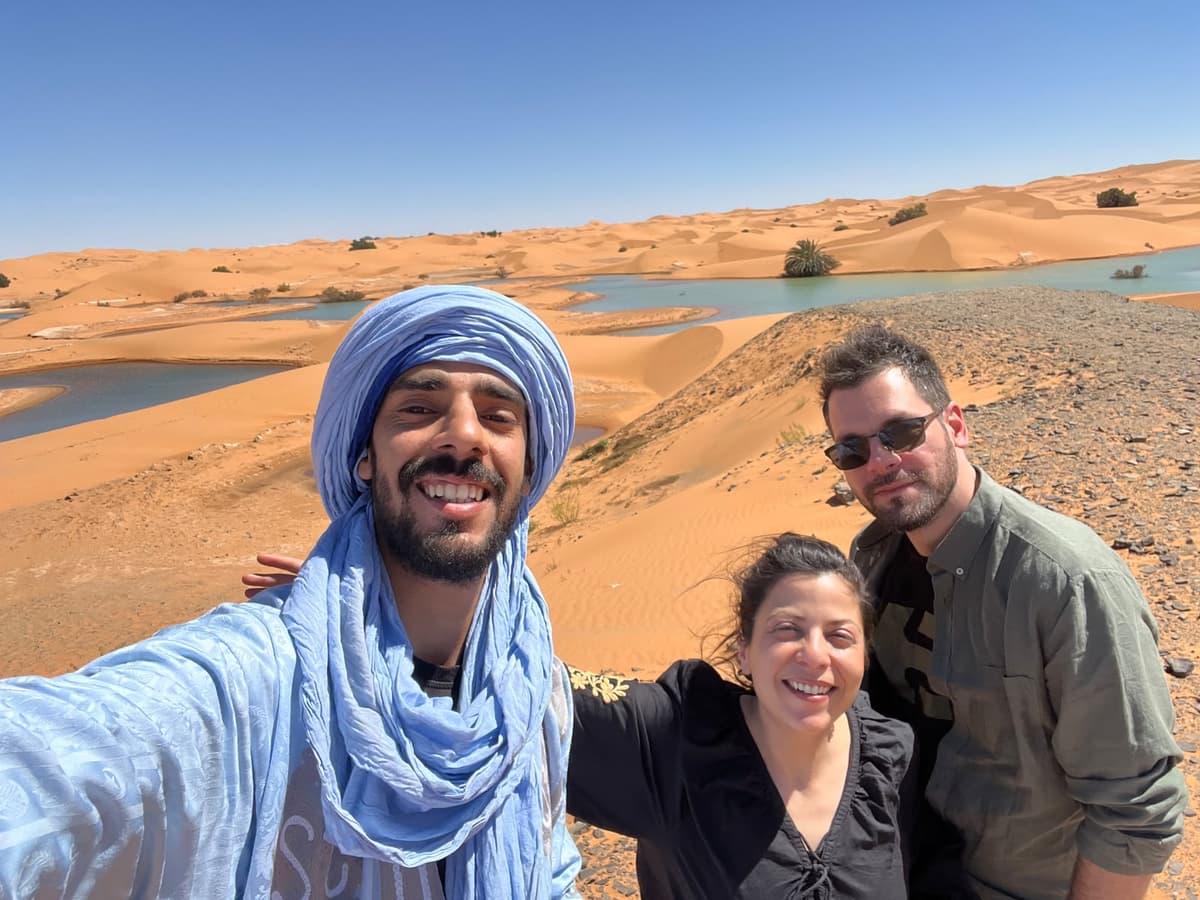
Travel from Marrakech to Merzouga over five days through the High Atlas, Ait Ben Haddou, Draa Valley and Erg Chebbi, with camel ride, luxury desert camp, Merzouga exploration, Todra and Dades.
 7 days / 6 nights
Morocco 7 Day Itinerary – 7 Days Desert Tour from Marrakech
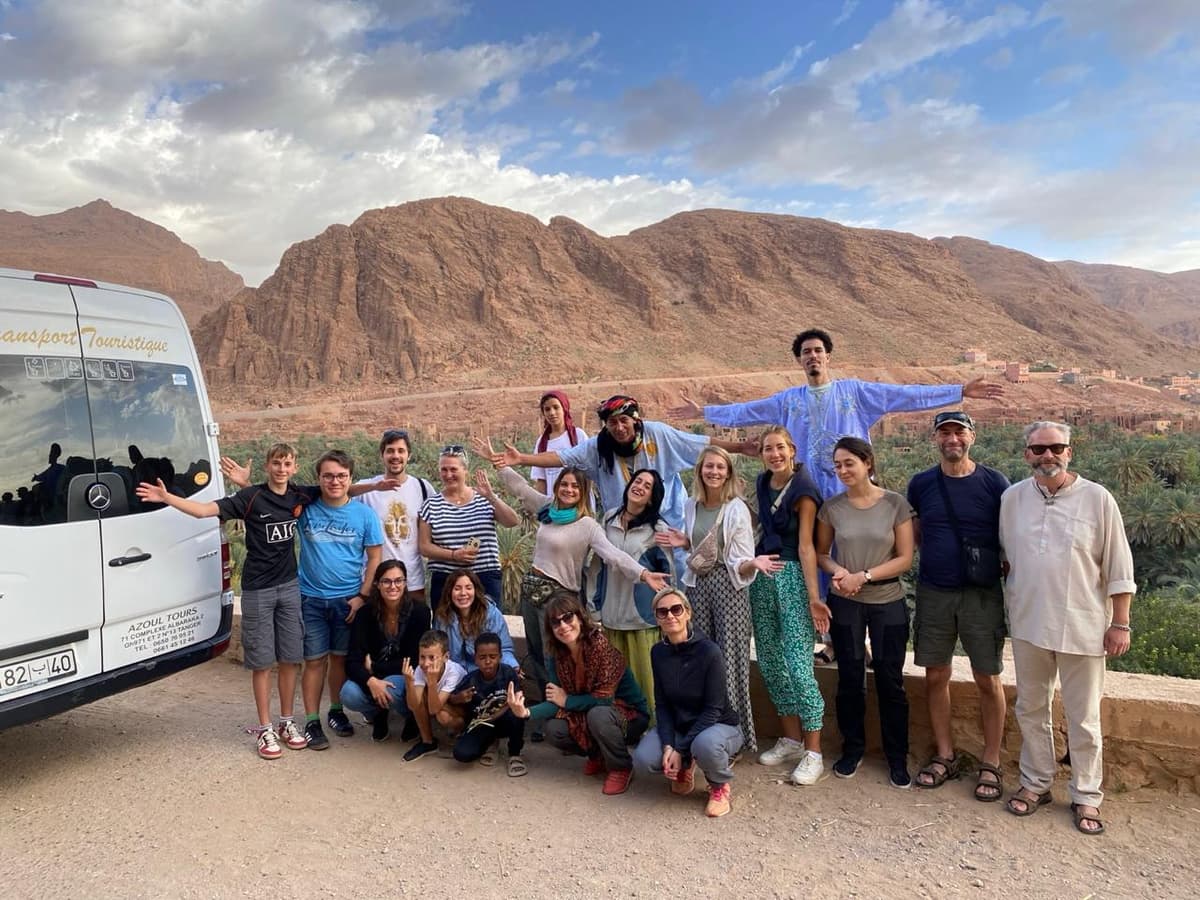
Spend seven days traveling from Marrakech through the High Atlas, Dades, Todra and Merzouga before exploring remote Sahara villages, the Draa Valley and Ouarzazate.
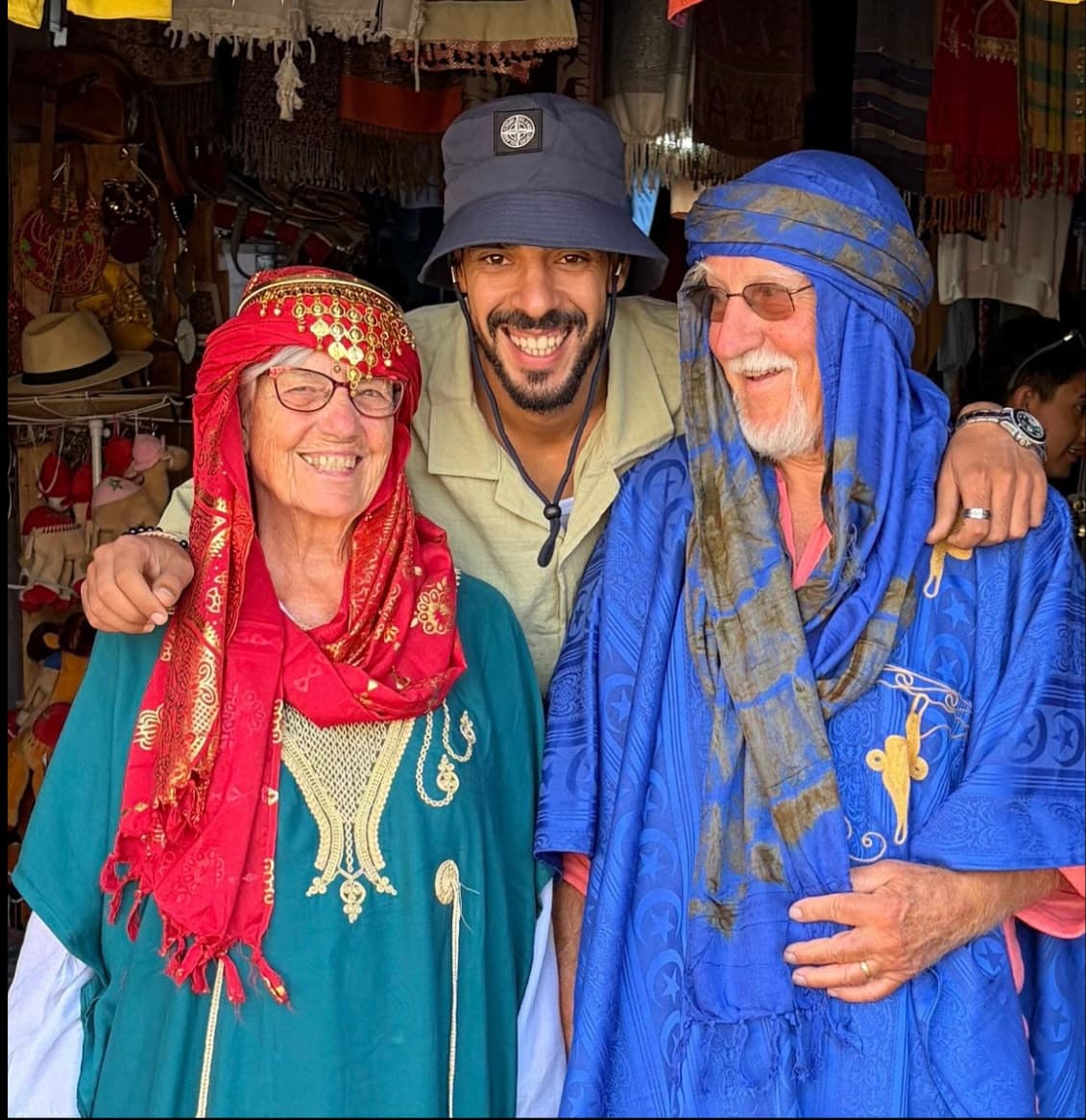 6 days / 5 nights
Morocco Atlas Mountains Desert Merzouga 6 Day Itinerary
Travel from Marrakech through the High Atlas, Ait Ben Haddou, Dades and Merzouga in six days, with camel trek, luxury desert camp, Middle Atlas and a guided Fes Medina visit.
Free travel advice
Have a question about one of our tours?
Ask us about the itinerary, accommodation, transport, desert camps, prices or possible changes. We'll help you understand your options before you book — completely free and with no obligation.