Morocco in March 2027: Weather, Desert & What to Pack
Morocco in March 2027: temperatures, Marrakech weather, Sahara conditions, what to pack, Ramadan advice and 4-, 5- and 6-day tour options.
Planning to visit Morocco in March 2027? Tours Marrakech Desert helps travelers organize private early-spring journeys linking Marrakech, the High Atlas, traditional kasbah landscapes, southern valleys, Merzouga and Erg Chebbi. Depending on the confirmed package, a private tour can include comfortable transport with a professional local driver, selected riads or hotels, a Sahara camp, camel trekking where listed and local guides where included. Travelers with four, five or six tour days can choose between a Marrakech-to-Fes route, a Marrakech round trip with additional time around Merzouga, or a six-day journey that continues to Fes with a dedicated guided Medina day.
What is the weather like in Morocco in March? March is an early-spring month and conditions vary sharply by region. Marrakech and southern inland areas often have mild-to-warm afternoons, Atlantic cities are moderated by the ocean, Fes and northern Morocco can be cooler and wetter, the High Atlas is colder because of altitude, and the Sahara can combine strong sun with cool evenings. This guide uses historical climate information for planning; it does not claim to predict the exact weather on any March 2027 travel date.
What Is the Weather Like in Morocco in March?
March marks the transition from winter toward spring, so travelers should expect contrast rather than one national temperature. Historical climate normals show Casablanca averaging about 19.7°C (67°F) for the daily maximum and 11.6°C (53°F) for the minimum in March, while Fes averages around 19.9°C (68°F) and 6.6°C (44°F). Agadir is milder and warmer during the day, with a historical March maximum around 23.4°C (74°F) and minimum around 12.3°C (54°F).
Inland southern locations can warm more quickly under sunshine, but nights remain much cooler than afternoons. Mountain routes are a separate case: altitude can produce much colder air, cloud, rain or even remaining snow at high elevations. Merzouga and Erg Chebbi are generally drier than northern Morocco, yet wind and blowing sand can occur. For this reason, a layered packing strategy works better than treating March as either a winter or summer month.
March Temperature Comparison Across Morocco
The table below mixes official station-based climate data where reliable figures were available with clearly labeled qualitative or modeled regional guidance where directly comparable official data was not available. Historical averages are planning references, not forecasts for March 2027.
| Destination | Typical March high | Typical March low | Rainfall / variability | Practical advice |
|---|---|---|---|---|
| Marrakech | Usually low-to-mid 20s °C / low-to-mid 70s °F in long-term spring references | Cooler evenings, often around low-teens °C | Showers remain possible | Light daytime clothing plus a sweater or jacket. |
| Fes | 19.9°C / 67.8°F | 6.6°C / 43.9°F | About 59.3 mm in 1991–2020 normals | Comfortable walking weather with a rain layer and warm evening layer. |
| Casablanca | 19.7°C / 67.5°F | 11.6°C / 52.9°F | About 42.5 mm in 1991–2020 normals | Expect Atlantic moderation and occasional wind. |
| Rabat | Mild spring conditions | Cool after sunset | Atlantic and northern influence; rain possible | Use a local forecast rather than Marrakech temperatures. |
| Chefchaouen | Cool-to-mild spring days | Cool nights | Rif region can remain relatively wet in March | Pack a light waterproof jacket and good walking shoes. |
| Essaouira | Mild coastal daytime conditions | Mild-to-cool nights | Atlantic wind can be a major comfort factor | Add a wind-resistant layer. |
| Agadir | 23.4°C / 74.1°F | 12.3°C / 54.1°F | About 31.3 mm in 1991–2020 normals | Often pleasant for coastal sightseeing; evenings still merit a layer. |
| Ouarzazate | Low-to-mid 20s °C in regional climate references | Cool nights | Generally drier than northern Morocco | Large day-night difference makes layers useful. |
| Merzouga | Warm desert afternoons in seasonal references | Noticeably cooler nights | Low rainfall overall, but wind and blowing sand possible | Sun protection by day and warm layer after sunset. |
| Imlil / High Atlas reference | Cool mountain daytime conditions | Cold nights, potentially near low single digits °C | Strong altitude effect; rapidly changing weather possible | Bring warm, weather-resistant layers even if Marrakech feels warm. |
This contrast explains why one traveler may wear a lightweight shirt in Marrakech at midday and still want a warm jacket in the Sahara after dark or during a High Atlas stop on the same itinerary.
Marrakech in March: Weather, Temperature and Things to Do
Daytime Conditions
Marrakech generally becomes more comfortable for outdoor sightseeing as winter gives way to spring. Many March afternoons can feel mild or warm, especially in direct sun, but short-term conditions vary. A historical monthly average should never be treated as the exact temperature for your travel day.
Nighttime Conditions
Evenings can feel much cooler once the sun drops. If you plan a rooftop dinner, an early airport pickup or a dawn departure toward the Atlas, keep a light sweater or jacket available rather than leaving all warm clothing in checked luggage.
Rainfall
March is not a guaranteed dry month in Marrakech. Showers remain possible, and one wet day can feel significantly cooler than the monthly average. A compact waterproof layer is useful without taking much luggage space.
What to Wear
Comfortable trousers, breathable tops, a light sweater, walking shoes and sun protection form a practical base. Add a light rain shell and one warmer layer if your journey continues to mountains or desert.
Things to Do
March can suit walking in the Medina, Jemaa el-Fnaa, Bahia Palace, gardens, historic streets, guided city visits and food experiences. Check current opening times and admission details before visiting rather than relying on old travel blogs.
Riads or Hotels?
A Medina riad gives atmosphere and walking access but may involve pedestrian lanes and luggage assistance. Boutique hotels can combine style with easier road access, while larger modern hotels can be more practical for families, early departures or travelers who value elevators and vehicle access. Premium accommodation varies widely, so confirm heating, room type and access rather than assuming every property offers the same facilities.
Marrakech is the departure city for all three featured March routes in this guide. To compare more departures, browse our Marrakech desert tours.
Sahara Desert in March: Is It a Good Time to Visit Merzouga?
March can be a very appealing month for Merzouga because the strongest summer heat has not yet arrived. Daytime sun can feel warm, while evenings and nights cool quickly. The desert is also exposed to wind, and blowing sand can occasionally affect visibility or the timing of dune activities.
For a camp stay, ask in advance about tent category, warm bedding, private or shared bathroom, heating availability, hot-water arrangements, luggage handling, meal inclusions and the camel-trek setup. No camp feature should be assumed merely because a product uses the word “luxury.”
For camel trekking, wear long comfortable trousers, closed or secure footwear and layers that can handle cooler conditions after sunset. A scarf can help with wind or dust. Camel timing may change with weather, daylight or operational conditions, so no itinerary should guarantee a perfect sunset on every departure.
Tours Marrakech Desert can organize private routes reaching Merzouga through different itineraries. The right choice depends on whether you want to return to Marrakech, finish in Fes or spend extra time around the dunes.
Atlas Mountains Weather in March
The High Atlas behaves very differently from Marrakech. As the road climbs toward Tizi n'Tichka, temperature can drop substantially, and cloud, rain, wind or remaining snow at higher elevations are possible. A scenic road crossing is not the same as a high-altitude trek: these tours travel by road and make stops, but they do not include a Jebel Toubkal climb.
Drivers and local teams need to respond to real conditions rather than promise a fixed experience months in advance. Travelers should check forecasts close to departure and keep warm layers accessible inside the vehicle.
For a deeper explanation of Morocco's mountain systems and travel routes, see our Atlas Mountains Morocco guide.
What to Wear in Morocco in March
For Daytime City Sightseeing
Choose comfortable trousers, breathable tops, light layers and supportive walking shoes. A hat and sunglasses are useful in strong sun, particularly in Marrakech and southern Morocco.
For Marrakech Evenings
A light sweater, fleece or comfortable jacket is useful. Temperature swings are more noticeable when you have spent the afternoon in direct sun.
For Sahara Nights
Pack a warm fleece, wind-resistant outer layer, long trousers, closed shoes and sleepwear suited to a cool night. The exact temperature can vary considerably with wind and cloud cover.
For the Atlas Mountains
Use warmer layers, a weather-resistant jacket and footwear suitable for short walks at viewpoints or historic sites. Ordinary scenic road tours do not require specialist mountaineering equipment.
Cultural Considerations
Morocco does not require non-Muslim tourists to follow a universal legal dress code for ordinary sightseeing, but modest, respectful clothing is a good social choice, especially in religious or conservative settings. Shoulders and knees can be covered easily with light layers without sacrificing comfort.
Clothing for Children
Families should pack layers that children can remove or add independently. A child comfortable in sunny Marrakech may become cold during a mountain stop or after sunset in Merzouga, so keep one warm layer in the day bag.
Complete Morocco March Packing Checklist
| Category | Items | Priority |
|---|---|---|
| Clothing | Breathable tops, long trousers, sweater, warm jacket, walking shoes, socks, cool-night sleepwear | Essential |
| Sun protection | Sunscreen, sunglasses, hat, lip balm | Essential |
| Desert essentials | Small daypack, refillable bottle, scarf, camera protection, portable charger | Recommended |
| Travel documents | Passport, insurance information, booking confirmations, payment methods | Essential |
| Electronics | Charging cables and suitable adapter for your devices | Essential |
| Health / personal | Personal medication, toiletries and any prescribed essentials | Essential |
| Weather extras | Light rain jacket, extra mountain layer | Recommended |
| Camp convenience | Small overnight bag for selected essentials | Optional / practical |
For a more general desert checklist that applies beyond March, use our Morocco desert tour packing guide.
When Is the Best Time to Visit Morocco?
There is no single best month for every traveler. March offers relatively comfortable city sightseeing and practical desert travel, but nights can be cool and mountain weather variable. April is usually warmer, May can become noticeably hotter inland, autumn is another popular period for road trips, winter can be cold in mountains and at night, and summer is very hot in many inland and desert areas.
This article stays focused on March. For a complete year-round comparison, read Best Time to Visit Morocco.
Morocco Spring Break 2027
US Spring Break does not have one national date. Universities, colleges and school districts publish their own calendars, and many college breaks fall in March while some family breaks extend into early April. This makes March particularly relevant to American travelers researching Morocco.
A four-, five- or six-day land tour can fit into different overall vacations, but flight days matter. An overnight transatlantic journey and airport procedures can consume substantial calendar time, so a six-day tour may require eight or more days away from home depending on connections and recovery time.
For deeper US-specific Spring Break planning, keep this March article focused on weather, Ramadan and tour selection rather than duplicating a separate full Spring Break guide.
Ramadan and Eid al-Fitr in March 2027
Planning calendars available in October 2026 place the start of Ramadan 2027 in early February and show Eid al-Fitr tentatively around March 10, 2027. These dates are not final: Morocco's religious calendar depends on lunar observation and official national announcements.
If your trip falls during the final days of Ramadan, some restaurants and local businesses may adjust daytime hours, activity can increase before sunset, and traffic can become busier around iftar. Hotels and tourist restaurants often continue serving travelers, but opening patterns vary and should be checked locally.
Non-Muslim tourists are not required to fast, yet eating, drinking or smoking discreetly in public during fasting hours is a respectful choice. Guided visits can still operate, but timing may be adapted. Around Eid al-Fitr, family celebrations, holiday closures and increased local travel can affect schedules, so confirm opening times and transport arrangements.
Best Morocco Desert Tours for March 2027: 4, 5 or 6 Days?
| Tour | Start / finish | Key difference | Best suited to |
|---|---|---|---|
| 4 days | Marrakech → Fes | Fast one-way route with camp plus an extra Merzouga exploration day | Travelers with four tour days who do not need to return to Marrakech |
| 5 days | Marrakech → Marrakech | Round trip with two nights in the Merzouga region | Travelers based in Marrakech who want more time around the desert |
| 6 days | Marrakech → Fes | Merzouga plus a dedicated guided Fes day | Travelers wanting more cultural time after the Sahara |
5 Days Tour from Marrakech to Merzouga
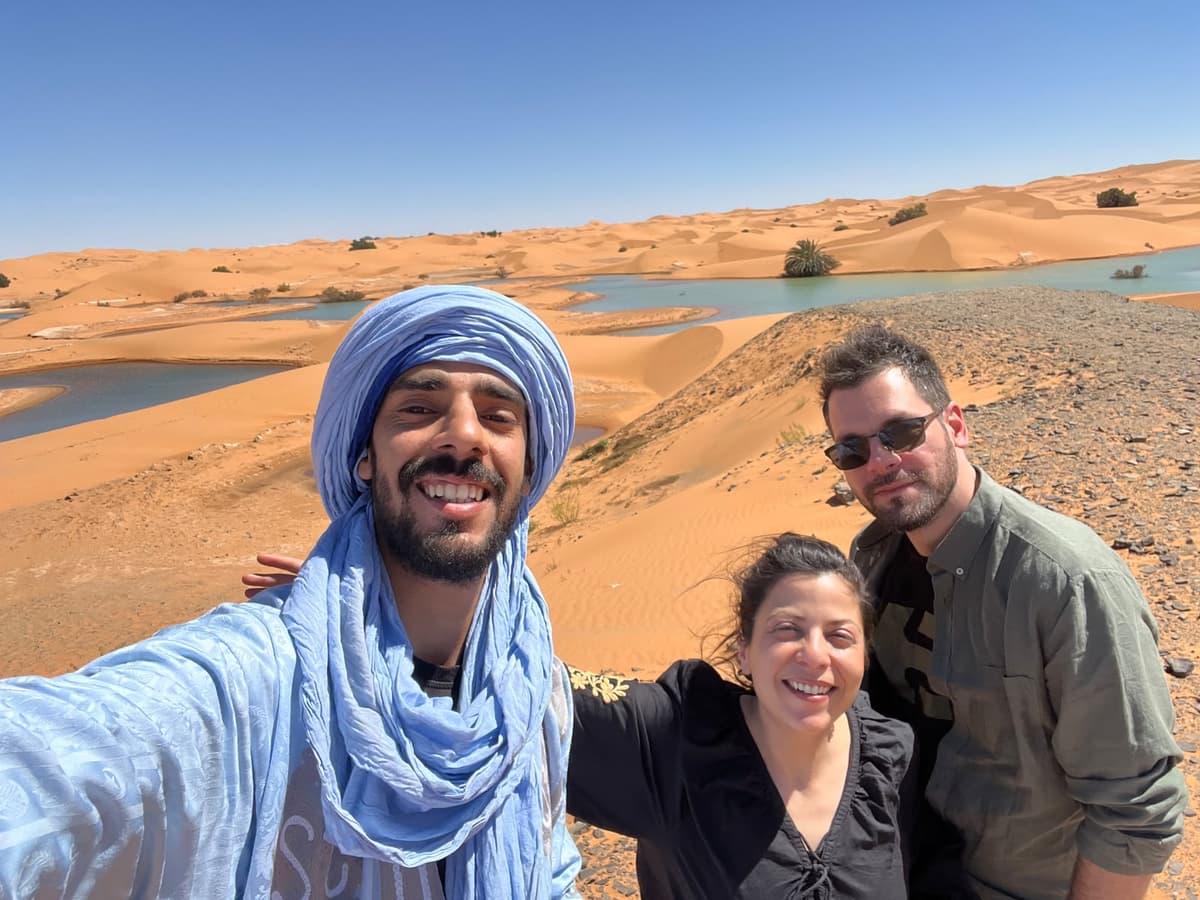
The 5 Days Tour from Marrakech to Merzouga lasts five days and four nights, begins and ends in Marrakech, and gives the Merzouga region more breathing room than a fast return route.
Day 1 — Marrakech, High Atlas, Telouet, Ait Ben Haddou and Ouarzazate
Leave Marrakech in a private vehicle and climb toward Tizi n'Tichka. Stops depend on road, traffic and weather conditions. Continue through Telouet and the Ounila landscapes toward Ait Ben Haddou before reaching Ouarzazate for the first night. March mountain weather means a jacket should stay accessible during the crossing.
Day 2 — Ouarzazate, Agdz, Draa Valley, Nkob and Merzouga Desert Camp
Follow the Draa Valley through palm groves and kasbah landscapes, continue through Nkob and the Rissani area, then reach Merzouga. The official product includes a camel ride and camp night. Warm layers matter after sunset.
Day 3 — Merzouga, Khamlia, Desert Exploration and Local Culture
Spend additional time around Erg Chebbi with 4x4 exploration, Khamlia and local cultural encounters when available. The itinerary includes another overnight in the Merzouga region, which is a major advantage over shorter routes.
Day 4 — Merzouga, Rissani, Erfoud, Todra Gorge and Dades
Leave the desert through Rissani and Erfoud, then continue toward Tinghir and Todra Gorge before staying in the Dades Valley. Market visits depend on market days and timing and should not be guaranteed.
Day 5 — Dades, Rose Valley, Skoura, High Atlas and Marrakech
Return through Kelaat M'Gouna, the Rose Valley, Skoura and Ouarzazate before crossing the High Atlas back to Marrakech. March does not guarantee the same rose bloom that travelers may see later in spring.
This route is particularly suitable for couples, families and travelers who want a Marrakech round trip with more time in Merzouga.
4 Days Tour from Marrakech to Fes
The 4 Days Tour from Marrakech to Fes lasts four days and three nights, starts in Marrakech and finishes in Fes.
Day 1 — Marrakech, High Atlas, Ait Ben Haddou, Ouarzazate, Valley of Roses and Dades
Cross Tizi n'Tichka, continue through Ait Ben Haddou and Ouarzazate, then travel toward the Valley of Roses and Dades for the night.
Day 2 — Dades, Todra Gorge, Erfoud, Merzouga and Desert Camp
Travel through Todra Gorge and southeastern Morocco toward Merzouga. The official route includes a camel trek and camp night. The product describes a luxury-style camp according to the confirmed package, but exact facilities must be verified before booking.
Day 3 — Merzouga, Nomads, Khamlia and Erg Chebbi
Use the extra Merzouga day for desert exploration by 4x4, cultural stops such as Khamlia and visits linked to desert communities where appropriate and available. The night is in a hotel or riad near Merzouga.
Day 4 — Merzouga, Rissani, Erfoud, Ziz Valley, Midelt, Ifrane and Fes
This is a long final road day. The journey crosses the Ziz Valley, Middle Atlas and Ifrane area before arriving in Fes. A stop near the cedar forest may offer wildlife sightings, but Barbary macaques are never guaranteed.
This itinerary works for travelers who have only four tour days, want a Sahara camp and prefer to finish in Fes rather than backtrack to Marrakech. It does not include a dedicated guided Fes sightseeing day after arrival.
Morocco Atlas Mountains Desert Merzouga 6 Day Itinerary
The 6-day Atlas Mountains and Merzouga itinerary begins in Marrakech and finishes in Fes, with five nights and a dedicated guided day in Fes.
Day 1 — Marrakech, High Atlas, Ait Ben Haddou and Dades
Cross the High Atlas via Tizi n'Tichka, visit Ait Ben Haddou, pass Ouarzazate and continue to Dades for the night.
Day 2 — Dades, Todra Gorge and Merzouga
Continue through Tinghir and Todra Gorge to Merzouga. The night is in a hotel or riad near the dunes; this is specifically not the camp night.
Day 3 — Merzouga Sahara Adventure and Desert Camp
Spend time around Erg Chebbi before the camel trek and camp night. Dinner is included where specified by the confirmed package. March evenings can be cool, so warm clothing remains important.
Day 4 — Merzouga, Ziz Valley, Midelt, Cedar Forest, Ifrane and Fes
Leave the Sahara, travel through the Ziz Valley and Midelt, cross the Middle Atlas and continue through Ifrane to Fes. Wildlife sightings near the cedar forest are possible but not guaranteed.
Day 5 — Guided Fes Medina and Cultural Heritage
A local guide introduces the historic Medina, artisan quarters, souks and cultural history. Paid monument tickets should not be assumed included unless specifically confirmed.
Day 6 — End of the Journey in Fes
The standard itinerary ends in Fes and does not return to Marrakech. Final transfer arrangements depend on the confirmed booking.
This is the strongest option for travelers who want a one-way Marrakech-to-Fes route with both Sahara time and a complete cultural day in Fes.
Which Morocco Desert Tour Is Best in March: 4, 5 or 6 Days?
| Feature | 4 days | 5 days | 6 days |
|---|---|---|---|
| Start | Marrakech | Marrakech | Marrakech |
| Finish | Fes | Marrakech | Fes |
| Desert camp | Yes, Day 2 | Yes, Day 2 | Yes, Day 3 |
| Extra Merzouga time | Yes, Day 3 | Yes, Day 3 | Yes, with hotel night before camp |
| Guided Fes day | No | No | Yes, Day 5 |
| Main practical advantage | Shortest Marrakech-to-Fes option | Round trip and more desert time | Desert plus deeper Fes culture |
| Best flight pattern | Arrive Marrakech, depart Fes | Arrive and depart Marrakech | Arrive Marrakech, depart Fes |
The right tour depends on flight plans and available days, not on a universal ranking. If you need to return to Marrakech, the five-day loop is the natural fit. If you want to continue north to Fes, the four- or six-day routes reduce backtracking.
How March Weather Affects the Three Tours
High Atlas: all three routes cross mountain terrain, so cooler air and changing conditions are relevant. Dades and Todra: sunshine can feel warm, while shaded canyon sections feel cooler. Merzouga: afternoons may be comfortable or warm but nights can be cool. Desert camp: ask about bedding and tent amenities. Middle Atlas: the four- and six-day routes can encounter cooler conditions on the way to Fes. Fes: spring showers remain possible.
Morocco Tour Prices in March 2027
Pricing depends on the number of travelers, private vehicle, driver, room configuration, accommodation standard, camp type, travel dates, included meals, optional activities and the start and finish cities. Current product pages may display starting prices, but those figures should not be treated as guaranteed March 2027 quotes for every group.
Ask for a written proposal showing inclusions and exclusions. Avoid assuming airport transfers, upgrades, special activities or cancellation terms unless they are explicitly confirmed.
Where to Stay in Morocco in March
March comfort depends on property design as much as category. In Marrakech and Fes, traditional riads can be atmospheric but may have cooler courtyards and pedestrian access. In Dades, guesthouses vary in heating and room insulation. Around Merzouga, hotel/riad nights and camp nights can feel very different after dark.
Before booking, ask about heating, warm bedding, hot water, bathroom setup, road access and room configuration. Tours Marrakech Desert can discuss preferred accommodation categories as part of a confirmed private-tour proposal, but no universal facility should be assumed.
Plan Your Morocco Trip for March 2027
Planning to visit Morocco in March 2027? Whether you want a four-day Marrakech-to-Fes desert journey, a five-day Merzouga round trip or a six-day Atlas and Sahara itinerary with a guided Fes day, Tours Marrakech Desert can help you discuss a private route suited to your dates, accommodation preferences and travel plans.
Share your dates, arrival city, departure city, number of travelers, children where relevant, preferred duration, accommodation preferences, budget range and special requirements through Customize Your Tour or contact Tours Marrakech Desert.
FAQ
Yes for many travelers. March can offer comfortable city and desert conditions, but nights are cool, rain remains possible and mountain weather can change quickly.
Conditions vary by region: Marrakech and southern areas are milder to warmer, the Atlantic coast is moderated by the ocean, Fes and the north can be wetter, the Atlas is colder and Merzouga has cool nights.
Long-term references generally place Marrakech in the low-to-mid 20s °C during the day with much cooler nights. Check an official forecast for your actual travel dates.
Yes. Rain is possible, especially in northern and Atlantic regions. The southeast is generally drier, but no March itinerary is guaranteed to be rain-free.
Daytime conditions can be mild or warm in Merzouga, while evenings and nights are much cooler. Wind and blowing sand are also possible.
It can feel cold after sunset, particularly with wind. Pack a fleece or warm jacket and confirm bedding and camp facilities.
Use layers: breathable clothing for daytime, a sweater or jacket for evenings, a light rain shell and warmer clothing for mountains and desert nights.
A warm layer is strongly recommended because desert temperatures drop after sunset and wind can make conditions feel colder.
Yes. March is the beginning of meteorological and seasonal spring in the Northern Hemisphere, although regional conditions still vary considerably.
Yes. Planning calendars currently place the end of Ramadan in early March 2027, with Eid al-Fitr tentatively around March 10. Final dates depend on lunar observation and official Moroccan announcements.
Choose based on flights and priorities: 4 days is a Marrakech-to-Fes route, 5 days returns to Marrakech with extra Merzouga time, and 6 days ends in Fes with a guided Fes day.
You can request a private proposal for March 2027. Final availability, price, accommodation and inclusions must be confirmed for your exact dates.
Tours Marrakech Desert
 5 days / 4 nights
5 Days Tour from Marrakech to Merzouga
Travel from Marrakech to Merzouga over five days through the High Atlas, Ait Ben Haddou, Draa Valley and Erg Chebbi, with camel ride, luxury desert camp, Merzouga exploration, Todra and Dades.
 7 days / 6 nights
Morocco 7 Day Itinerary – 7 Days Desert Tour from Marrakech
Spend seven days traveling from Marrakech through the High Atlas, Dades, Todra and Merzouga before exploring remote Sahara villages, the Draa Valley and Ouarzazate.
 6 days / 5 nights
Morocco Atlas Mountains Desert Merzouga 6 Day Itinerary
Travel from Marrakech through the High Atlas, Ait Ben Haddou, Dades and Merzouga in six days, with camel trek, luxury desert camp, Middle Atlas and a guided Fes Medina visit.
Free travel advice
Have a question about one of our tours?
Ask us about the itinerary, accommodation, transport, desert camps, prices or possible changes. We'll help you understand your options before you book — completely free and with no obligation.