What to Pack for a Morocco Desert Tour
What to pack for a Morocco desert tour: clothes, shoes, camel trek gear, winter layers, Sahara camp essentials, luggage and a practical 3-day checklist.
Travel Insights by Tours Marrakech Desert
Knowing what to pack for a Morocco desert tour is less about carrying more and more about carrying the right things. A typical Marrakech-to-Merzouga journey combines long road sections, High Atlas viewpoints, valleys, kasbahs, short walks, a camel ride, sand, strong sun and a night in the Sahara.
You do not need expedition-level equipment for a standard Morocco Sahara desert tour. You need a practical system: light clothes for the day, warmer layers for the evening, sun protection, comfortable shoes and a small overnight bag for the camp.
The Moroccan National Tourist Office describes Morocco as a country of strong climatic contrasts and recommends spring and autumn as particularly suitable seasons for Sahara travel. Its desert travel material also highlights camel rides and bivouac-style accommodation around the dunes. For current background, see the official Morocco climate guide.
Quick Packing Checklist
| Category | Pack This | Why |
|---|---|---|
| Day clothing | Loose T-shirts, breathable long sleeves, light trousers | Comfort and sun protection |
| Night clothing | Fleece, warm layer, long trousers | Desert evenings can cool quickly |
| Footwear | Comfortable closed shoes + camp sandals | Road stops, dunes and camp |
| Sun protection | Sunglasses, hat, sunscreen, scarf | Strong sun and reflected UV |
| Camp bag | Small backpack or overnight bag | Easier than taking a suitcase into the dunes |
| Electronics | Phone, cable, power bank | Charging access can vary |
| Personal care | Medication, lip balm, toiletries | Dry air and long road days |
| Hydration | Reusable water bottle | Dry heat increases fluid needs |
How to Prepare Gear for a Multi-Day Desert Expedition
The keyword how to prepare gear for a multi-day desert expedition can sound more technical than your Morocco itinerary really is. On most tours Marrakech desert, your main luggage travels in the vehicle. You are not carrying a tent, stove and several days of water across the Sahara on foot.
Your priorities should therefore be simple:
- protect yourself from sun, wind and dust;
- prepare for cooler evenings and winter nights;
- wear clothes that work both in the vehicle and during outdoor stops;
- keep your desert-camp bag small;
- carry medicines, passport, money and valuables yourself.
Weather in Sahara Desert Morocco: Why Packing in Layers Matters
Weather in Sahara desert Morocco changes more than first-time visitors expect. A desert can be hot during the day and surprisingly cool after sunset. Winter mornings and nights can feel cold, while summer afternoons can become extremely hot.
The Moroccan tourism office emphasizes Morocco's climatic contrasts and recommends spring and autumn for Sahara travel. That does not mean winter is a bad time to visit; it simply means warmer evening clothing becomes more important.
Before departure, check forecasts for Marrakech, the High Atlas, Dades or Ouarzazate, and Merzouga. One forecast for Marrakech does not represent the entire route.
What to Wear in the Sahara Desert During the Day
If you are researching what to wear in the Sahara desert, think breathable, loose and covered rather than minimal clothing.
A lightweight long-sleeve shirt and loose trousers can be more comfortable than exposing a lot of skin. They protect against direct sun, wind and blowing sand while still allowing airflow.
The CDC recommends loose, lightweight clothing, a hat, sunglasses and sunscreen in hot climates. It also notes that UV radiation can reflect from sand, which is especially relevant in desert environments. See the CDC sun-exposure guidance.
What Should I Wear in the Morocco Desert at Night?
This is one of the most important questions because many travelers pack only for daytime heat.
For most seasons, bring at least one long-sleeve layer and a fleece or warm sweater. In winter, add a light insulated jacket, warm socks and a beanie. If you feel the cold easily, a thermal base layer takes almost no room and can make a big difference.
Do not assume that luxury camping tents mean you will never need warm clothes. Camp standards vary, and heating is not guaranteed in every tent category.
What Should I Pack for the Sahara Desert in Winter?
For December, January and other colder periods, pack:
- thermal or long-sleeve base layer;
- fleece or warm sweater;
- light insulated jacket;
- long trousers;
- warm socks;
- closed shoes;
- beanie;
- scarf;
- sunscreen and sunglasses.
Cold-weather packing does not replace sun protection. The CDC notes that UV exposure still occurs in winter and that sand can reflect UV radiation.
What Should I Pack in Summer?
Summer changes the priorities. Heat management becomes more important than insulation during the day.
- very lightweight breathable clothing;
- long, loose trousers;
- light long-sleeve shirt;
- wide-brim hat;
- high-quality sunglasses;
- sunscreen;
- scarf for wind and sand;
- refillable water bottle.
The CDC also recommends drinking plenty of non-alcoholic fluids and planning outdoor activity for cooler parts of the day when traveling in hot climates.
What to Pack for a Camel Trek
What to pack for a camel trek should be kept simple because comfort on the camel matters more than carrying gear.
Wear long trousers rather than shorts because your legs rub against the saddle. Choose flexible clothing that allows you to mount and dismount easily. Keep your phone, sunglasses and scarf secure rather than loose.
Best Camel-Trek Essentials
- long trousers;
- light long-sleeve top;
- scarf or buff;
- sunglasses with a secure fit;
- closed shoes;
- small backpack;
- phone or camera with strap;
- water.
What Not to Carry on the Camel
Avoid large suitcases, loose shopping bags, bulky coats hanging from your arms, open drinks or anything difficult to secure.
The camel ride is easier when your hands are free and your bag is compact.
Shoes for a Morocco Desert Tour
The best shoes for a Morocco desert tour are usually comfortable closed walking shoes or trainers with decent grip.
You need shoes that work for roadside viewpoints, kasbah visits, short walks, rocky ground and getting on and off the camel. Extremely heavy boots are unnecessary for most standard tours.
Do I Need Hiking Boots for a Morocco Desert Tour?
Usually, no.
If your itinerary is a standard road tour with sightseeing stops, camel riding and a desert camp, quality trainers or walking shoes are normally enough.
Bring hiking boots only if you specifically plan longer hikes, rocky trekking, mountain walks or extended off-road walking.
Sandals: Useful or Not?
Yes, but mainly for the camp.
Light sandals are useful for moving between your tent, dinner area and bathroom. They should be your second pair, not your only footwear.
Can I Bring a Suitcase on a Morocco Desert Tour?
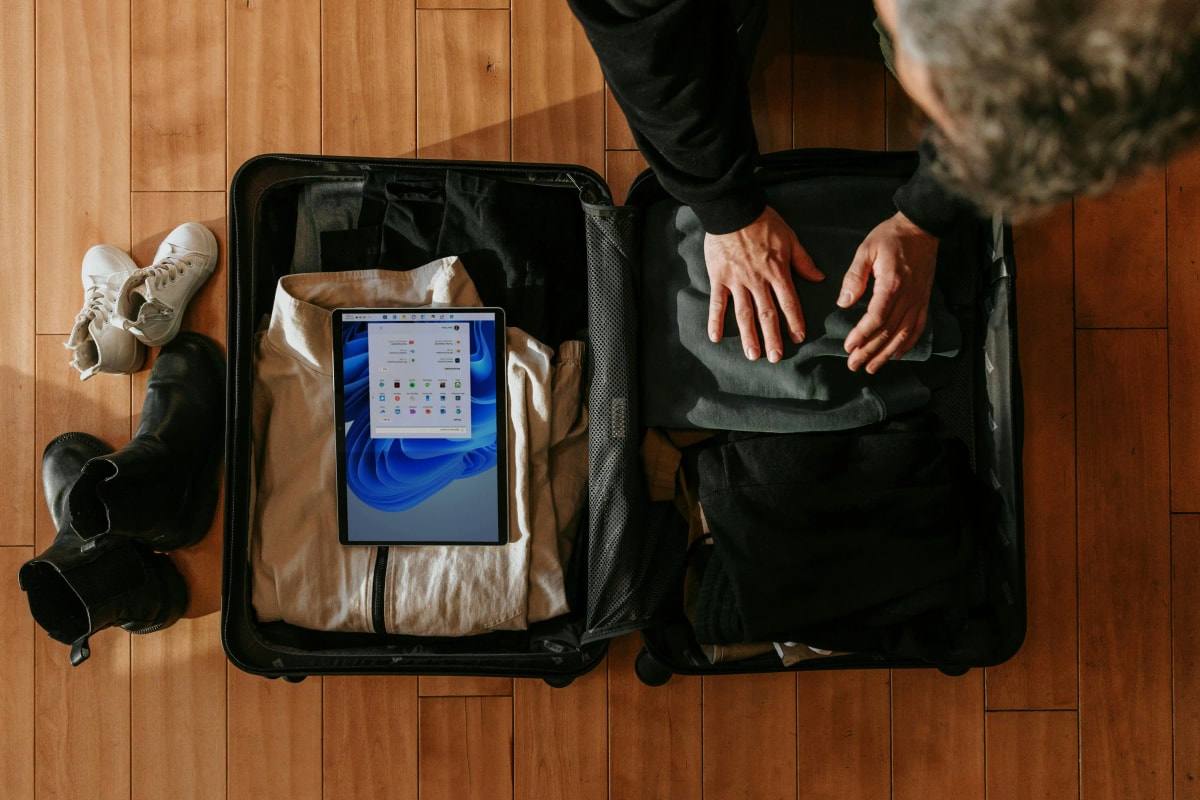
Usually yes, because your main luggage can remain in the tour vehicle during the road journey.
The problem is not bringing a suitcase to Morocco. The problem is trying to take a large suitcase onto a camel or through soft sand.
The Best Luggage Strategy
- Main suitcase: stays in the vehicle when possible;
- Small overnight bag: goes with you to the desert camp;
- Small day bag: carries passport, money, phone, medication and camera.
Always confirm exact luggage arrangements before departure because vehicle type and camp transfer logistics can vary.
What to Bring to a Sahara Desert Camp
When deciding what to bring to a Sahara desert camp, think about one night rather than your entire holiday.
- warm layer;
- change of underwear;
- toothbrush and basic toiletries;
- medication;
- phone;
- camera;
- power bank;
- charging cables;
- headlamp or small torch;
- lip balm;
- sunscreen;
- water;
- documents and valuables.
Luxury Camping Tents: What Still Needs to Go in Your Bag?
Even with luxury camping tents, bring your personal essentials.
Camp categories vary. Some private tents have en-suite bathrooms and more hotel-like bedding, while other camps are simpler. Power outlets, heating, air conditioning, towels and toiletries can also vary.
Ask what is included before departure rather than packing based only on the word “luxury.”
What Should I Pack for a 3-Day Morocco Desert Tour?
A 3-day route does not require three completely different outfits. Pack compactly and re-wear practical layers.
Recommended 3-Day Packing List
| Item | Quantity |
|---|---|
| Breathable tops | 2–3 |
| Long trousers | 1–2 |
| Warm mid-layer | 1 |
| Jacket | 1 seasonal layer |
| Underwear | 3 sets |
| Socks | 3 pairs |
| Closed walking shoes | 1 pair |
| Camp sandals | 1 pair |
| Scarf | 1 |
| Sun hat | 1 |
| Sunglasses | 1 |
| Small overnight bag | 1 |
Electronics and Charging
Bring a power bank even if your camp advertises electricity. Power availability can vary and outlets may be limited.
Keep cameras and phones protected from fine sand. A simple zip pouch or small dry bag can help when the wind picks up.
Camera Gear
If photography is important, bring only the lenses you expect to use. Changing lenses repeatedly in blowing sand increases the chance of dust reaching the sensor.
Pack:
- camera with strap;
- spare battery;
- memory card;
- lens cloth;
- sealed pouch for sand protection.
Medication and Personal Health Items
Keep prescription medicine in your day bag, not buried in your main suitcase.
Useful personal items include pain relief you normally use, any prescribed medication, hand sanitizer, tissues and basic stomach medication if recommended for you by your healthcare professional.
Sun, Skin and Dry-Air Essentials
Dry desert air can make lips and skin uncomfortable.
Pack:
- broad-spectrum sunscreen;
- lip balm;
- moisturizer;
- sunglasses;
- hat;
- scarf.
Do I Need a Scarf?
You do not strictly need one, but it is one of the most useful items you can pack.
A scarf can protect your neck from sun, cover your face during wind or blowing sand, add warmth after sunset and help you feel more comfortable during the camel ride.
What Not to Pack
- several heavy jackets;
- too many pairs of shoes;
- large hard-shell luggage for the camp section;
- expensive jewelry you do not need;
- bulky toiletries;
- large amounts of cash;
- unnecessary camping equipment already provided by the camp.
How Packing Changes Between Our 3 Marrakech Desert Tours
Your core packing list is similar for all three routes, but longer itineraries benefit from a little more organization.
2 Days Marrakech to Merzouga
For our 2 Days Tour From Marrakech To Merzouga, keep everything especially compact. You spend a lot of time moving, so one small overnight bag with your camp essentials is ideal.
3-Day Marrakech to Merzouga
For our 3-day Marrakech to Merzouga desert tour, bring enough for one hotel night and one camp night, but you still do not need a large amount of clothing.
4-Day Desert Tour from Marrakech
For our 4 day desert tour from Marrakech, add one extra clean top, underwear and socks. The same footwear and outer layers can normally be used throughout the trip.
Final Packing Check Before You Leave Marrakech
- comfortable closed shoes;
- lightweight daytime clothing;
- warm evening layer;
- scarf and sun hat;
- sunglasses and sunscreen;
- water bottle;
- medication;
- phone, cable and power bank;
- small overnight bag;
- passport and valuables.
Final Answer: What Should You Pack for a Morocco Desert Tour?
The best packing strategy for a Morocco Sahara desert tour is simple: travel light, dress in layers and separate your main luggage from the small bag you need for the camp.
You do not need hiking boots for a normal road-and-camp itinerary, you can usually bring a suitcase in the vehicle, and you should never pack only for daytime heat. Warm night clothing, sun protection and comfortable shoes matter more than carrying many outfits.
For your route, compare our 2-day Marrakech to Merzouga tour, 3-day Marrakech to Merzouga tour and 4-day Marrakech desert tour.
FAQ
Wear layers. Even after a warm day, desert evenings can feel cool, and winter nights can feel genuinely cold. Pack a long-sleeve base layer, fleece or warm mid-layer, long trousers, warm socks and a light insulated jacket. In winter, add a beanie and a warmer outer layer.
For three days, pack lightweight daytime clothes, one warm layer, comfortable closed shoes, sandals for camp, sunglasses, a sun hat, scarf, sunscreen, lip balm, reusable water bottle, toiletries, medication, phone charger, power bank and a small overnight bag for the desert camp.
Usually yes, because the main luggage can travel in the vehicle. A large suitcase is not practical for the camel section or inside the dunes, so keep your camp essentials in a small backpack or overnight bag. Confirm exact luggage handling before departure.
Pack a fleece, warm jacket, long trousers, long-sleeve or thermal base layer, warm socks, closed shoes, scarf and beanie. Keep sunscreen and sunglasses too, because strong sun and UV exposure can still be significant in winter.
Not for a standard Marrakech-to-Merzouga road tour with sightseeing stops, camel riding and a camp night. Comfortable trainers or closed walking shoes with good grip are usually enough. Hiking boots are useful only if your itinerary includes longer hikes or rocky trekking.
Bring only what you need for one night: warm layer, toiletries, medication, phone, camera, charging cable or power bank, headlamp, lip balm, sunscreen and a little water. Keep your valuables with you and leave unnecessary luggage in the vehicle when possible.
Tours Marrakech Desert
 5 days / 4 nights
5 Days Tour from Marrakech to Merzouga
Travel from Marrakech to Merzouga over five days through the High Atlas, Ait Ben Haddou, Draa Valley and Erg Chebbi, with camel ride, luxury desert camp, Merzouga exploration, Todra and Dades.
 7 days / 6 nights
Morocco 7 Day Itinerary – 7 Days Desert Tour from Marrakech
Spend seven days traveling from Marrakech through the High Atlas, Dades, Todra and Merzouga before exploring remote Sahara villages, the Draa Valley and Ouarzazate.
 6 days / 5 nights
Morocco Atlas Mountains Desert Merzouga 6 Day Itinerary
Travel from Marrakech through the High Atlas, Ait Ben Haddou, Dades and Merzouga in six days, with camel trek, luxury desert camp, Middle Atlas and a guided Fes Medina visit.
Free travel advice
Have a question about one of our tours?
Ask us about the itinerary, accommodation, transport, desert camps, prices or possible changes. We'll help you understand your options before you book — completely free and with no obligation.